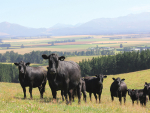
BVD Control Begins Long Before You See A Problem
Bovine Viral Diarrhoea (BVD) is sometimes viewed as a dairy industry issue, but the reality is that the disease can have serious consequences for beef breeding herds as well.
 increase font size
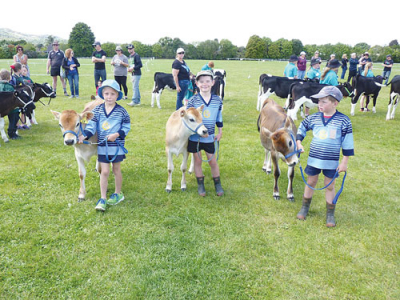 The Whangarei Group Calf Club. Picture: Hukerenui School.
Whangarei microbiologist Dr Barry Pyle says calf days are a perfect opportunity to educate youngsters and friends and family about biosecurity.
And attention may be needed to how some kids may react to seeing stock carted off for slaughter, he says. The Ministry for Primary Industries says it is sticking by its recommendation that schools and clubs don’t hold calf days this spring.
“Bringing together animals from different herds can risk spreading disease,” MPI told Dairy News.
“It’s a pretty low risk, but we are in a critical phase for tracking down and eradicating Mycoplasma bovis and it’s helpful to not mix animals at events like calf days if possible.”
But Pyle asks why doesn’t MPI prepare now to use these days to educate rural youngsters and their families and friends about biosecurity?
“While the guidelines are a good start, there should be education on the disease: why animals shouldn’t make contact, what’s the point of disinfecting boots, etc and what are appropriate disinfectants and methods and so on,” he says.
“Since calves from farms under restrictions will be excluded, everyone is going to know who and where these are, and this could be good or bad.
“Another aspect that could be covered is our response to culling of animals. Some of the kids will have heard of, or even seen, a neighbour’s stock being carted off for slaughter.
“They need to be given help to deal with the gut-level responses of their own, family members’ and friends’, and in particular their response to others in the community who may have had their stock culled or be facing that prospect.”
As an environmental microbiologist, Pyle strongly disagrees with one of the guidelines given out – that if calf days go ahead participants bring milk but do not share it.
“No natural milk should be brought to calf days as feed; it should all be milk replacer to avoid any risk of cross-contamination,” says Pyle.
“Calves often salivate during and after feeding and may suckle the navels of other animals. These are instinctive traits and would be difficult to prevent especially for a youngster in control of a rambunctious calf.
“Maybe in future, the parallels between M. bovis and foot and mouth control should be made,” Pyle suggests.“We are now (again) in practice mode for that eventuality, but to raise it with school-age children may be too scary at the moment.”
Meanwhile MPI, DairyNZ and Beef + Lamb NZ are all still advising against calf days this year.
But MPI recommends if schools and clubs do go ahead with events, they should talk with communities and take all sensible precautions.
They should refer to the fact sheet on the DairyNZ website for further advice: www.dairynz.co.nz/media/5789749/m-bovis-calf-club-days.pdf
MPI also has plenty of information about M. bovis on its website. Anybody looking for educational materials or further information about M. bovis should refer to the MPI website www.mpi.govt.nz/bovis
Bovine Viral Diarrhoea (BVD) is sometimes viewed as a dairy industry issue, but the reality is that the disease can have serious consequences for beef breeding herds as well.
Election years are always a concerning time for farmers, according to DairyNZ chair Tracy Brown.
Testing confirms H5 bird flu in a single northern giant petrel, found dead on a remote Cape Palliser beach in the Wairarapa, says Dr Mary van Andel, the Ministry for Primary Industries' (MPI) Chief Veterinary Officer.
Bovine Viral Diarrhoea (BVD) is sometimes viewed as a dairy industry issue, but the reality is that the disease can have serious consequences for beef breeding herds as well.
Four years since it was first detected in New Zealand, researchers and growers now know much more about management of maize pest fall armyworm (FAW).


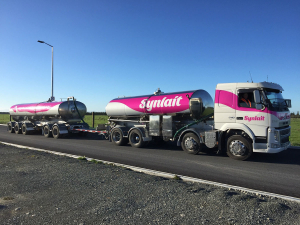
Synlait has swung to second-half profit as operations stabilise, but the dairy processor still posted a $75.4m annual loss.

LIC shareholders have elected a new North Island representative to the co-operative's Board, along with five representatives to its Shareholder Reference Group (SRG), following the company's Annual Meeting held in Invercargill.
Farmers across parts of Southland and South Otago are continuing to deal with difficult conditions after a prolonged run of wet weather, with pressure building around feed supply, stock management, pasture damage, farm infrastructure and everyday workloads.
Federated Farmers says it welcomes Labour's commitment to reviewing the Sharemilking Agreements Act, calling on other major parties to do the same.
For Canterbury dairy farmers Sian Meijer and Rick Wobben, wearable technology has become one of their most valuable on-farm tools - helping manage 1850 cows across an expansive, high-performing dairy operation while improving efficiency, mating outcomes and day-to-day decision making.
Fonterra has unveiled its annual results for the 2026 financial year, posting $27 billion in revenue and close to $20 billion returned to New Zealand farmer owners and unit holders.