Environment Southland Urges Vigilance After New Old Man's Beard Infestation Found Near Dipton
Environment Southland is calling on residents to be vigilant and check their properties after a new Old Man's Beard site was discovered near Dipton.
 increase font size
 Funding is available to all landowners within the Southland region looking to do projects that enhance water quality.
Environment Southland's catchment improvement funding is once again available for innovative landowners in need of a boost to get their project going.
Funding is available to all landowners within the Southland region looking to do projects that enhance water quality, with up to 50% of the costs covered by the council. The total funding available is $140,000.
Environment Southland's general manager community and engagement Sam Rossiter-Stead says the funding is designed to support landowners who want to take action on environmental improvements.
"If you've identified ways to improve the environment on your property but haven't had the means to follow through, this funding could be the key to making it happen."
The Environment Southland funding is divided into two categories, one for land management and the other for native planting.
The Land Sustainability Mitigations Fund is designed to support landowners in implementing practical measures that contribute to improved freshwater outcomes.
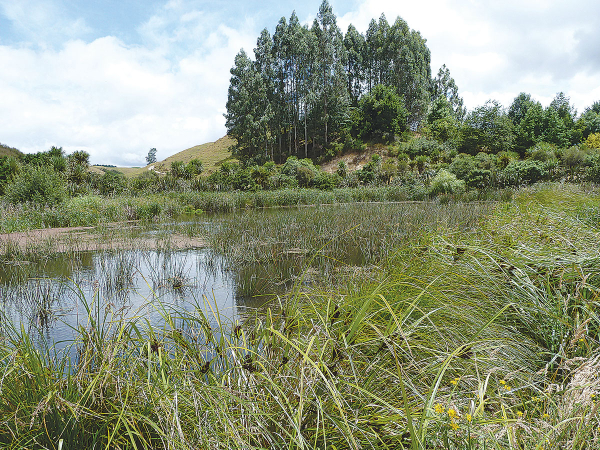
Projects eligible for funding include fencing for critical source areas, constructing and fencing wetlands, building detainment bunds, fencing gullies, planting erosion-control poles, installing bark chip bioreactors, and undertaking wetland restoration.
Through this fund, Environment Southland will cover 50% of project costs, up to a maximum of $5,000.
The Southland Native Planting Fund also covers 50% of project costs, up to $3,000. It supports native planting adjacent to waterways, in wetlands, for forest restoration, in critical source areas, and on retired farmland.
To be eligible for funding, projects must be discussed with an Environment Southland land sustainability officer before submitting an application.
All projects must be completed within the financial year, with invoices submitted by 15 June, 2026.
For more information, contact Environment Southland to discuss your projects with a land sustainability officer on 0800 76 88 45.
Environment Southland is calling on residents to be vigilant and check their properties after a new Old Man's Beard site was discovered near Dipton.

Southland farmers staring down a May deadline to submit freshwater farm plans under current regional plan rules have been given an 18-month reprieve by the Government.
Southland farmers are being encouraged to get ahead of the winter grazing season by attending a practical field day in Pukerau next week.
Environment Southland is welcoming this week’s decision by the Environmental Protection Authority (EPA) to approve the release of Blaptea elguetai, a leaf‑feeding beetle that will help control the highly invasive Chilean flame creeper.
The most successful catchment groups in NZ are those that have 'a source to sea' approach.


The Royal New Zealand College of General Practitioners (the College) and Hauora Taiwhenua Rural Health Network are calling for investment in a proposed new training pathway for rural GPs, warning that many rural practices are struggling to recruit while a large share of the existing workforce nears retirement.
Federated Farmers has called on Central Otago District Council (CODC) to drop or vote down a plan to truck sludge from Alexandra and Cromwell to farmland near Lauder, warning it would compound an "outrageous" situation created by a separate council's decision weeks earlier.
Synlait has swung to second-half profit as operations stabilise, but the dairy processor still posted a $75.4m annual loss.
LIC shareholders have elected a new North Island representative to the co-operative's Board, along with five representatives to its Shareholder Reference Group (SRG), following the company's Annual Meeting held in Invercargill.
Farmers across parts of Southland and South Otago are continuing to deal with difficult conditions after a prolonged run of wet weather, with pressure building around feed supply, stock management, pasture damage, farm infrastructure and everyday workloads.
Federated Farmers says it welcomes Labour's commitment to reviewing the Sharemilking Agreements Act, calling on other major parties to do the same.