Labour Vows to Change Tact on How to Handle Freshwater Rules
A Labour-led Government won’t be bringing back the controversial freshwater rules of 2020.
 increase font size
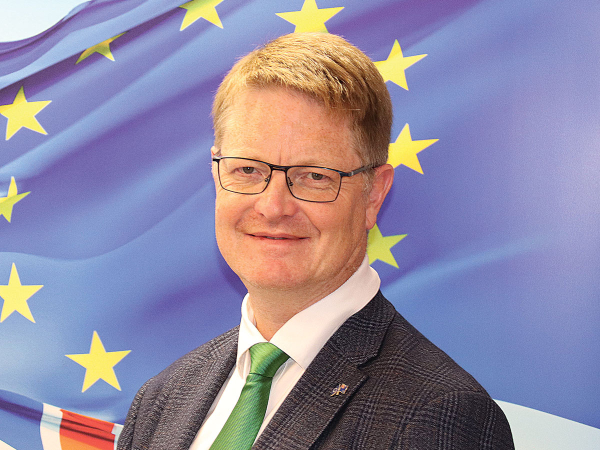 EU Ambassador Lawrence Meredith.
New Zealand and the European Union are closer than ever.
That's the word from the EU's Ambassador to NZ, Lawrence Meredith, referring to a comprehensive nationwide perceptions study done by the EU of relations between the two jurisdictions.
The report is timely in that it coincides with the second anniversary of the FTA between NZ and the bloc.
Meredith says the survey shows that there's strong support among New Zealanders for deeper engagement with Europe across trade, innovation, security and shared values - reflecting the growing momentum of the EU-NZ partnership.
"The EU-NZ relationship as one built on shared values, trust, and a long-standing partnership between like-minded partners," he told Dairy News.
The key findings in the survey show that 93% of NZ respondents view the EU as an important trading partner and that trade was identified as the most important aspect of the relationship, followed closely by innovation and science, security cooperation, and people-to-people links.
The report also noted respondents associated Europe strongly with culture, sustainability, quality of life and innovation.
The report also highlighted the fact that the EU ranked second only to the US as a perceived leader in international politics.
The findings come as cooperation between the EU and NZ continues to expand across multiple sectors.
Meredith says since the EU-NZ FTA came into effect, NZ exports to the EU have increased by more than NZ$3 billion, making it one of our fastest-growing export destinations.
He says research and innovation cooperation is also accelerating through Horizon Europe, the EU's flagship research and innovation programme with NZ becoming its first global partner.
While trade with the EU surges on, perhaps a little surprising is that just over a third of those surveyed were not actually aware of the FTA between the two jurisdictions.
That aside, it is clear that the overall political and trade relationships between the EU and NZ are stronger than ever and according to Meredith will continue to grow.
"At a time when countries are looking for trusted and reliable partners, the EU and New Zealand are building a modern partnership that delivers practical benefits across trade, research, innovation, climate action, security and people-to-people connections," he says.
Trade and Investment Minister Todd McClay says the New Zealand-European Union Free Trade Agreement (FTA) is delivering a major boost to the economy and supporting jobs nationwide.
"Because the FTA entered into force early, our exporters got an immediate head start with tariff cuts and better access into what is now our fastest growing major market," McClay says.
Exports to the EU hit $8.8 billion in the year to December 2025 - up 29% or nearly $1.9 billion. Two years ago, exports wrre $5.7 billion.
"On the agreement's second anniversary, Kiwi exporters have now chalked up an extra $3 billion in sales. This growth has significantly exceeded forecasts and expectations and shows what's possible when we back our exporters and open new doors.
"It means the world is choosing more of the high-quality food, fibre and products our farmers, growers and businesses are known for."
Some of the standout gains in the last year include butter exports up 121% and meat up 38%.
A Labour-led Government won’t be bringing back the controversial freshwater rules of 2020.

It was billed as a chance for all the political parties to woo the rural vote, but question marks hang over just how effective this was.
There's been widespread support from the primary sector for the Government's announcement on changes to freshwater farm plans that come under the Natural Environment Bill, which is now set to replace the existing RMA.
The country's second largest milk processor is warning against 'complacency' during a review of competition regulations in the dairy sector.
Agriculture Minister Todd McClay has admitted that a scheme bringing workers from Pacific nations to work on orchards has become too hard to navigate but says changes are coming.

Farmer-owned fertiliser company, Ballance Agri Nutrients is welcoming National’s plan to negotiate security agreements with key supplier countries to protect New Zealand-bound products from export restrictions and greater supply chain certainty.

Carrfields has announced the appointment of Stu Hall to the newly created role of chief operating officer, Carrfields Ltd, reflecting the continued growth of their agribusinesses and the need to ensure the company has the leadership capacity and support in place as it pursues the emerging opportunities ahead.
New Zealand's role is not to compete with Indian growers, according to NZ Apples and Pears.
The potato industry is celebrating the success of two rising stars - James Blair, the 2026 Young Grower of the Year and runner-up and innovation award winner, Amber Davy.
Twenty-eight emerging leaders from across the horticulture sector spent two days last month learning valuable skills and connecting with industry experts.
There are five entrants in this year’s Young Horticulturist of the Year, competing in a series of technical, practical, business and leadership challenges.