Milk Powder Prices Prop Up Farmgate Milk Price
Milk powder prices are keeping farmgate prices up, helping processors offset the dip in milk fat prices.




 increase font size
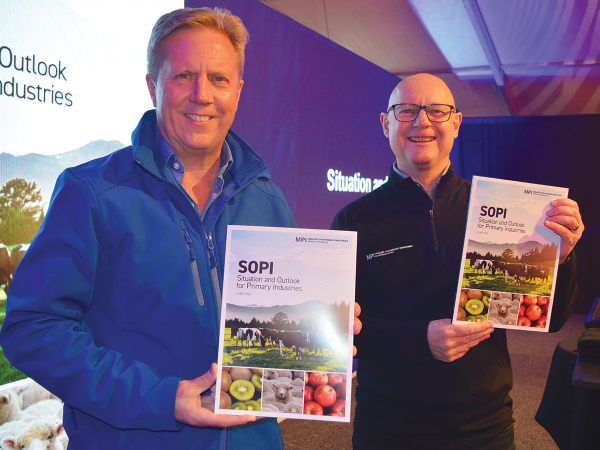 Agriculture Minister Todd McClay and MPI Director General, Ray Smith, at the SOPI report launch at Fieldays last week.
Farmers and growers are powering the economy with export revenue at record highs.
Two reports, released at National Fieldays last week, show record farmgate prices across dairy, red meat, and horticulture sectors.
The Situation and Outlook for Primary Industries (SOPI) report, from Ministry for Primary Industries (MPI), shows that export earnings will top $64 billion for year ending June 2026.
ANZ's Agri Focus for June notes that farmgate prices are at or very near record levels for beef, lamb, mutton and wool. Milk, venison, kiwifruit, and apples aren't too far behind.
It's all systems go for these sectors, the report says.
Agriculture Minister Todd McClay told Rural News that the record export earnings reflect "a real partnership" between farmers and the Government.
"It's become a real partnership and over the last few years we've simplified rules, taken the costly ones that don't work away and backing farmers to make smarter decisions for themselves," he says.
"They know they have to meet their environment and climate obligations and they're willing to do that."
McClay had a dig at the previous Labour government, claiming farmers were sick of "all of the unworking, costly rules that Labour had put in place".
He says there's also greater demand around the world for the high-quality food and fibre that New Zealand produces.
"And our trade deals are certainly helping."
Beef + Lamb NZ chair Kate Acland says sheep and beef farmers are having one of the best years ever and are feeling positive about the outlook.
"After several challenging seasons in 2023-24, we're having one of the best years we've ever had, there is a real sense of optimism on farm," Acland told Rural News.
"Stronger prices are giving farmers more confidence to plan ahead and reinvest in their farm businesses.
"They're also spending in their rural and regional communities, which is helping the New Zealand economy through a tough period. We know that when farmers do well, the rest of New Zealand does well.
"Demand from ov erseas markets remains strong for New Zealand red meat, with growth in North America continuing and pricing firm in other markets.
"That continued demand shows the confidence global customers have in New Zealand's red meat sector and the strong reputation we hold in premium markets.
"However, there remains a high degree of uncertainty, particularly around the US tariff situation and the ongoing Middle East conflict.
"Farmers will be keeping an eye on key input costs such as fuel, freight and fertiliser as a result of the disruption to the global supply chain.
"Every farmer knows that while revenue is improving, costs can move just as quickly."
ANZ agri economist Matt Dilly says that despite everything happening overseas, New Zealand's agriculture sector is doing incredibly well.
"Dairy prices have been strong for two seasons running, alongside great pasture conditions. The tail end of last season and the start of the new season look positive as well, despite robust milk production globally," says Dilly.
However, wine, forestry, and grains are conspicuously missing from the upbeat assessment.
Dilly says these sectors are still struggling to varying degrees with oversupply, low prices, and higher production costs.
McClay agrees that the arable sector is quite challenging now.
He says there is a range of reasons for that.
"That's why I've appointed Mike Butterick (as Associate Agriculture Minister) giving him specific responsibility of delegation to the arable sector so he can get stuck in and work very closely with them to start working out what some of the challenges are and support them more.
"Wine is also a bit challenged and some of that is oversupply of grapes because actually by value around the world, our wine industry is still doing very well."
Milk powder prices are keeping farmgate prices up, helping processors offset the dip in milk fat prices.
There's been widespread support from the primary sector for the Government's announcement on changes to freshwater farm plans that come under the Natural Environment Bill, which is now set to replace the existing RMA.
New Zealand's Emissions Trading Scheme (NZ ETS) encourages afforestation while not achieving climate goals, says a new report released by the Parliamentary Commissioner for the Environment, Simon Upton.
Beef+Lamb New Zealand and the Ag Emissions Centre have launched a new research project aimed at helping beef farmers reduce methane emissions without impacting productivity or profitability.
Conversions of sheep and beef farms to forestry have slowed, however new research from Beef + Lamb New Zealand (B+LNZ) suggests land of value for food production remains at risk.



Now in its fourth year, the 2026 Fencing Industry Awards, formed part of the proceedings of the FCANZ Conference, held in Nelson during August.
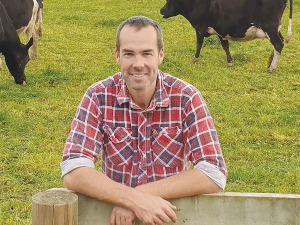
DairyNZ deputy chair Cameron Henderson has been re-appointed unopposed for another term.
OPINION: The stats speak for themselves.
Farms across the upper North Island are trialling different pasture mixes as part of a research programme that aims to build greater resilience into farming systems.
Election years are always a concerning time for farmers, according to DairyNZ chair Tracy Brown.
The Ballance Farm Environment Awards are coming to the West Coast of the South Island.


OPINION: The same mainstream media muppets that brought you Jacindamania in 2017 have been flat out pimping for the Opportunities…
OPINION: Your old mate reckons the atrocious way farmers in the UK are treated by their lords and masters in…