Southerly Winds Hit Taranaki Dairy Pasture Growth
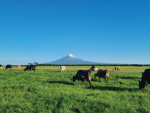
A spate of southerly winds bringing cold temperatures has presented challenges for Taranaki dairy farmers.
 increase font size
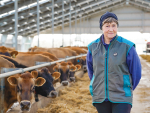
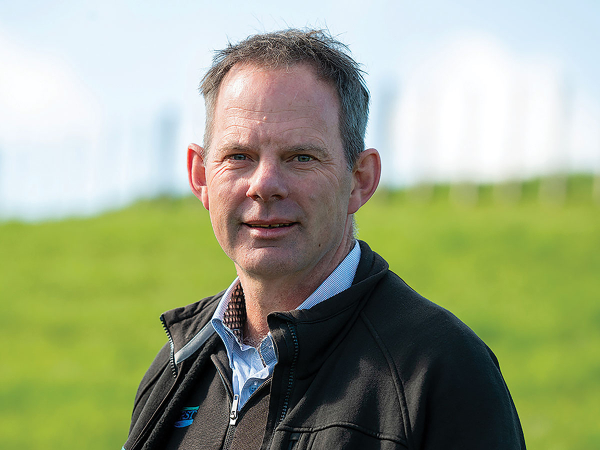 James Allen, AgFirst, is urging farmers to be more efficient with fuel and fertiliser.
As fuel and fertiliser prices rise and with uncertainty in the future, farmers are being urged to go over their budgets with a fine-tooth comb.
That's the advice from respected Waikato-based farm consultant, James Allen, AgFirst.
He says not only should they be doing some serious budgeting but also looking at ways they can be more efficient with fuel and fertiliser.
"With good prices there is a risk that people get a bit complacent, but I would be encouraging people to think about ways they can utilise their existing nutrient levels in their soils and to be really focused on and smart on using what they have got," he told Rural News.
Allen says one way of doing this is to increase the amount of soil testing on their farms and focus on individual paddocks rather than across big blocks.
He says understanding the precise fertility of the farm may take a bit more time, but it is probably money well spent.
"Keeping things simple and harvesting as much pasture as you can is important," he says.
In some areas of the central North Island it is noticeable that large areas of land have been planted in winter forage crops and Allen believes this is because some farms are recent dairy conversions and still need some development work.
He says cropping seems to work well in that region where there tends to be colder winters and getting a good yield from maize can be challenging at times.
"What this highlights is that there is a need for people to evaluate their farm systems going into the season ahead. What I mean by that is cropping can have an effective place in the farm system, but it does depend quite a bit on yield. And if you're not getting a good maize yield, maybe you are better to buy it in. And equally if you are not getting a good yield from the forage crop, don't grow it," he says.
Allen says the other issue in the mix is the cost of palm kernel.
He says now it's about $400 a tonne but believes it is more likely to go up in price rather than drop.
He also suspects that the cost of producing maize will rise as that crop relies on fuel and fertiliser.
He says a dairy farmer can grow quite a good maize crop quite effectively with a lower level of fertiliser than people generally apply on an efficient paddock.
"So, the key message is good budgeting and thinking more about how to get very efficient fertiliser use and nutrient management," he says.
A spate of southerly winds bringing cold temperatures has presented challenges for Taranaki dairy farmers.
Surprised, humbled and quite thrilled. That’s the reaction of James Allen, one of the founding partners and now chief executive of AgFirst, on being made a life member of the Institute of Rural Professionals.
OPINION: At Fieldays this year, one theme kept surfacing across the sector: global shocks are no longer something that happens “over there”. They are now translating quickly into local, farm-level impacts through increasingly complex and connected channels.
A warning to dairy farmers not to expect the same good conditions that they experienced last season, has been issued by a leading farm consultant.
Rural contractors are getting guidance on how to deal with recent rising fuel prices.



LIC shareholders have elected a new North Island representative to the co-operative's Board, along with five representatives to its Shareholder Reference Group (SRG), following the company's Annual Meeting held in Invercargill.
Farmers across parts of Southland and South Otago are continuing to deal with difficult conditions after a prolonged run of wet weather, with pressure building around feed supply, stock management, pasture damage, farm infrastructure and everyday workloads.
Federated Farmers says it welcomes Labour's commitment to reviewing the Sharemilking Agreements Act, calling on other major parties to do the same.
For Canterbury dairy farmers Sian Meijer and Rick Wobben, wearable technology has become one of their most valuable on-farm tools - helping manage 1850 cows across an expansive, high-performing dairy operation while improving efficiency, mating outcomes and day-to-day decision making.
Fonterra has unveiled its annual results for the 2026 financial year, posting $27 billion in revenue and close to $20 billion returned to New Zealand farmer owners and unit holders.
The first major update to the Dairy Cattle Code of Welfare in more than a decade has been released, marking what DairyNZ describes as an important step in ensuring animal welfare standards continue to evolve alongside scientific evidence and on-farm realities.