Ah Tatua, You've Done It Again!
Waikato milk processor Tatua has again declared a record milk payout to farmer shareholders, leaving other processors in the dust.
 increase font size
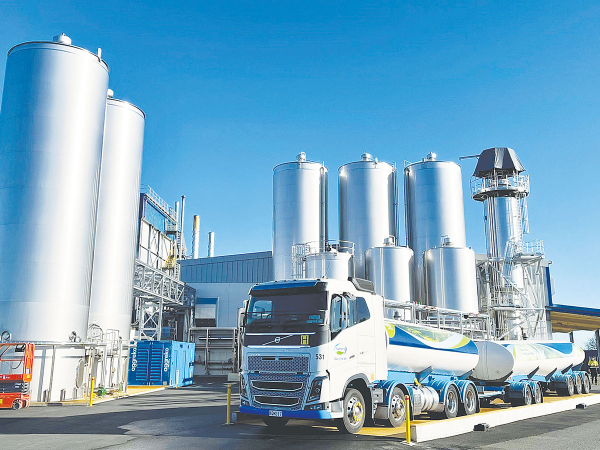 Fonterra has invested $40 million at its Tirau site to help concentrate whey permeate, making it more efficient to transport to its other sites to produce lactose.
Fonterra is eyeing an increase in lactose production.
The co-operative has just invested $40 million in a move to help concentrate whey permeate at its Tirau site to make it more efficient to transport to other sites to produce lactose.
It’s a move the co-operative says is a positive step forward, creating better value return than the ethanol produced previously at the Tirau site.
During the dairy season’s peak, the plant produces up to 2 million litres of milk each day.
According to Fonterra general manager Central North Island Tony Maclean, 2.5 million litres of ethanol is also potentially stored there, meaning the plant is designated as a major hazard facility.
Maclean says that when the Tirau plant was built, there were benefits to converting lactose into ethanol.
“When the plant was built, the benefit of generating ethanol was primarily… set up reduce the amount of lactose that went to a wastewater treatment plant,” he told Dairy News.
Maclean says that at that time, harvesting the lactose as ethanol was seen as better than sending it on to wastewater treatment ponds.
He says that now, however, lactose produces more earnings for the cooperative than ethanol.
“Ethanol has limited usage. I mean, they made industrial grade ethanol there which was made for things like solvents and sanitisers where lactose can be used in a whole raft of pharmaceutical applications.
“The profitability from lactose as a product was greater than ethanol was.”
Maclean says the investment also means a lot for the co-operative in terms of its sustainability goals.
“We have a massive energy production per year,” Maclean told Dairy News, adding that energy production totalled 15,000 megajoules per year.
He says the move away from ethanol production towards lactose production will see reductions in CO2, water usage, wastewater and general waste. “So, it’s some pretty impressive numbers around those reductions.”
Maclean says there’s great value for money in the move as well.
“If you look at spending our shareholders’ money on remediating an asset to be compliant, around making that redundant and investing money into a brand new asset, with a slightly different product mix… the savings from that as well as the ability to generate lactose, we have the ability to reduce energy, reduce carbon, reduce water, reduce wastewater and waste,” he says.
Waikato milk processor Tatua has again declared a record milk payout to farmer shareholders, leaving other processors in the dust.
Fonterra has unveiled its annual results for the 2026 financial year, posting $27 billion in revenue and close to $20 billion returned to New Zealand farmer owners and unit holders.
Fonterra Co-operative Group has confirmed the independently assessed candidates standing for election to its board in 2026.
Fonterra has revised its Farmgate Milk Price forecast for the 2026/27 season, lifting the midpoint and narrowing the range on the back of improving global dairy commodity prices.
Outgoing Fonterra Co-operative Council chair John Stevenson says that it has been a privilege to represent the co-op's farmer shareholders.

Mobile phone coverage and reliability are deteriorating in rural areas, and farming families are bearing the cost, according to a Federated Farmers survey.

HelloFresh New Zealand has launched a limited-edition Country Cookout Box of Southern-inspired meals, arriving as the 2026/27 rodeo season gets underway.
Beef + Lamb New Zealand Incorporated (BLNZ Inc) is marking 40 years of promoting red meat to New Zealand consumers, citing its taste, family meals and nutritional benefits.
Pāmu has welcomed Taranaki student Paige Burston as its newest First Foundation Scholar, supporting her journey towards a career in agriculture and animal science.
Farmer-owned fertiliser company, Ballance Agri Nutrients is welcoming National’s plan to negotiate security agreements with key supplier countries to protect New Zealand-bound products from export restrictions and greater supply chain certainty.
Carrfields has announced the appointment of Stu Hall to the newly created role of chief operating officer, Carrfields Ltd, reflecting the continued growth of their agribusinesses and the need to ensure the company has the leadership capacity and support in place as it pursues the emerging opportunities ahead.