Too Lenient
OPINION: Reckless action by Greenpeace in 2024 forced Fonterra to shut down a drying plant for four hours, costing the co-op about $300,000.
 increase font size

GREENPEACE ACTIVISTS hoping to put dairy farmers off palm kernel expeller (PKE) by chaining themselves to boats should think again.
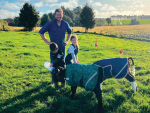
Reporoa farmer Alan Wills, a keen PKE user, has cancelled his membership of Greenpeace, rejecting its assertion that the New Zealand dairy industry is responsible for the growth of the palm oil industry in Asia.
Wills normally feeds 500kg of PKE or PKE blends annually to each cow. But in tough seasons when pasture is limited, each cow can get up to one tonne of PKE. He sees PKE as a by-product that the New Zealand dairy industry is re-cycling through our cows to help keep production going during through periods of poor pasture growth. That is a huge benefit to us and the wider economy, he says.
"Prior to it being used as a stock food, it was dumped on uninhabited coral atolls around Malaysia and Indonesia," he told Dairy News. "So it's organic and we make good use of the product."
Wills rejects Greenpeace's claim that New Zealand dairy farmers are driving palm oil industry in Asia. Dairy farmers respect the environment and our use of the by-product is not the driver of any deforestation, he says.
"My wife is a greenie and there's not much that doesn't get recycled here," he says. But Greenpeace is taking its protests too far, says Wills. "We cancelled our Greenpeace membership when they started chaining themselves to ships."
Wills has two farms: a home farm running 500 cows on 182ha and 300 cows on a 105ha adjacent property.
He has used PKE for seven years. Cows on 300-day lactation are fed PKE in spring if pasture growth is poor and again through summer.
Some maize is also used in autumn, with PKE to boost starch levels.
Wills has no animal health issues using PKE. He rejects biosecurity concerns about the feed. "We have well-trained people protecting our borders and I trust what they allow in is safe."
Wills buys PKE from J Swap, Matamata. "They are well organised with a big fleet of trucks and generally get to us within 48 hours."
But he admits 2008-09 was a learning curve for the industry. "It was a one-off event, the product was new and there were lessons learnt by all players."
A drought followed by a reduced payout, triggered by the global financial crisis, forced some farmers to walk away from PKE and maize supply agreements which had them paying more than the spot price. The drought also spiked demand for PKE and companies were struggling to meet demand.
"It was a difficult time for everyone. They were struggling to supply those of us on contracts. As we went into the drought we had a profile of using nearly a unit load a week but that became difficult for them to maintain as the demand pressure came on. But we have worked through that and the situation is a lot more stable now and working well."
Wills also sees PKE as part of sustainable farming. He's not a big fertiliser user.
PKE becomes part of the nutrient management mix via effluent and cows excreting on paddocks.
OPINION: Reckless action by Greenpeace in 2024 forced Fonterra to shut down a drying plant for four hours, costing the co-op about $300,000.

A day after selling its consumer businesses, Fonterra has settled a civil claim, filed by Greenpeace, out of court.
OPINION: Governments all over the world are dealing with the fuel crisis.
OPINION: Dark suited spin doctors exist to, well, spin, and the nice cuddly progressive types at Greenpeace Aotearoa practice this dark art with the same cynicism as your average corporate giant.
OPINION: In recent weeks beaches in Auckland, Wellington and Christchurch have been unsafe to swim in because of recent heavy rain triggering wastewater overflows throughout the region.

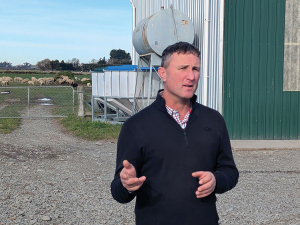
Improving health and safety is about incremental gain rather than a sudden decision, says Leeston farmer and Federated Farmers health and safety spokesman David Birkett.
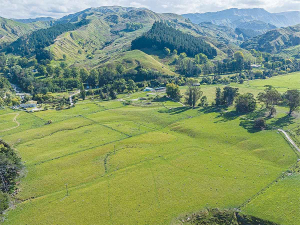
OPINION: Alistair Carmichael raises some interesting questions about striking a balance between profitability in farming and preserving the character of rural communities.
Ploughing champions Mark Dillon and Malcolm Taylor earned the right to represent the country at the World Ploughing Championships in Osijek, Croatia, on 5 and 6 September, after winning their titles at the New Zealand Ploughing Championships in Middlemarch in 2025.
The man appointed to lead Gallagher's global Animal Management business through the next stage of growth believes the wearables boom is here.
Horowhenua organic dairy farmers Ange and Wayne Moxham have taken their business to a new level.
Federated Farmers' new vice president Sandra Faulkner says the issue of adverse events emergency management and infrastructure needs to be taken out of the three-year political cycle.