
Federated Farmers Welcomes ACT’s New Farming Policies
Federated Farmers has welcomed new rural policies released by ACT, saying they align closely with its own election priorities.
 increase font size
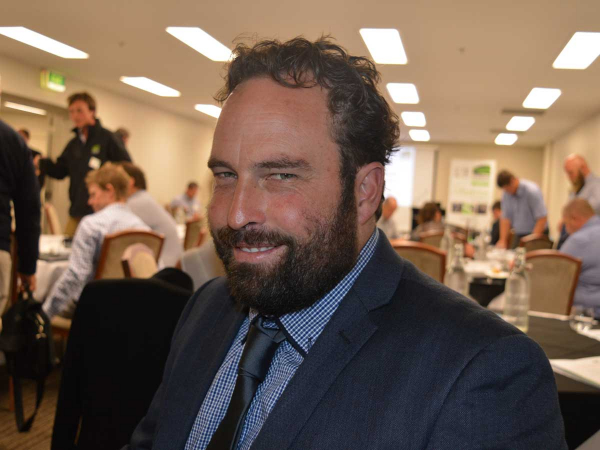 Richard McIntyre.
Federated Farmers sharemilkers’ section chairman Richard McIntyre says not knowing whether the country or parts of it will still be in lockdown on Gypsy Day is adding to uncertainty in the industry.
McIntyre says this is making it hard for those sharemilkers, contract milkers and staff moving to new properties on June 1, the start of the new milking season.
Typically there are about 1200 movements on June 1 but McIntyre accepts that the situation is changing from day to day and that uncertainty is what people will have to deal with.
“I have been getting a lot of calls from people concerned about how this may play out,” he says.
McIntyre says moving farms is just one of the issues. He says a lot of other matters such as relating to the end of contracts have to be worked though and people are concerned as to how this might happen in a Covid-19 environment. Other issues he says are things such as agreements on cow condition and pasture covers which have to be signed off as part of Gypsy day.
“Then there is meeting the strict health and safety requirements laid down the Ministry of Health. We at Feds have been working through these issues with MPI, FMG, and DairyNZ to find a solution.
“The problem is that with so much uncertainty we have be ready with optional solutions to deal with the various scenarios that might occur,” he says.
Coping with COVID-19
Sharemilker Richard McIntyre and his wife and two children run 450 cows on a 190ha block, with a 180ha run-off block in the Horowhenua, Lower North Island.
He says to some degree nothing has changed with the arrival of COVID-19 because the cows have to be fed and milked.
“But we also have make sure that our staff fully understand the situation the country is in and keep in their respective bubbles and obey the strict rules on social distancing. We developed a plan for this and that was important,” he says.
McIntyre says they have put on hold several projects on the farm such as fencing a wetland and putting in a water reticulation system because these are not deemed essential under the Level 4 lockdown protocols.
One real problem for McIntyre is around how to deal with any significant mechanical breakdowns on the farm.
He says for example accessing a part for a piece of essential equipment that has broken down means he’s got to ring the person at a store and get them to come in specially and he’s then got to pick this up.
“If we had an engineering issue and had to get an engineer out it would be a special callout for them, whereas previously it would be part of their normal business. It’s also a case of what is essential in terms of a breakdown. In some ways it’s very similar to trying to do business over Christmas,” he says.
As well as trying to help others out McIntyre and wife Emma are also having to spend more time with their children.
“We’re enjoying having the kids at home,” he says.
Federated Farmers has welcomed new rural policies released by ACT, saying they align closely with its own election priorities.
Federated Farmers is backing Feilding High School’s call to keep Agriculture and Horticultural Science as a standalone subject in Year 11.
National’s pledge to introduce 19 new national standards shows the party is serious about getting Wellington out of farming, Federated Farmers says.
Mobile phone coverage and reliability are deteriorating in rural areas, and farming families are bearing the cost, according to a Federated Farmers survey.
Central Otago District Council (CODC) has voted against a plan to spread treated sewage sludge from Cromwell and Alexandra on farmland near Lauder, a decision Federated Farmers says reflects strong opposition from rural residents.


Federated Farmers has welcomed new rural policies released by ACT, saying they align closely with its own election priorities.

Rural Contractors NZ says proposed changes to land transport rules for agricultural vehicles are a welcome response by the Government to out of date regulations which have seen members hit with huge fines.
Alliance is calling for final applications for its 2027 Graduate Programme, with applications closing on Sunday 25 October.
Decades piloting planes has ensured vet and farmer David Hayes is focused on safety. So, after a serious accident while welding on farm, he is sharing his experience so others can learn from it.
Canterbury milk processor, Synlait Milk has confirmed Leon Fung as its chief executive officer.
OPINION: Making it easier to collect rainwater and use it to grow crops and livestock is a no brainer.