
Federated Farmers Welcomes ACT’s New Farming Policies
Federated Farmers has welcomed new rural policies released by ACT, saying they align closely with its own election priorities.




 increase font size
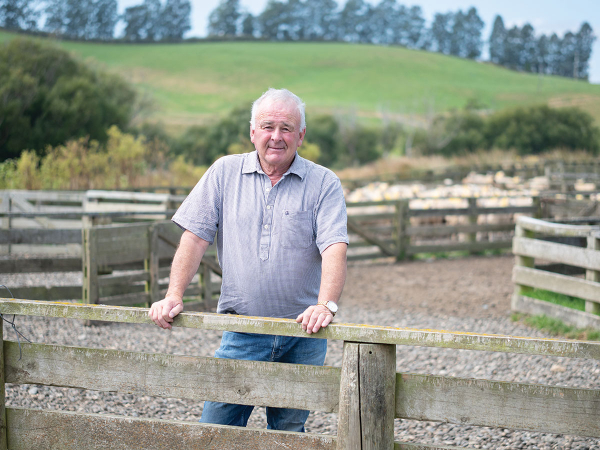 Environment Southland chair Nicol Horrell
OPINION: Recent media commentary from Southland Federated Farmers has raised concerns among our rural communities, particularly around Environment Southland’s approach to winter grazing inspections and nitrogen reporting. But let’s be clear, much of what’s been said simply doesn’t reflect reality.
At the heart of the issue is a claim that farmers are being invoiced for inspections even when no problems are found. That’s not just misleading, it’s wrong. Environment Southland only issues cost recovery invoices when there’s a confirmed breach of the rules. This isn’t about penalising farmers for doing the right thing, it’s about ensuring that the cost of investigating and enforcing noncompliance doesn’t fall unfairly on all ratepayers.
This winter alone, 76 intensive winter grazing sites were flagged for follow-up. Of those, only 21 resulted in cost recovery invoices and each tied directly to confirmed noncompliance. The rest have had an array of approaches from advisory letters, ongoing investigations, to no further action being needed.
There is also still 26 investigations to complete.
Our enforcement approach has remained the same for several years and is education-first, if appropriate.
Officers look at compliance history, engagement with Environment Southland staff and environmental effects of any identified noncompliance, and case-by-case, determine next steps.
Let’s not lose sight of the bigger picture. Farmers who hold winter grazing consents receive one inspection per year, and they pay based on actual costs (time/ kilometres). They then receive an invoice for annual charges, the same as other consent holders. That’s standard practice, not targeted enforcement.
There’s also been confusion around communication. Contrary to what’s been implied, farmers are always contacted if non-compliance is found. Staff discuss the inspection outcome directly, including any cost recovery. The invoice itself includes information about potential future penalties, not because they’re being applied now, but because transparency matters. Farmers deserve to know what’s at stake if issues persist.
On the nitrogen reporting front, Southland farmers have shown strong engagement with this national requirement. With 85% fully compliant and six farmers exceeding limits, the region is clearly committed to responsible nutrient management. Where limits were breached, Environment Southland took an education-first approach, working with farmers to improve understanding, not rushing to enforcement.
Yes, there were 20 farmers who received non-supply fees after repeated reminders. But even then, many responded quickly, and those who’ve now submitted their data may be eligible for remittance. Again, this isn’t about revenue, it’s about fairness and accountability.
In a time when trust and collaboration are more important than ever, it’s disappointing to see misinformation muddy the waters. Southland farmers deserve facts, not fear.
non-supply fees have been issued. When balanced against the number of farmers in the region, it seems clear that this is not the overzealous penalisation that is being painted.
We’ve seen a lot of positive change in winter grazing practices in the region in recent years. This is reflected in what Environment Southland staff are seeing on the ground, with most farmers doing the right thing.
Our staff are here to help farmers navigate their environmental responsibilities. We want to work with farmers to ensure that the best outcomes are achieved through the regulatory framework.
Nicol Horrell is chairman of Environment Southland
Federated Farmers has welcomed new rural policies released by ACT, saying they align closely with its own election priorities.

Federated Farmers is backing Feilding High School’s call to keep Agriculture and Horticultural Science as a standalone subject in Year 11.
National’s pledge to introduce 19 new national standards shows the party is serious about getting Wellington out of farming, Federated Farmers says.
Mobile phone coverage and reliability are deteriorating in rural areas, and farming families are bearing the cost, according to a Federated Farmers survey.
Central Otago District Council (CODC) has voted against a plan to spread treated sewage sludge from Cromwell and Alexandra on farmland near Lauder, a decision Federated Farmers says reflects strong opposition from rural residents.


Federated Farmers has welcomed new rural policies released by ACT, saying they align closely with its own election priorities.

Rural Contractors NZ says proposed changes to land transport rules for agricultural vehicles are a welcome response by the Government to out of date regulations which have seen members hit with huge fines.
Alliance is calling for final applications for its 2027 Graduate Programme, with applications closing on Sunday 25 October.
Decades piloting planes has ensured vet and farmer David Hayes is focused on safety. So, after a serious accident while welding on farm, he is sharing his experience so others can learn from it.
Canterbury milk processor, Synlait Milk has confirmed Leon Fung as its chief executive officer.
OPINION: Making it easier to collect rainwater and use it to grow crops and livestock is a no brainer.




OPINION: It seems Canterbury processor Synlait is still in the doldrums.
OPINION: Get offside with New Zealand First leader Winston Peters at your own peril.




