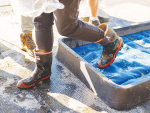
Biosecurity Ranked Top Priority In KPMG Agribusiness Agenda 2026
According to new research, industry leaders have ranked world-class biodiversity as the number one priority for the 16th year in a row.
 increase font size
 KPMG’s head of global agri, Ian Proudfoot.
New Zealand dairy farmers need to have a greater passion for the milk they produce beyond the farmgate, according to KPMG’s head of global agri, Ian Proudfoot.
Speaking at a PGP seminar in Wellington last week, Proudfoot ranged widely over what NZ needs to do to establish a successful and profitable niche in global markets.
He noted that no country can ever be famous for its commodity products.
“You can be a well respected commodity producer, but fame comes from being the Louis Vuitton or the Rolex -- the brands that stand out,” he says. “We are not the Rolex or Louis Vuitton of the food industry – the exception may be Zespri. We are world famous for rugby, not our food.”
NZ must inject more passion and emotion into its food sector, including getting farmers involved; telling the story about its food and making the link between farmers and consumers is a critical part of this process.
“There is an interesting comparison between NZ and French dairy farmers. They are largely inefficient, subsidised, probably quite grumpy therefore often staging large protests to the government about things that affect them. But they are passionate about the milk they produce, the cheese it becomes and the experience it delivers and as a consequence they have world famous cheeses.
“Our dairy farmers are highly efficient and passionate about their farms. But their passion ends once the milk is in the tank and it becomes Fonterra’s or Westland’s or Synlait’s problems,” he says.
Proudfoot says as a consequence NZ has no connection between farmers and consumers and this has to change.
Looking to the future, Proudfoot says NZ has to look at consumer and lifestyle trends and find ways to meet those. For example, he says with people commuting long distances to work, more will eat on trains, so providing high quality nutritious on-the-go convenience food is a need.
Three key consumer groups need to be targeted: millennials, the aged and urban consumers.
“Particularly we need to look at millennial consumers who are now just coming to an age when they are having kids and starting to unlock a whole new range of expectations.
“Most older people are suffering from some chronic health disorder but have the money to buy food to help them.
“Then there is the urban consumer. NZ needs to invest so that it can better align itself with these consumers,” he says.
Proudfoot says there is an urgent need in NZ to close the gap between rural and urban societies. This is the key to developing an NZ story embraced by everyone.
“Sadly, there is no pan leadership in the primary sector. We need a vison and an aspirational goal similar to what the Irish have with their Origen Green,” he says.
According to new research, industry leaders have ranked world-class biodiversity as the number one priority for the 16th year in a row.

Biosecurity remains the top priority for agribusiness leaders, according to KPMG’s 2025 Agribusiness Agenda released last week.
Biosecurity remains the top priority for agribusiness leaders, according to KPMG's 2025 Agribusiness Agenda released last week.
OPINION: In the same way that even a stopped clock is right twice a day, economists sometimes get it right.
OPINION: Noted economist and self-promoter Cameron Bagrie took one look at KPMG's recently released Financial Institutions Performance Survey on banks and zeroes in one key number that suggests banks are so risk averse in this country that they are probably stifling growth and innovation.


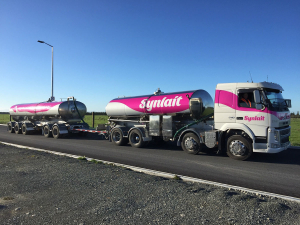
Synlait has swung to second-half profit as operations stabilise, but the dairy processor still posted a $75.4m annual loss.
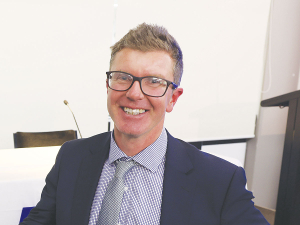
LIC shareholders have elected a new North Island representative to the co-operative's Board, along with five representatives to its Shareholder Reference Group (SRG), following the company's Annual Meeting held in Invercargill.
Farmers across parts of Southland and South Otago are continuing to deal with difficult conditions after a prolonged run of wet weather, with pressure building around feed supply, stock management, pasture damage, farm infrastructure and everyday workloads.
Federated Farmers says it welcomes Labour's commitment to reviewing the Sharemilking Agreements Act, calling on other major parties to do the same.
For Canterbury dairy farmers Sian Meijer and Rick Wobben, wearable technology has become one of their most valuable on-farm tools - helping manage 1850 cows across an expansive, high-performing dairy operation while improving efficiency, mating outcomes and day-to-day decision making.
Fonterra has unveiled its annual results for the 2026 financial year, posting $27 billion in revenue and close to $20 billion returned to New Zealand farmer owners and unit holders.