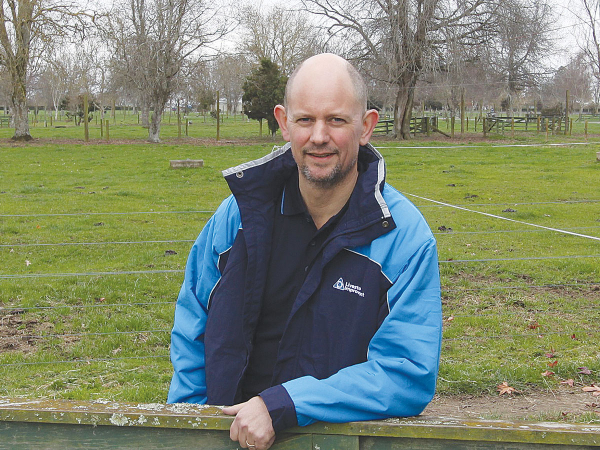
Departing LIC chief executive Wayne McNee says the farmer co-operative is in a great shape.
Speaking to Dairy News after taking part in his last annual general meeting for LIC shareholders this month, McNee says the company has a great bunch of people, passionate about serving the dairy sector.
"It is and will always remain a very important part of the New Zealand dairy industry," he says.
"LIC is a great company, the DNA of the New Zealand dairy industry."
McNee joined LIC after his role as the first Director General of the Ministry for Primary Industries (MPI).
He led the merger of the Ministry of Agriculture and Forestry, Ministry of Fisheries and the New Zealand Food Safety Authority.
"I wanted to move to the private sector after 18 years in the state sector.
"I wanted to work in the dairy industry as in my view it is the engine room of the New Zealand economy - it was then, it is now, and it will be for many years to come.
"While other sectors come and go, the dairy industry leads the way."
McNee is proud of the contribution he has made to LIC and the contribution the co-op makes to the New Zealand dairy industry.
"LIC has transformed over the last 10 years into a modern, progressive cooperative."
He lists the ongoing investment LIC makes into R&D and the benefits that brings the sector - over 6% of revenue, the highest percentage of any established company in the New Zealand food and fibre sectors. "Being a co-operative helps LIC have a long term focus - investing in science, which may not pay back for a decade, or may never even pay back - like our research into genomics, low methane emitting cows, and heat tolerant cows."
McNee says LIC has also invested in its people, with a significant investment in leadership development and skills training across LIC.
"I leave LIC with a strong balance sheet and a company in great shape."
McNee says he loved working with farmers, many of whom are straight shooters.
"Farmers don't hold back: they tell you as they see it," he says. "When we had software issues, they made their views known and I appreciate and valued their feedback."
He also thanked LIC directors who he has worked with over the years, especially chairman Murray King who led the board during McNee's tenure.
"We haven't always agreed on everything, but that is as it should be. The directors are appointed by the shareholders to set strategy, and management's job is to deliver that strategy and to be held to account for that delivery."
McNee insists that he's not retiring. After taking a three-month break, mostly looking after his two young daughters as his wife is a full-time worker, McNee says he will look at new opportunities.