What Would Synlait Be Worth to Fonterra or a2 Milk?
Speculation of a possible joint move by Fonterra and a2 Milk to buy Synlait raises a much bigger strategic question, says agribusiness expert Dr Nic Lees.
 increase font size
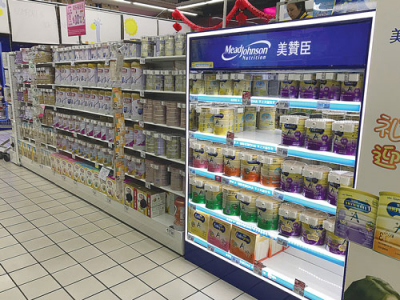 Keith Woodford says NZ infant formla manufacturers would need to change the way they make the product for China.
New Zealand's dairy farmer leaders have been told that while global demand for milk is great, there is no future without China.
Retired Lincoln University professor Keith Woodford told the Federated Farmers dairy conference that China is where “all the markets and opportunities are”.
“Europe and the US don’t need us, Africa can’t pay for it, so it has to be Asia and that’s where all the growth is occurring,” he says.
Woodford, who has visited China since 1973, says NZ continues to lack understanding of the China market.
“We have to work with China – spend more time in China understanding how the markets work and not repeating the big mistakes we have made there over the last 10 years.”
He also pointed out that NZ’s spring calving and grass-fed system work well for long-life commodities only, not for value-added products, including infant formula.
Woodford points out that infant formula earnings in China are greater than for whole milk powder but NZ remains a small player with Synlait and Danone doing well. Fonterra has failed to make a dent in China’s infant formula market which is dominated by European processors.
He says NZ manufacturers marketing infant formula state on the cans the manufacturing and use-by dates; this may need to change.
“We talk about milk being a 48-hour asset, then it becomes a liability,” he says.
“What’s the first thing done when your milk reaches the factory? It all gets dried and goes into a storehouse; six months later when things are quieter in winter, the first thing they do is add water back again.
“We won’t be able to do that for too long; the Chinese are onto that and the only reason they are not moving right now is because they manufacture that way as well.”
Woodford says infant formula manufacturing would need to become a one-line system; the manufacturing date for infant formula will be the date milk came to the factory.
He says the industry should start thinking about how it would manufacture for such markets.
“We are the only country in the world to have this calving system; let’s start thinking about other options.”
Speculation of a possible joint move by Fonterra and a2 Milk to buy Synlait raises a much bigger strategic question, says agribusiness expert Dr Nic Lees.

China remains New Zealand’s biggest market, taking $23 billion of our exports, but it’s no longer a commodity story, says Prime Minister Christopher Luxon.
Fonterra is strengthening its foodservice presence in China with the launch of a new cream for professional bakeries at Bakery China 2026 in Shanghai.
OPINION: What does the birth rate in China have to do with stock trading? Just ask a2 Milk Company.
OPINION: Media reports say global recalls tied to cereulide toxin contamination in milk-based nutrition brands could inflict combined financial losses exceeding $1 billion.


Red meat farmers are welcoming Labour’s plan to review the Emissions Trading Scheme and not to campaign on pricing agricultural emissions.
Where any worker in the kiwifruit industry is mistreated, we expect the authorities to take action.
Mid Canterbury Federated Farmers arable chair, Bevan Lill, said Beef + Lamb NZ data indicated that for the last six years, the average arable return on investment was about 0.8% while inflation ran about 4% - so the average arable farm was going backwards at about 3% a year.
Seed and grain companies share the concerns of arable farmers about the viability of their sector, says Seed and Grain New Zealand chief executive Dr Sarah Clark.
The New Zealand Institute of Forestry (NZIF) says unnecessary changes to New Zealand’s Emissions Trading Scheme (NZ ETS) will seriously erode investor confidence and result in significant reductions in forest planting rates.
For the first time in a quarter of a century, Federated Farmers has something positive to say about the Labour Party’s climate change policy leading into a general election.