DCANZ Urges Next Government to Back Dairy Export Growth
Dairy processors are ready to further boost New Zealand’s export earnings but want the incoming government to match their ambition with good policy.
 increase font size
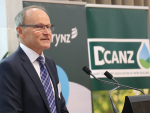
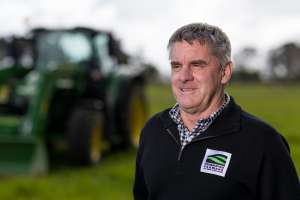
 DCANZ chair Guy Roper
'Common sense' cuts to government red tape will make it easier for New Zealand to deliver safe food to more markets.
This from the Minister for Food Safety Andrew Hoggard who says the present system whereby NZ exporters of some products - especially dairy - need to go through a series of bureaucratic hoops to meet certain food labelling and other standards.
Now, so long as a product meets the standards of the country it is being exported to, companies won't be required to get an exemption to export from MPI. Hoggard says previously exemptions had to be applied for product by product - a system he describes as onerous and one that drove up costs, created delays, and sometimes meant missed opportunities.
"The dairy sector, for example, has pointed out that composition requirements for dairy products vary significantly between countries, as their citizens often have different diets and get their nutrition in different ways. The uncertainty and paperwork and compliance costs; give exporters more certainty, and allow them to manage their own compliance with overseas markets," he says.
Hoggard says exporters have been clear that the old system held back trade and innovation but now they have a streamlined approach that makes exporting easier and more efficient.
The chair of the Dairy Companies Association of New Zealand (DCANZ) Guy Roper believes that exporters could have missed out on millions of dollars in export earnings over recent years because of the requirement.
He says the change will make it easier for companies to export new, high-value, and innovative dairy products. And adds this is great news for the NZ economy at a time when every export dollar from every market matters.
"DCANZ is not aware of any other country requiring its dairy exporters to obtain gazetted exemptions from domestic compositional standards when they are not appropriate for the export market," he told Dairy News.
"These applications have often taken months to process, slowing the time to market for new products and have put our exporters at a disadvantage to their overseas competitors," he says.
Roper says a good example of this is that Europe has set higher ranges for vitamin D in formulated foods than New Zealand does, reflecting that our northern hemisphere counterparts receive less vitamin D from other sources, such as sunlight. But he says NZ's requirements for selenium levels in formulated food are higher than other countries, reflecting the low levels we have in our soil and therefore in other food sources.
"Dairy exporters have been seeking this change for some years and are pleased the Government has removed this unnecessary and costly second-guessing of other countries' regulatory competence," he says.
Roper says having a streamlined and less duplicative regulatory approach around this is exactly the type of red tape reduction needed to support export growth.
Dairy Goat Support
The dairy goat industry has also welcomed the changes, with Alastair Hulbert, CEO of the Waikato-based, farmer-owned dairy goat manufacturing business saying it’s come at a time when his business is progressing a new five-year growth strategy.
Hulbert says the removal of the time-intensive requirements is great news for the dairy goat industry and supports their strategy to grow infant formula sales into new and existing international markets.
“It allows us to get new product to market faster while maintaining high food safety standards, without the need to constantly seek exemptions under what was a self-imposed barrier to NZ export growth,” he says.
Hulbert says the change will also accelerate his company’s strategy to increase utilisation of their manufacturing facility and allow it to innovate for the business as well as those it manufactures on behalf of.
Dairy processors are ready to further boost New Zealand’s export earnings but want the incoming government to match their ambition with good policy.
OPINION: It really is getting harder to lampoon government bureaucrats when they do such a good job of it themselves.
Anyone in the primary sector will know about the clowns covering the countryside in the red tape we all have to wade through.
Spare a thought then for media outfit Stuff who were threatened with fines up to $200,000 by a snivelling civil servant from the MoH for illustrating a quiz question with a photo of part of the cover of a 45-year-old copy Playboy.
As Stuff notes, “It wasn’t the Playboy cover which caused offence. No, it was the back page which… featured an advert for a cigarette brand”.
As Regulations Minister David Seymour notes, “The real scandal here is, well, no wonder we’ve got problems in healthcare when they’re doing the Stuff quiz during work time.”
OPINION: As negotiations advance on the India-New Zealand FTA, it’s important to remember the joint commitment made by Indian Prime Minister Narendra Modi and New Zealand Prime Minister Christopher Luxon at the beginning of this process in March: for a balanced, ambitious, comprehensive, and mutually beneficial agreement.
The dairy sector is hopeful of being part of a free trade deal being hammered out between New Zealand and India.
A former Fonterra executive is the new chair of the Dairy Companies Association of New Zealand (DCANZ).


Worst election result imaginable for New Zealand and not good for business confidence.

Associate Agriculture Minister, Mike Butterick has lost his Wairarapa seat in the final count released today.
Women across the dairy sector have an opportunity to invest in their leadership, education and professional development, thanks to a scholarship fund.
Three of New Zealand's leading primary sector organisations have joined forces to propose a new Food and Fibre Private Training Establishment (PTE).
OPINION: The World Dairy Summit, held in Auckland last week, delivered a poignant message – when it comes to global trade, the old order has passed away.
Deer Industry New Zealand (DINZ) has welcomed Government co-investment in a new $10 million programme aimed at increasing the value of New Zealand farmed venison, velvet and co-products and improving returns to deer farmers.