Fonterra Names Four Independently Assessed Director Candidates
Fonterra Co-operative Group has confirmed the independently assessed candidates standing for election to its board in 2026.
 increase font size
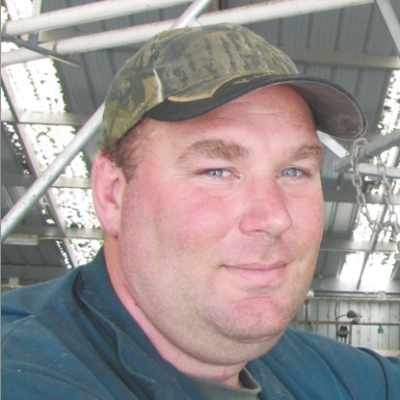 Federated Farmers Dairy chairman Andrew Hoggard
FOR THE first time in the cooperative’s history, Fonterra could be forced to clawback payout as dairy markets continue to slide.
The cooperative’s board meets today (December 9) and a cut to the $5.30/kgMS payout forecast was widely expected as Dairy News went to press.
Federated Farmers Dairy chairman Andrew Hoggard fears if it cuts to below $5/kgMS it will see the cooperative forced to clawback some of the advance payments it made in the early part of the season.
“Westland had to do it a few seasons ago and it wasn’t very nice for a lot of their shareholders,” he noted.
“The issue is we’ve all been paid $5/kgMS for the milk we produced in June, July and August. There would only have been a little bit of milk in June and July but for August there would have been some reasonable amounts.”
September’s advance payment plus capacity adjustment would also have been up there, so if the forecast falls into the $4 range, as all the banks are predicting, that money will have to be reclaimed too, he warns.
“The cashflow’s probably all right just now: we’ve just had the last of the money from last season. The impact’s going to come in the autumn, winter and spring next year. The red ink will be like blood on the balance sheet.”
Hoggard was speaking in the wake of last week’s 7.1% fall in whole milk powder (WMP) prices on Global Dairy Trade (GDT).
He was “pretty disappointed” to see New Zealand’s main product down by so much, but found a silver lining in butter and cheddar’s 7.3% and 5.2% rises respectively.
“And the forward contracts for whole milk powder showed a lift too, to US$2780/t, so that’s a small positive.”
However, it was still well short of Fonterra chief executive Theo Spiering’s annual meeting indication that WMP needs to be averaging US$3500/t by March if the $5.30/kgMS milk price forecast was to be achieved.
WMP is over 60% of the offering on GDT, and last week it was all from New Zealand. Skim milk powder is the next largest offering, at about 14% of the tonnage, but that includes Indian and European product.
Hoggard says if farmers haven’t already done so, they should be revising their budgets and talking to their accountants and bank managers.
“We’ve just got to cut costs, focus on what’s absolutely required and what’s not, and if you can’t cut anymore, we’ll have to borrow.”
Most regions are having a reasonable season, with the exception of Southland where rain and more rain is making for a “horrible” season with reports of production back 5-6%.
Global supply statistics tell the full story
DCANZ statistics released the day before the GDT event showed New Zealand’s October milk production up 5.4% on last year, following a 5.7% increase in September.
Across the ditch, Dairy Australia reported 6% growth in October, following a 4.2% lift in September, and on the other side of the Pacific the USDA said October production was up 3.8% year on year and up 0.3% compared to September. The US national dairy herd continues to grow and is now the largest it has been since August 2009 at 9.28m cows.
Meanwhile in Europe, UK industry body Dairy Co reports supply for the two weeks ending November 22 up 4.7% compared to the previous year, and Europe-wide supply for September was up 4.6%.
Farmgate prices in Europe and the US are falling but much more slowly than in New Zealand and until recently, low grain prices had maintained margins over feed costs for most producers. Since October grains markets have staged a modest recovery while milk prices continue to fall, suggesting margin pressure will start to be felt. However, that will have come too late for farmers mating extra cows and heifers in anticipation of Europe’s abolition of production quota which takes effect April 1.
Fonterra Co-operative Group has confirmed the independently assessed candidates standing for election to its board in 2026.

Fonterra has revised its Farmgate Milk Price forecast for the 2026/27 season, lifting the midpoint and narrowing the range on the back of improving global dairy commodity prices.
It was billed as a chance for all the political parties to woo the rural vote, but question marks hang over just how effective this was.
Mid Canterbury Federated Farmers arable chair, Bevan Lill, said Beef + Lamb NZ data indicated that for the last six years, the average arable return on investment was about 0.8% while inflation ran about 4% - so the average arable farm was going backwards at about 3% a year.
For the first time in a quarter of a century, Federated Farmers has something positive to say about the Labour Party’s climate change policy leading into a general election.


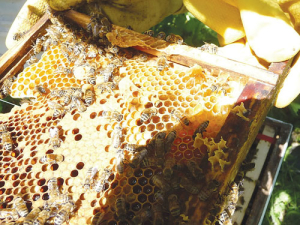
New Plymouth-based Manuka honey exporter Egmont Honey has completed its acquisition of Taihape beekeeping business Tweeddale's Honey, with settlement finalised on Friday, 18 September.
Westpac NZ is calling on farmers and growers to start preparing now for the possibility of a dry summer, as likely El Niño conditions raise the risk of drought across parts of the country.
Fonterra Co-operative Group has confirmed the independently assessed candidates standing for election to its board in 2026.
Fonterra has revised its Farmgate Milk Price forecast for the 2026/27 season, lifting the midpoint and narrowing the range on the back of improving global dairy commodity prices.
New Zealand's citrus growers were challenged to build their future on the value embedded in their fruit rather than the volume they produce, at Citrus New Zealand's annual gathering in Gisborne on 17 September.
Leading John Deere technicians and apprentices from New Zealand and Australians were recognised at the recent sixth annual JD Technician of the Year Awards, held in Brisbane.