Southerly Winds Hit Taranaki Dairy Pasture Growth
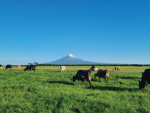
A spate of southerly winds bringing cold temperatures has presented challenges for Taranaki dairy farmers.
 increase font size
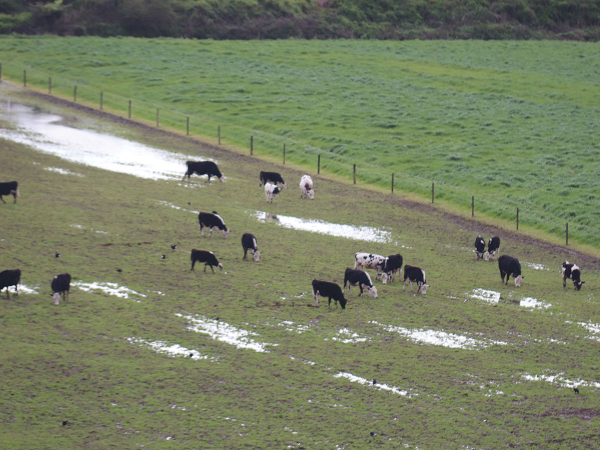 After a wet winter, farmers need sunny days for pasture growth.
Wanted urgently - some sunny weather in the Waikato to help lift milk production.
That's the view of AgFirst's James Allen who told Dairy News that production in the Waikato and in many other parts of New Zealand is down on last year.
He says Canterbury is one region that's in the same boat as the Waikato, but it appears that Southland is doing okay.
"What we have got going on in the Waikato is that we ended last season with pasture covers below target and cow condition was also marginally below. We then used up a fair bit of our supplement. Winter this season has been fairly wet and hard work and we are getting out the other side now, where things are okay, but generally production is behind last year,” he says.
An issue is supplement, and Allen says, because it’s been so wet, a lot hasn’t been made, which is delaying the planting of crops. He adds that there isn’t a lot of pasture available yet for silage and maize supplement supply on farms is low. Allen says farmers have just got enough grass and certainly no surplus.
“We need some hot sunny days to get things moving, so unless something dramatic happens in the next two or three weeks, we are in trouble, especially given that this is the money-making side of the season. If we are behind now, we are going to be behind for most of the season," he says.
James Allen says, unless there’s a nice autumn and not a dry summer, milk production will be down on last season.
Meanwhile, on the West Coast, Fed Farmers president and local dairy farmer Bede O’Connor says milk production on the coast had its challenges in the first half of spring, but the second half seems to be going quite well. He says it was a wet winter and wet August, but since then, things have turned around and “it’s starting to feel like we are heading into a good October”.
“My understanding is that people are doing better than last year,” he says.
O’Connor says farmers have repaired most of the damage to their farms caused by successive floods and pastures have been re-grassed. He says calving has gone really well and overall the mood of farmers is positive, helped along by the prospect of a good payout.
However, he says the only downside is rising costs, which affect things on farm but also hit other areas such as transport.
“When it comes to farming livestock, it’s not easy, but we work hard and do what we do well,” he says.
A spate of southerly winds bringing cold temperatures has presented challenges for Taranaki dairy farmers.
Surprised, humbled and quite thrilled. That’s the reaction of James Allen, one of the founding partners and now chief executive of AgFirst, on being made a life member of the Institute of Rural Professionals.
A warning to dairy farmers not to expect the same good conditions that they experienced last season, has been issued by a leading farm consultant.
As fuel and fertiliser prices rise and with uncertainty in the future, farmers are being urged to go over their budgets with a fine-tooth comb.
For the most part, dairy farmers in the Waikato, Bay of Plenty, Tairawhiti and the Manawatu appear to have not been too badly affected by recent storms across the upper North Island.


Federated Farmers has welcomed new rural policies released by ACT, saying they align closely with its own election priorities.

Rural Contractors NZ says proposed changes to land transport rules for agricultural vehicles are a welcome response by the Government to out of date regulations which have seen members hit with huge fines.
Alliance is calling for final applications for its 2027 Graduate Programme, with applications closing on Sunday 25 October.
Decades piloting planes has ensured vet and farmer David Hayes is focused on safety. So, after a serious accident while welding on farm, he is sharing his experience so others can learn from it.
Canterbury milk processor, Synlait Milk has confirmed Leon Fung as its chief executive officer.
OPINION: Making it easier to collect rainwater and use it to grow crops and livestock is a no brainer.