AgriZeroNZ Launches $51m Emissions Accelerator
AgriZeroNZ is ramping up efforts to accelerate the uptake of emissions reduction tools on farm with a new initiative to help more farmers put proven tools into practice.
 increase font size
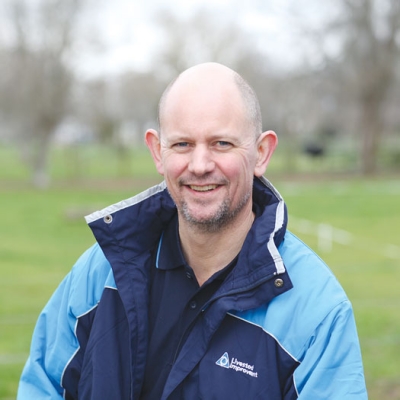 Wayne McNee, LIC.
A suggestion that New Zealand farmers should house more cows hasn’t gone down well with one industry leader.
Visiting Dutch agriculture expert Professor Aalt Dijkhuizen suggested New Zealand farmers keep cows indoors to improve production and reduce pollution, as do their Dutch counterparts.
Speaking in Auckland to an audience that included Fonterra chairman John Wilson and Open Country Dairy chairman Laurie Margrain, he said a simple housing system for cows would lift production, safeguard the environment, assure good animal welfare and allow adoption of new technology.
However LIC chief executive Wayne McNee sees a flaw in Dijkhuizen’s argument: profitability and efficiency does not seem to feature highly.
“The two go hand-in-hand here,” McNee says. “Profit is the ultimate goal for New Zealand dairy farmers, regardless of the system or technology utilised.
“The best way to make a profit is by breeding animals that will efficiently, and repeatedly, convert feed into quality, high-value milk.
“The New Zealand cow is renowned for her ability to efficiently produce milk solids, get in-calf each year and keep doing so for an average of five lactations. For the majority, this is on pasture, at the envy of many farmers around the world. “
McNee says the claim that Dutch cows produce twice the volume of milk of New Zealand dairy cows may be true but he questioned how much feed the animals require to achieve those levels of production, and at what cost to the farmer.
“Also, how fertile are they and how long will they last in a herd? Therefore, how efficient are they, really?
“What works in the Netherlands, or any overseas model for that matter, won’t necessarily work here.
“Housing cows in barns is not the only way to increase production. New Zealand dairy farmers have proven the success of this over the last 20 years: average production of milk solids from New Zealand cows has increased from 278kg to 371kg, and 60% of that increase is a result of genetic improvement.”
Dijkhuizen told Dairy News that he accepted the success of the New Zealand system in the past.
“The discussion, however, is about the most attractive system for the future… where environmental regulations may (or will) restrict the growth and profitability of the New Zealand system and hence increase the costs of production.
“The question then is not which cow produces the most per kg of liveweight but what is the most efficient and profitable per kg of milk or milksolids.
“In that equation, it becomes much more attractive to produce the amount of milk with fewer animals or, the other way around, to produce with the same number of cows more milk.”
He cautions that simply rejecting possible adjustments of the NZ dairy system may turn out not to be the wisest option.
Benefits of housing cows
Aalt Dijkhuizen says housing cows:
Safeguards the environment and assures good animal welfare
Offers opportunity for economic growth and income
Does not detract from the pasture-based image when done in a balanced way
Would be good for NZ’s image in 10 years and would fuel greater production to help meet growing demand for dairy.
AgriZeroNZ is ramping up efforts to accelerate the uptake of emissions reduction tools on farm with a new initiative to help more farmers put proven tools into practice.

A move to boost farmer uptake of low methane emitting sheep is underway.
A US-based company developing a vaccine to reduce methane emissions in cattle has received another capital injection from New Zealand’s agriculture sector.
A world-first public-private joint venture helping farmers cut emissions is set to have the first product from its investment portfolio - a methane-reducing bolus - available for beef farmers early next year.
AgriZeroNZ has entered a new partnership with Britain's national innovation agency, Innovate UK.
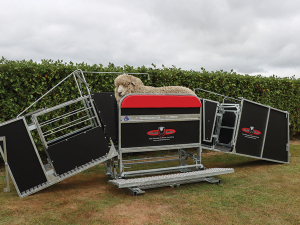
Oamaru-based livestock handling specialist Te Pari has bought Combi Clamp, the New Zealand manufacturer of Combi Clamp manual sheep handlers.
Agriculture Minister Todd McClay has admitted that a scheme bringing workers from Pacific nations to work on orchards has become too hard to navigate but says changes are coming.
A new app designed in New Zealand aims to help sheep, beef and deer farmers capture, analyse and use body condition score data more effectively.
Canterbury farmer Andy Macfarlane has been appointed to the board of AgriZeroNZ, the public-private partnership designed to accelerate the development and deployment of emissions reduction tools for New Zealand farmers.
For over 50 years Mel Ewers has been supporting the apple sector navigate through compliance and quality assurance issues.
The apple sector is enjoying a bumper harvest season.