Fonterra Elections 2026: Voting Opens Tuesday 20 October
Fonterra shareholders can begin voting on Tuesday 20 October in the 2026 Board of Directors’ election, a Co-operative Council election in one Ward, and seven Annual Meeting resolutions.
 increase font size
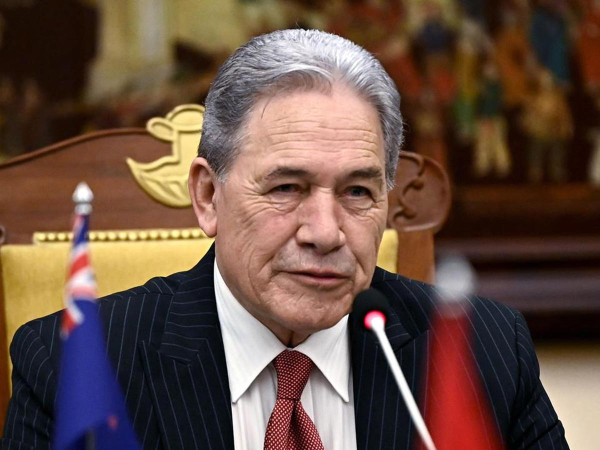 Winston Peters
New Zealand First leader and Foreign Minister Winston Peters is ratcheting up pressure on Fonterra farmers as they vote on divesting the co-operative’s consumer and related businesses.
Peters opposes the $4.22 billion sale to French diary giant Lactalis – the deal includes iconic brands like Mainland, Kapiti and Anchor changing hands. Voting on the proposal started earlier this month. Fonterra holds a special general meeting online on October 30. The co-op needs 50.1% support from voting shareholders.
In a new statement Peters cautioned Fonterra farmers to carefully consider the implications of the sale.
“The decision is yours. We caution you to think not of the short-term sugar hit from selling, but to the long-term security for their children, grandchildren, and country.
“Why? It is there in black and white. The sale terms provide everything you need to know - after three years Lactalis can terminate milk supply from Fonterra for Anchor and Mainland.
“Or to put it in the jargon of Fonterra, “the initial term is three years. Following the initial term, the global supply agreement automatically renews until it is terminated.”
“Automatically renews until it is terminated” is corporate flannel, executive flimflam, tier one C-Suite rubbish that translates to: ‘after three years, we cancel.’
“That’s it. Milk split. Fonterra will be a wholesaler. Lactalis will control your brands.”
Peters warns that Fonterra farmers won’t control “the very thing that has underpinned your success for generations: quality”.
“Why would we expect Lactalis to offer any long-term security to New Zealand farmers? Every incentive is on Lactalis to do the opposite. The most direct commercial lever they will have is to terminate their supply deal, and dilute New Zealand milk with lower quality, cheaper milk and vegetable fat.
“Why would we believe Lactalis would want to secure New Zealand milk for more than three years? If they do, why has Lactalis not offered a longer supply agreement? If they meant it, it would be in the deal. They want ten years of your raw milk for their own brands but only want your raw milk for three years for Anchor and Mainland.”
Peters claims that Fonterra executives have been invited to present their arguments to select committees twice.
He says this from a company “that is a creature of statute and owes its existence to legislation passed in 2001 providing favourable regulatory settings”.
“Their ‘she’ll be right’ mentality is not the sign of hard-nosed commercial realist. That is the sign of people who have been sucked in and are expecting you to be too.
“We, in a party called New Zealand First, are commercial realists.
“We know that this country’s economic fortunes rest upon the hard-won sweat and tears of New Zealanders. You and your forebears, starting in 1886, built Anchor with 130 years of product development, consumer trust, just as all the other brands have been built.
“For $4 billion, they are giving it away.
“The short-sighted may have dollar signs in their eyes, having heard that farmers stand to have hundreds of thousands put in their bank account. But when the sugar rushes, the ants follow. Watch how quickly that money goes.”
Peters adds that Fonterra have a choice, and his party hopes they will make the right decision.
Fonterra shareholders can begin voting on Tuesday 20 October in the 2026 Board of Directors’ election, a Co-operative Council election in one Ward, and seven Annual Meeting resolutions.

Fonterra Co-operative Group chief financial officer Andrew Murray has resigned to take up a role outside the dairy giant.
Four candidates have been confirmed for two director positions on Fonterra’s board.
A record farmgate milk price and strong global demand is laying the foundation for continued growth of organic dairy farming in New Zealand.
Waikato milk processor Tatua has again declared a record milk payout to farmer shareholders, leaving other processors in the dust.


Dairy processors are ready to further boost New Zealand’s export earnings but want the incoming government to match their ambition with good policy.
Massey University is best placed to solve the “problems” facing the dairy industry, says vice chancellor, Pierre Venter.
Synlait's longest serving employee – a man who joined the Canterbury-based milk processor even before it began processing milk – is now its newest executive.
A dairy industry leader believes eradicating the common and costly disease, Bovine Viral Diarrhoea (BVD) is within reach.
A farmgate milk price of $10/kgMS this season is firming up as milk powder prices soar and the New Zealand dollar weakens.
Federated Farmers has welcomed new rural policies released by ACT, saying they align closely with its own election priorities.