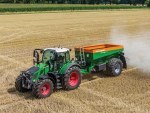
Amazone ZG-TX Spreader Gets New Weighing and FlowControl
Amazone's ZG-TX combi spreader has been updated with several new features, centred around improved accuracy and easier operation.
 increase font size
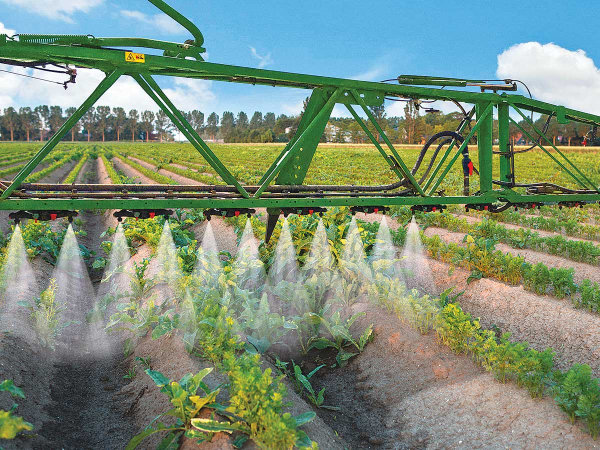 The AmaSelect electronic nozzle selection system.
AMAZONE has raised the bar in the area of partial width spraying technology.
AMAZONE has added new band spraying and turning functions to its AmaSelect electronic nozzle selection system, available on all AMAZONE UX trailed sprayers and Pantera self-propelled sprayers.
AmaSelect is an electronic multi-nozzle control system that automatically selects and activates the best nozzle according to the desired application rate and forward speed. Positioned at 50 cm intervals along the boom, each ‘pod’ comprises four individually controlled nozzles.
In use, the operator enters the optimum pressure range for each nozzle into the ISOBUS operator terminal. Once the optimum pressure range of a nozzle is reached, AmaSelect automatically switches over to a smaller or bigger nozzle or adds a second nozzle to the spray circuit. Standard fittings include LED lighting on each nozzle and the DUS Pro high- pressure recirculation system. An optional GPS-Switch function switches off individual nozzles in 50 cm part-width sections as the unit approaches headlines and other obstacles. Alternatively, an optional intermediate kit enables nozzles to be fitted at 25 cm intervals for high volume application or if target heights are less than 50 cm.
CLAAS Harvest Centre product manager for AMAZONE, Steve Gorman, says the technology can significantly reduce spraying costs. “By itself, the automatic control of individual nozzles can reduce chemical costs by up to five percent ten percent when used in combination with AMAZONE GPS-Switch section control.”
The new band spraying function enables any sprayer equipped with AmaSelect to be converted from whole-boom application to row-specific band spraying at the press of a button.
In operation, the AmaSelect Row function utilises special SpotFan 40-03 nozzles that deliver 100% of the crop protection agent across a 50 cm wide spray cone, with a 40-degree spray angle eliminating overlap. An extension kit is also offered to shift the positions of two nozzles in each pod to cater for 25 cm and 75 cm row spacing.
Also new is the AmaSelect CurveControl function, which ensures constant application across the boom width during turning. “Increasing boom widths means over-application on the inside of the turn and under-application on the outside is becoming a major issue,” says Gorman.
“Over-application may damage crops, while under-application may result in incomplete weed, insect or disease control. Either way, both can lead to loss of yield, which is counterproductive to spraying in the first instance.”
CurveControl uses sensors to determine the curve radius, from where the AmaSelect system then automatically determines the correct nozzle and the application rate for each section across the boom.
Amazone's ZG-TX combi spreader has been updated with several new features, centred around improved accuracy and easier operation.

With an extensive cultivation portfolio, Amazone entered a new era in tillage 25 years ago when it launched the newly developed Catros in 2001, an innovative design with a high performance, compact, shallow stubble cultivator, initially sold as a three-point linkage mounted implement.
With the price of fertiliser still significantly higher than 2024, there is an increased onus on ensuring its spread accurately at the correct rate.
With many European manufacturers releasing mechanical weeding systems to counter the backlash around the use and possible banning of agrochemicals, Amazone has added a new model to its Venterra mechanical hoe range.
Landpower is heading to Mystery Creek to showcase the latest Claas Harvest Centre European technologies from manufacturers, including Claas, JCB, and Amazone.


New Plymouth-based Manuka honey exporter Egmont Honey has completed its acquisition of Taihape beekeeping business Tweeddale's Honey, with settlement finalised on Friday, 18 September.

Westpac NZ is calling on farmers and growers to start preparing now for the possibility of a dry summer, as likely El Niño conditions raise the risk of drought across parts of the country.
Fonterra Co-operative Group has confirmed the independently assessed candidates standing for election to its board in 2026.
Fonterra has revised its Farmgate Milk Price forecast for the 2026/27 season, lifting the midpoint and narrowing the range on the back of improving global dairy commodity prices.
New Zealand's citrus growers were challenged to build their future on the value embedded in their fruit rather than the volume they produce, at Citrus New Zealand's annual gathering in Gisborne on 17 September.
Leading John Deere technicians and apprentices from New Zealand and Australians were recognised at the recent sixth annual JD Technician of the Year Awards, held in Brisbane.