Farm Safety Improves Through 'Incremental Gain', Says Birkett
Improving health and safety is about incremental gain rather than a sudden decision, says Leeston farmer and Federated Farmers health and safety spokesman David Birkett.
 increase font size
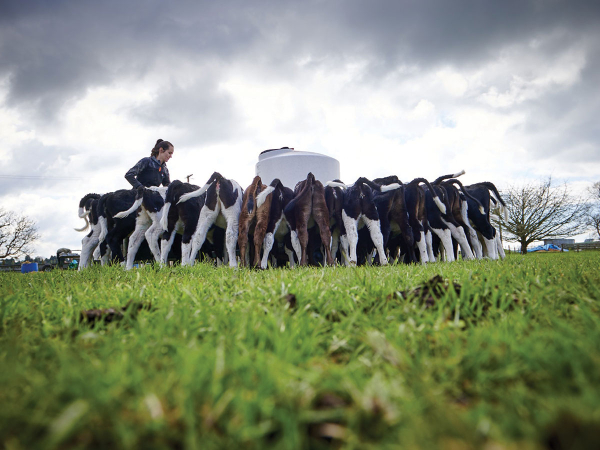 A common cause of rollovers is that the ATV being used isn’t heavy enough to tow the loaded weight of the feed trailer.
Rollovers of quad bikes or ATVs towing calf milk trailers have typically prompted a Safety Alert from Safer Farms, the industry-led organisation dedicated to fostering a safer farming culture across New Zealand.
It says there’s a pattern when feeding calves in the paddock, with many ‘near misses’ and injuries sustained, reinforcing the need to recognise that any rollover has the potential to result in serious injuries or indeed a fatality.
A common cause of rollovers is that the ATV being used is not heavy enough to tow the loaded weight of the feed trailer, leading to a case of “the tail wagging the dog”. With a thousand litres of milk weighing 1000kg, plus the weight of the trailer, it is apparent that the total is too great for a typical mid-range ATV.
Interestingly, a quick look at a range of manufacturers towing specifications, show that rated capacities appear to be around twice the kerb weight, so typically 600 to 800kg.
Other common causes of rollovers include sudden changes of direction by the driver, driving on uneven, slippery ground or steep gradients, inexperienced drivers, driver inattention or a distraction.
Safety Alerts are real-life documented incidents and key lessons which have been provided by farmers, condensed into one-page handouts that managers can download and print [see the Farm without Harm website] to be use in safety discussions with their teams.
This calf feeding alert discusses where best to feed calves, considering where they can be accessed safely, alongside the importance of reconsidering the access as necessary, so operators can drive in and out safely.
Where possible, staff should consider towing the feed trailer with a larger vehicle, such as a larger side-by-side vehicle, ute or even a small tractor.
However, if an ATV is the only vehicle available, it is important to know the loaded weight of the trailer and never exceed the manufacturer’s maximum towing capacity. Staff should also reduce the load if conditions or terrain changes, particularly in bad weather.
Farm owners and managers should also ensure that drivers are adequately trained and regularly updated for the task, knowing when to stop if conditions become unsafe.
In addition, they should always ensure that drivers always have a reliable way to call for help.
Further consideration might also centre around installing a crush protection device (CPD) or other rollover safety system to the ATV, or the availability of operating milk tanks fitted with integral baffles to reduce dynamic movement of the load.
Visit www.farmwithoutharm.org.nz
Improving health and safety is about incremental gain rather than a sudden decision, says Leeston farmer and Federated Farmers health and safety spokesman David Birkett.
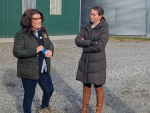
A huge reduction in ACC claims from on-farm accidents over the last five years is due to thousands of small, practical decisions being made in sheds, yards, paddocks and around kitchen tables across the country, says Safer Farms ambassador Lindy Nelson.
Lindy Nelson, Safety Farms ambassador, has been named the winner of the Leadership category at the 2026 New Zealand Workplace Health and Safety Awards in Auckland.
A safety push across New Zealand has revealed significant gaps in hazardous substances management, farm vehicles, tractors, quad bikes and side-by-sides.
Safer Farms ambassador Lindy Nelson's dedication to "rethinking how the primary sector works together to reduce harm on farm" has been recognised with a finalist place in the New Zealand Workplace Health and Safety Awards for 2026.


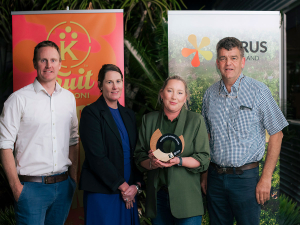
New Zealand's citrus growers were challenged to build their future on the value embedded in their fruit rather than the volume they produce, at Citrus New Zealand's annual gathering in Gisborne on 17 September.
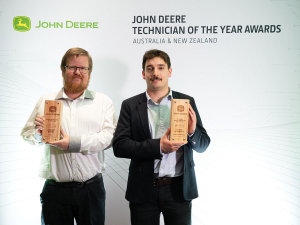
Leading John Deere technicians and apprentices from New Zealand and Australians were recognised at the recent sixth annual JD Technician of the Year Awards, held in Brisbane.
In Dacre, near Invercargill in New Zealand’s South Island, Bruce Dinnington is running a dairy operation unlike any other.
A free online platform aggregating governance vacancies across rural and regional New Zealand has been launched.
Environment Minister Nicola Grigg has announced details of a new rural plastics recycling scheme.
Agricultural drone operators say that a government decision to allow lower-risk drone work without certification won’t lower standards but drive innovation and efficiency.