Welding Safety on Farms: One Farmer’s Burns Lesson
Decades piloting planes has ensured vet and farmer David Hayes is focused on safety. So, after a serious accident while welding on farm, he is sharing his experience so others can learn from it.




 increase font size
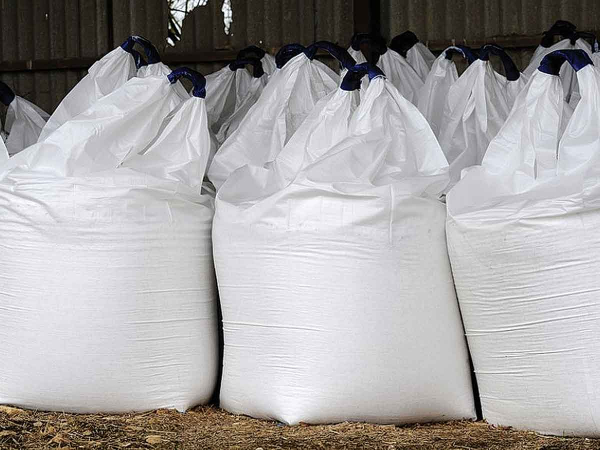 Before lifting fertiliser bags, drivers should inspect any lifting hoops to ensure they are in good condition.
Recent rain has offered respite for some from the ongoing drought.
It might also mean farmers are considering applying some fertiliser to stimulate a little late-season growth.
Farm Without Harm has recently released a safety alert and advice on the safe handling of fertiliser bags.
The safety advice centres around a recent nearmiss that occurred when a one-tonne bag of fertiliser was being lifted by a tractor loader combination. The load shifted, causing one of the lifting hoops to fail.
They noted that the fertiliser supplier had recently moved from one-tonne, re-useable bags to single-use, recyclable items. Thankfully, in this event, no one was hurt, but it emphasised the need for safety when undertaking such tasks.
Responding to this near miss, they acknowledged that while the bags have a 5 to1 safety factor, the correct procedures need to be followed for lifting and transporting such items, alongside caution when lifting or lowering, to minimise the risk of lifting hoop failure.
As well as understanding safe procedures, farmers, landowners and contractors should also ensure staff are aware of potential risks.
Operators should be aware that if they are working with colleagues, ideally they should establish a 5m exclusion area around the work site. If this is not possible and the co-worker is not in direct sight, the driver should stop until the person is back in view and only proceed with the task after an affirmative “thumbs up” signal.
Before lifting such bags, drivers should inspect any lifting hoops to ensure they are in good condition, without any obvious signs of tearing or delamination. They should also ensure the bags are carried as low as possible to lower the centre of gravity, at a speed no greater than walking pace – particularly when travelling over unsealed or uneven surfaces.
After lifting, operators should ensure the load remains secure and stable, and the intended travel route should be unimpeded. Other staff working in the immediate vicinity should never walk or stand under a suspended load of any kind.
It goes without saying that drivers should not be using any mobile phones during lifts.
When they are able to empty the content of the bag into a fertiliser, or in the case of seed, into a spreader or seed drill, they should use a longhandled blade or slasher to pierce the underside of the bag or consider investing in a specialist bag opener/dispenser.
For more information visit www.farmwithoutharm.org.nz or www.safersfarms.co.nz
Decades piloting planes has ensured vet and farmer David Hayes is focused on safety. So, after a serious accident while welding on farm, he is sharing his experience so others can learn from it.
French manufacturer Pichon has expanded its SV slurry tanker range with the launch of two new models.
Recently revealed, Krone’s new Series Six, BiG Pack Plus and Pro balers are designed to use standardised components, interfaces, and control concepts, including pick-up, knotter systems and user interfaces.
Consuming around six years and more than 35,000 hours of physical and digital testing, the new sixth-generation Valtra T Series is being described as the most significant new release in the company’s history.
Strautmann has introduced a new Hay Edition auger for its Verti-Mix feed mixer wagons, aimed at operators using rations with larger proportions of hay or other long-fibre materials.


Decades piloting planes has ensured vet and farmer David Hayes is focused on safety. So, after a serious accident while welding on farm, he is sharing his experience so others can learn from it.
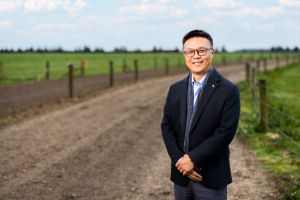
Canterbury milk processor, Synlait Milk has confirmed Leon Fung as its chief executive officer.
OPINION: Making it easier to collect rainwater and use it to grow crops and livestock is a no brainer.
As part of its Election 2026 coverage, Rural News asked political parties how they would help pull the arable sector out of the doldrums. Here's what they said:
Farmers are being encouraged to rethink how they manage waste on farm with the launch of ruralwastesorted.co.nz, a new website bringing together practical tips, real farmer experiences and resources.
New Zealand Winegrowers (NZW) is celebrating the India-New Zealand Free Trade Agreement (FTA) coming into force today, bringing New Zealand wine improved access to one of the world’s fastest-growing economies.


OPINION: The same mainstream media muppets that brought you Jacindamania in 2017 have been flat out pimping for the Opportunities…
OPINION: Your old mate reckons the atrocious way farmers in the UK are treated by their lords and masters in…




