New Rural Recycling Scheme to Replace Voluntary Farm Plastics Programmes by 2027
Environment Minister Nicola Grigg has announced details of a new rural plastics recycling scheme.




 increase font size
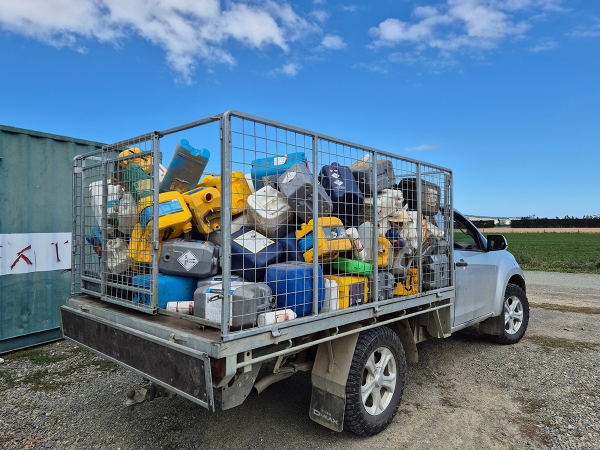 The industry led scheme will bring the existing Agrecovery and Plasback programmes together into a single national system that is simple, free to use and accessible for all users of agrichemicals and farm plastics.
Rural recycling scheme Agrecovery is welcoming the Government's approval of regulations for a nationwide rural recycling scheme for agrichemicals and farm plastics.
Agrecovery is describing it as a landmark step for farmers, growers and the wider primary sector.
The industry-led scheme will bring Agrecovery and the Plasback programmes together into a single national system designed to be simple, free to use and accessible for all users of agrichemicals and farm plastics.
Agrecovery will manage the scheme on behalf of producers and rural communities.
Environment Minister Penny Simmonds says the decision responds to what rural New Zealand has been asking for.
“This initiative is about fixing the basics while building the future with practical solutions that protect the environment, support our farmers, and ensure a productive, sustainable primary sector," Simmonds says.
“Farmers and growers have been working towards this for a long time. Today, we’ve made it happen.”
Tony Wilson, chief executive of Agrecovery, says the decision recognises close to 20 years of voluntary stewardship and gives the whole primary sector a stable framework for the future.
“Farmers and growers have been recycling with Agrecovery and Plasback for years because they want to do the right thing," Wilson says. "Regulation now gives us the framework to grow that success into a fully integrated rural recycling scheme, extend coverage even further, and ensure all producers contribute to the costs of dealing with the plastics they place on the market. It is a significant win for rural New Zealand.”
He says the focus remains on making life easier on farm.
“Our role has always been to make recycling easy and accessible for farmers and growers. Regulation means we can scale up responsibly and deliver a free, future-proofed and transparent recycling system that matches the needs of modern primary production.”
Agrecovery board chair and Wairarapa farmer Anders Crofoot says the Government's decision provides the structure and certainty needed for the next decade of farm plastics management.
“This is a pivotal moment for rural New Zealand. A single, nationally consistent framework gives farmers and growers a straightforward answer about what to do with their plastics and who is responsible," Crofoot says.
He says the scheme is about environmental care and practical productivity working together.
“Better management of farm plastics protects soil, water, stock and people, and it also frees up space and time on farm. A well-designed stewardship scheme turns what was once a waste problem into a straightforward part of running a modern, efficient farm business. It also helps farmers and growers demonstrate the sustainability performance that markets increasingly expect.”
Neal Shaw, Plasback commercial manager says the decision recognises the groundwork already done and lifts performance to a new level.
“It is great to see the investment that Agrecovery and Plasback have made over the last 20 years continue to drive plastic collection," Shaw says.
"Bringing that experience together under regulation is a real step change for rural recycling. Removing free riders will help the scheme deliver a more effective and efficient service for farmers and growers.”
The new rural recycling scheme will cover key farm plastics including agrichemical containers and drums, bale wrap and silage film, small bags used for agricultural products and bulk woven polypropylene bags.
Environment Minister Nicola Grigg has announced details of a new rural plastics recycling scheme.

The Government is introducing a new nationwide rural recycling scheme that will significantly increase the recovery of farm plastics from March next year, Minister for the Environment Nicola Grigg announced today.
Rural contractors will be able to play a role in the revamped agricultural plastic recycling scheme with new regulations due for Cabinet signoff before this year’s election.
The Government is calling on rural New Zealanders to share their views on proposed regulations designed to improve the management of farm plastic waste.
Agrecovery, an accredited product stewardship scheme operator for farm plastics, has launched its latest initiative, allowing for the recycling of wool fadges.



Mark Hooper has been appointed the new chair of NZPork, the industry organisation representing New Zealand pig farmers.

As the India-New Zealand free trade agreement enters into force, New Zealand’s apple industry has reaffirmed its commitment to the long-term development of India’s apple sector.
Fonterra shareholders can begin voting on Tuesday 20 October in the 2026 Board of Directors’ election, a Co-operative Council election in one Ward, and seven Annual Meeting resolutions.
National’s pledge to introduce 19 new national standards shows the party is serious about getting Wellington out of farming, Federated Farmers says.
The National Party’s policies to make it easier to grow fresh vegetables, secure reliable water and energy and simplify farm planning are practical changes that will give growers the confidence to invest, according to Horticulture New Zealand (HortNZ).
Fonterra Co-operative Group chief financial officer Andrew Murray has resigned to take up a role outside the dairy giant.




OPINION: The same mainstream media muppets that brought you Jacindamania in 2017 have been flat out pimping for the Opportunities…
OPINION: Your old mate reckons the atrocious way farmers in the UK are treated by their lords and masters in…




