Badge of honour!
OPINION: Milking It reckons New Zealand should take a bow after winning the 'Fossil of the Day' award at COP30 in Brazil over recent improvements to our methane targets.




 increase font size
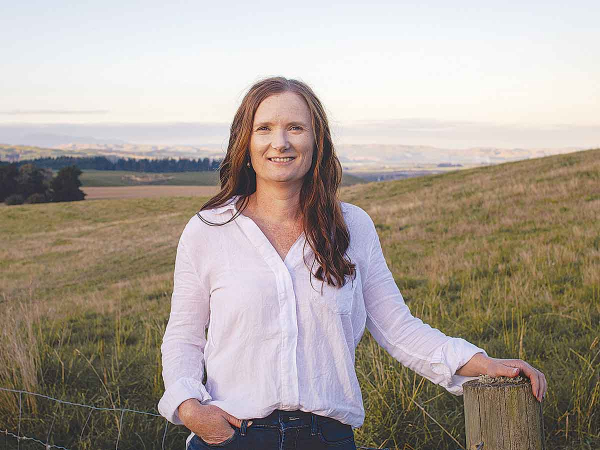 Paige Wills
OPINION: Farmers are being asked to celebrate a target that changes nothing for the climate, wastes taxpayer money, and ignores real science.
The Government’s new methane target isn’t a victory for farmers — it’s political theatre. Dropping the reduction goal from 24–47% to 14–24% doesn’t solve anything. It’s like being told you had to kick your puppy 20 times, and now they’ve reduced it to 10 — it’s still completely wrong, while the real issue, that livestock methane is not driving warming, is completely ignored.
The truth is simple: this target has almost nothing to do with actual climate change. The Intergovernmental Panel on Climate Change (IPCC) has confirmed that earlier climate models overstated methane’s warming effect by up to four times. Even the Ministry for the Environment’s own data shows that all humanmade methane from 1850 to 2022 caused just 0.0021°C of warming — about 0.000012°C per year. Yet while the evidence shifts, the Government keeps pretending New Zealand livestock are heating the planet.
In reality, New Zealand’s methane emissions have already fallen — from 38,478 kt CO₂-e in 2017 to 36,751 kt CO₂-e in 2023 — a 4.5% drop achieved naturally, without new technology or taxpayer subsidies.
The Government’s own Methane Science Review (2024) was meant to clarify how much warming New Zealand’s ruminant emissions actually cause. Yet it failed to do the one thing it was commissioned for — quantify New Zealand’s real warming impact. Without that, every target is based on assumption, not evidence — like setting a speed limit without knowing how fast the car can go. Policy is being built on politics, not physics.
This new target isn’t about protecting the climate, it’s about protecting political credibility. By lowering the bar slightly, the Government can claim progress without admitting the entire premise was wrong.
Meanwhile, more than $400 million of taxpayer money continues to be poured into companies like AgrizeroNZ to fund “solutions” such as methane vaccines, feed additives, and boluses — interventions that are experimental, unnecessary, and in some cases risky.
Even if these tools ever prove feasible, they still miss the point: methane reductions from ruminants will not translate into meaningful climate cooling. Yet these measures threaten the very reputation of New Zealand farming, long recognised for producing natural, grassfed, minimally treated food. Consumers buy New Zealand products for their purity — not for lab interventions.
Our farmers feed a growing global population with high-quality, natural, safe, emissions-efficient food. That ability is something to protect, not punish. New Zealand farming isn’t the climate problem, it’s part of the climate solution. Our grass-fed, pasture-based systems produce some of the lowest emissions per kilogram of food in the world. Undermining that system with unnecessary interventions erodes our competitive advantage and the trust that underpins New Zealand’s brand.
Public funds could be far better spent supporting essential services and infrastructure. Instead, hundreds of millions are being channelled into methane technologies that neither farmers nor consumers want — and that deliver no measurable reduction in warming. In a country facing a cost-of-living crisis, a chronic shortage of doctors, nurses, and teachers, and crumbling infrastructure, this is money literally disappearing into the wind — a waste of taxpayer money on a scale that should outrage every New Zealander.
ACT MP and Associate Minister of Agriculture Andrew Hoggard recently claimed that “with some of the technologies coming online, their use in the dairy industry alone would likely achieve the methane reductions needed over the next 25 years”. That assumes reductions are needed at all, and they’re not.
Hoggard’s statement is wishful thinking at best and deeply misplaced at worst. Methane is part of a natural biological cycle that has remained in balance for millennia. Farmers and consumers alike don’t want to interfere with ruminant digestion just to meet an arbitrary political number.
The only commonsense target for livestock methane is zero. If cutting methane won’t cool the planet even a fraction of a degree, mandating reductions of any size wastes money, erodes trust, and punishes the very people feeding the nation.
Industry bodies Federated Farmers and Beef + Lamb NZ have welcomed the lower target as a relief, but that endorsement is a capitulation. Beef + Lamb NZ admits farmers will still face a “stretch” to meet the new targets while being expected to make efficiency improvements and “use tools and technologies where it makes sense.” In other words, they’ve accepted incremental change rather than standing firmly for farmers’ rights — despite the latest Groundswell, Methane Science Accord, and NZ Farming 2025 survey showing 71% of farmers would not adopt any methane-reduction tools, even if readily available.
Before another dollar is spent or another headline claimed, the Government owes New Zealanders an honest answer: what measurable warming are we actually reducing — and at what cost? Good policy starts with good science, not political spin. It’s time to steer New Zealand’s climate policy back to reality with targets that reflect how the atmosphere actually works. Anything else is political window dressing — and hundreds of millions of dollars being flushed down the drain that could be rebuilding the essential services this country desperately needs.
Paige Wills is a sheep and deer farmer from the Waitaki Valley.
OPINION: Milking It reckons New Zealand should take a bow after winning the 'Fossil of the Day' award at COP30 in Brazil over recent improvements to our methane targets.
OPINION: For close to eight years now, I have found myself talking about methane quite a lot.
A drop in methane targets announced by the Government this month has pleased farmers but there are concerns that without cross-party support, the targets would change once a Labour-led Government is voted into office.
OPINION: New Zealand farmers have been sold out, not just by the Government but by our own industry leaders.
Beef + Lamb New Zealand (B+LNZ) has reiterated calls for New Zealand to revise its methane targets after the Government's "disappointing" announcement of its revised Nationally Determined Contribution (NDC).

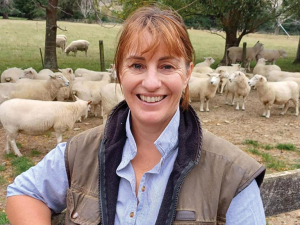
B+LNZ's Wormwise veterinarian Mary Bowron has won the Best Sheep and Beef Vet of the Year Award in recognition of her outstanding contribution to New Zealand’s sheep and beef sector.
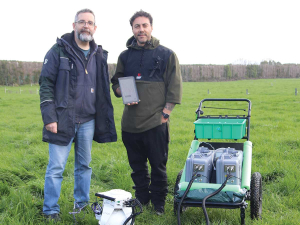
Researchers at Massey University are using a special piece of scientific equipment to improve the measurement of greenhouse gas emissions from pasture soils.
More signs of a booming kiwifruit sector.
OPINION: David Seymour and James Meager's plan to make it easier for farmers and orchardists to operate drones can best be described a 'courageous' move.
New Zealand wool is reaching new heights as air filtration companies move away from synthetic products to biodegradable alternatives.
Opuha Dam's ability to protect South Canterbury communities from major flooding has taken a significant step forward, with Opuha Water Limited (OWL) successfully commissioning a new outlet valve capable of releasing record volumes of water from the dam ahead of a weather event.



OPINION: The same mainstream media muppets that brought you Jacindamania in 2017 have been flat out pimping for the Opportunities…
OPINION: Your old mate reckons the atrocious way farmers in the UK are treated by their lords and masters in…