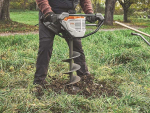
Stihl Launches BT140, Its First Battery-Powered Auger
With battery tools becoming more widespread and more importantly, productive and reliable, it was only time before we saw augers or post-hole borers.
 increase font size
 Chainsaw safety is like putting on a seatbelt when getting into a vehicle, say Stihl.
Chainsaw accidents are on the rise and it’s time to make some noise about this, says chainsaw maker Stihl.
The Stihl Chainsaw Safety Awareness Week returns this week in a bid to tackle New Zealand’s high accident statistics.
ACC claims for chainsaw accidents continue to rise: claims reported last year exceeded $2 million, on average six accidents per day.
Stihl marketing manager Stace Hall says it’s worrying that as chainsaw sales increase, accidents with the tools do too. “So keeping keeping people safe is why we continue… the Stihl Safety Awareness Week.”
The campaign kicked off last week at Myers Park in Auckland, where 40 women donned pink chaps to learn chainsaw safety tips with kiwi axeman and current Stihl Timbersports world champion Jason Wynyard.
Stihl shops are also hosting chainsaw training events for women. They include ladies’ nights and safety breakfasts for members of Dairy Women’s Network and local customers.
Qualified safety trainers will teach women about the simple safety techniques that can mean the difference between getting the job done and ending up in hospital.
“We believe that raising the issue first-hand with women who are often strong influences in the household is a good idea,” says Hall.
The company will support St John by donating some of the sales proceeds from its chainsaw safety packs, including the special pink women’s chaps.
Wynyard says chainsaw safety is like putting on a seatbelt when getting into a vehicle. “It should come naturally. You wouldn’t drive without wearing a seatbelt or go fishing without a lifejacket. Why would you use a chainsaw without safety gear?”
Stay safe this firewood season
World Timbersports champion Jason Wynyard offers these tips for safe chainsaw use.
1. Use the right safety gear
Even for a five minute job, your feet, legs, head, ears, eyes and hands need protection. Safety gear is widely available at power tool suppliers and hardware stores, so make a point of getting what you need.
Before starting any task that involves using a chainsaw, you should be wearing:
2. Stop and think
Thinking about the task before you attempt it can help reduce injuries. Before you start, make sure you have the right equipment and a safe environment to do the job.
Here are some key things you need to remember:
3. Kickback
Kickback happens when the moving chain at the tip of the bar hits an obstruction or a softer piece of material. This causes the chainsaw to whip back at high speed towards you. To reduce kickback:
4. Sharpen up
Good maintenance reduces the risk of injuries. This is because a well maintained chainsaw is easier to use than one that hasn’t been kept in good condition.
With battery tools becoming more widespread and more importantly, productive and reliable, it was only time before we saw augers or post-hole borers.

Improving health and safety is about incremental gain rather than a sudden decision, says Leeston farmer and Federated Farmers health and safety spokesman David Birkett.
ACC says that this week's Fieldays is a great chance for farmers to pause and reflect on their processes and ensure that their life is in balance.
The Roar is a highlight of the game hunting calendar in New Zealand, with thousands of hunters set to head for the hills to hunt male stags during March and April.
Most rural properties wouldn’t be without a chainsaw, so it’s fitting to celebrate the centenary of Andreas Stihl inventing the first portable chainsaw in a Stuttgart workshop in 1926.



Waikato milk processor Tatua has again declared a record milk payout to farmer shareholders, leaving other processors in the dust.

A Labour-led Government won’t be bringing back the controversial freshwater rules of 2020.
National’s much-touted free trade deal with India featured in the Rural Issues Debate at Mystery Creek, Hamilton on Wednesday night.
New Zealand's 2026-27 freshwater fishing season has opened, with anglers encouraged to head to rivers and lakes over the coming days as conditions look favourable across much of the country.
Central Otago District Council (CODC) has voted against a plan to spread treated sewage sludge from Cromwell and Alexandra on farmland near Lauder, a decision Federated Farmers says reflects strong opposition from rural residents.
Pāmu has released its FY26 Integrated Annual Report, reporting a Net Operating Profit of $113 million, more than double the $49 million recorded in FY25.