UK Politician Alistair Carmichael Praises "Positive Spirit" of NZ Farmers
A leading British farming politician says he's impressed with the positive attitude of New Zealand farmers that he met during his recent trip here.
 increase font size
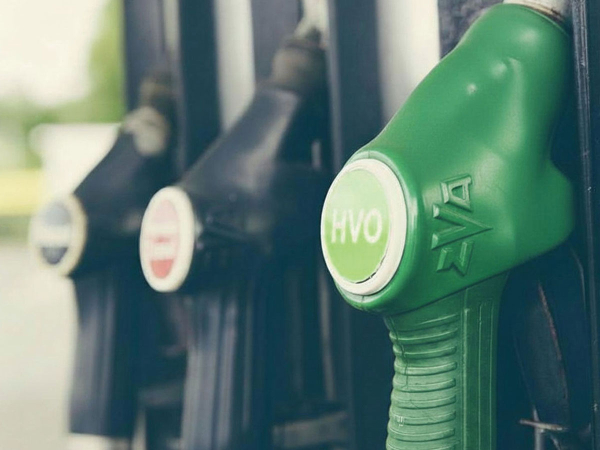 HVO or Hydro-Treated Vegetable Oil is moving to the forefront of the sustainability conversations.
Continued fluctuations in fuel costs are putting pressure on many businesses, driving a significant spike in interest for electrified options like hybrids and alternative power sources.
Renewable diesel, typically more commonly known as HVO or Hydro-Treated Vegetable Oil has been around for many years in Europe.
It has been part of several trials in New Zealand and can be produced from multiple sources.
Indeed, enabling renewable and alternative fuels is listed as a key action in the 'infrastructure pillar' of the Government's Going for Growth plan, with proposals to remove regulatory barriers to the importation and production of renewable diesel.
While not readily available at the local fuel pumps yet, HVO is moving to the forefront of the sustainabilty conversations, as it can reduce CO2 emissions, improve engine performance and offers a low-carbon alternative to conventional diesel in an increasingly volatile global landscape.
HVO is a second-generation renewable diesel, or hydro-biodiesel, made from waste products like used cooking oils, animal fats, and agricultural waste.
Unlike traditional fossil diesel, it is a paraffinic synthetic fuel that offers a much cleaner burn.
It can be used as a standalone product or blended with conventional diesel without engine modification, allowing for the direct substitution of fossil diesel, while reducing CO2 emissions significantly.
Just like the conversation going on about alternative electrical solutions, there is often confusion between renewable diesel (HVO) and biodiesel (FAME), so it is important to know they are not the same.
Traditional first-gen biodiesel has strict blend limits (usually capped at 20%) and can sometimes require engine modifications.
HVO, however, is a pure hydrocarbon that meets the EN15940 standard. It's more stable, lasts longer, and is a superior product in terms of engine health and storage for modern diesel engines.
Ford has recently announced that most of its iconic workhorses are fully compatible with HVO, or renewable diesel, includes the Next-Gen Ranger and Everest, from model year 2022, alongside the recently showcased Ranger Super Duty.
One organisation that has made the change is Melbourne Airport, who run a large fleet of more than 50 Rangers, Everests and Transits, which have completely transitioned to HVO.
They noted that although they explored the transition to EV, to electrify the whole fleet would have required a massive investment in charging infrastructure, noting that even eight superchargers for 50 units wouldn't be enough based on usage patterns.
Of particular interest, one of the biggest advantages was in the management of industrial equipment, which in some cases saw vehicles sitting unused for months.
In these situations, conventional diesel can degrade or corrode tanks, while HVO has a shelf life of up to 10 years.
They also noted that conventional diesel fuelled vehicles running in a semi-enclosed space are smelly, but with HVO it just smells a bit like a fish and chip shop.
Visit www.ford.co.nz
A leading British farming politician says he's impressed with the positive attitude of New Zealand farmers that he met during his recent trip here.

A new digital assistant is now helping Ballance Agri-Nutrients farmers speed up nutrient information and ordering.
OPINION: At Fieldays this year, one theme kept surfacing across the sector: global shocks are no longer something that happens “over there”. They are now translating quickly into local, farm-level impacts through increasingly complex and connected channels.
As the dust settles after Fieldays, we're once again reminded of the sheer volume of technology now available to New Zealand dairy farmers.
Last month's National Fieldays was an important event for Canadian manufacturer Can-Am, as it unveiled its first electric ATV, the Outlander, adding extra option to the new Defender HD11 and Defender MAX HD11 line-up.


Federated Farmers has welcomed new rural policies released by ACT, saying they align closely with its own election priorities.

Rural Contractors NZ says proposed changes to land transport rules for agricultural vehicles are a welcome response by the Government to out of date regulations which have seen members hit with huge fines.
Alliance is calling for final applications for its 2027 Graduate Programme, with applications closing on Sunday 25 October.
Decades piloting planes has ensured vet and farmer David Hayes is focused on safety. So, after a serious accident while welding on farm, he is sharing his experience so others can learn from it.
Canterbury milk processor, Synlait Milk has confirmed Leon Fung as its chief executive officer.
OPINION: Making it easier to collect rainwater and use it to grow crops and livestock is a no brainer.