Robotic Rotary Milking: Inside a $6M Investment Paying Off Faster Than Expected
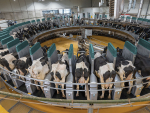
The Dairy ProQ robotic rotary, the first of its kind in the Southern Hemisphere, has proven to be an impressive addition for Victorian farmers Paul and Marsha Smith.
 increase font size
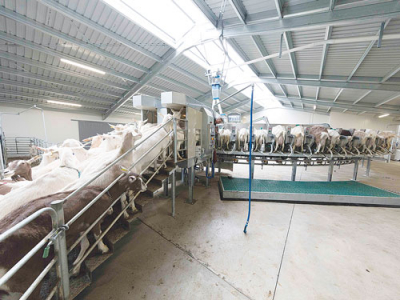 Hamish Noakes’ Milkabit Farm uses a GEA rotary platform said to be the first of its kind in New Zealand.
Hamish Noakes’ Milkabit Farm uses a GEA rotary platform said to be the first of its kind in New Zealand.
The automated platform is designed specifically for goats.
It has an integrated feeding system offering five different feed allocations, which makes feeding different flocks on the same farm easily achievable; and it alters feeding regimes based on variables such as inclement weather.
The system uses a head locker that securely holds the goat in place and allows accurate reading of the animal’s ID tag, and a stainless steel feed bin that can be easily emptied or cleaned.
In operation, entry boxes regulate goat flow onto the platform, ensuring no empty bails during milking and preventing goats from crowding into bails.
ID tags are read in each milking stall and the data is fed into a herd management system.
The parlour has automatic wash system, allowing better cleaning of plant, and a glycol snap chilling system that chills milk to 4oC before it enters the vat.
An extra feature of the parlour at the Milkabit Farm is a floor that can be raised or lowered to suit the height of the farm worker. It is 4.5m wide so the operator can work on several bails without having to step off the raised floor.
The Dairy ProQ robotic rotary, the first of its kind in the Southern Hemisphere, has proven to be an impressive addition for Victorian farmers Paul and Marsha Smith.
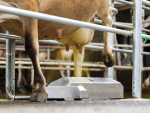
GEA says that its latest walkover teat sprayer is helping farmers save time and boost udder health.
New Zealand farmers get their first opportunity to experience the future of pasture-based dairy automation in action this week at the National Fieldays.
Milking technology provider GEA Farm Technologies is introducing its first automatic milking system (AMS) in New Zealand.
In a groundbreaking move for dairy farming in New Zealand, Craig Copland has become the first farmer in the country to use GEA’s Manure Decanter system, traditionally used in wastewater and wineries, to enhance environmental sustainability on his Canterbury farm.


New Plymouth-based Manuka honey exporter Egmont Honey has completed its acquisition of Taihape beekeeping business Tweeddale's Honey, with settlement finalised on Friday, 18 September.

Westpac NZ is calling on farmers and growers to start preparing now for the possibility of a dry summer, as likely El Niño conditions raise the risk of drought across parts of the country.
Fonterra Co-operative Group has confirmed the independently assessed candidates standing for election to its board in 2026.
Fonterra has revised its Farmgate Milk Price forecast for the 2026/27 season, lifting the midpoint and narrowing the range on the back of improving global dairy commodity prices.
New Zealand's citrus growers were challenged to build their future on the value embedded in their fruit rather than the volume they produce, at Citrus New Zealand's annual gathering in Gisborne on 17 September.
Leading John Deere technicians and apprentices from New Zealand and Australians were recognised at the recent sixth annual JD Technician of the Year Awards, held in Brisbane.