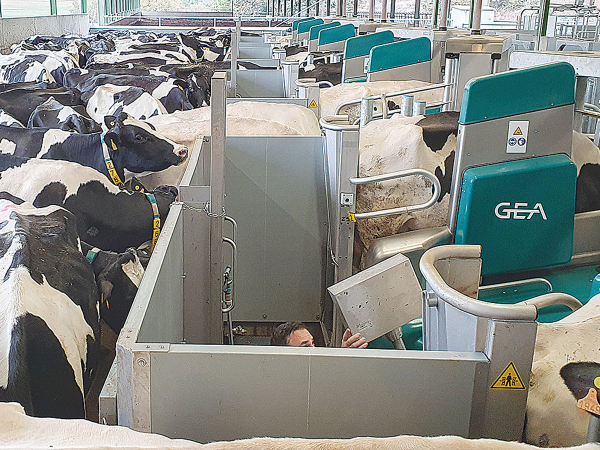
Milking technology provider GEA Farm Technologies is introducing its first automatic milking system (AMS) in New Zealand.
Designed for herds of all sizes, the robotic milking systems – the Dairy- Robot R9500, DairyProQ rotary, and the all-new DairyRobot R9600 and R9650 - offer batch and voluntary milking.
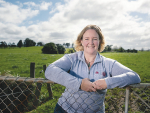
GEA Farm Technologies NZ head of sales and service, Craig Lowry, says that following the launch this month, his team are in talks with potential customers.
“We are very excited to be launching AMS in New Zealand,” he told Rural News.
“GEA has already had success with robotic milking on pasture-based farms in Australia, and we’re looking forward to replicating this locally.”
Lowry points out that GEA’s ‘In-Liner Everything’ technology is the main difference to other robotic machines available in the country.
The technology completes the entire milking process in one attachment, he adds.
“From teat stimulation to teat spraying, and everything in between, the advanced milking solution minimises movements and maximises efficiency,” Lowry says.
“Designed to speed up milking and allow more milkings per box per day, it also reduces operating costs. A camera detects the shape and position of the cow’s teats and precisely attaches the cups in a matter of seconds. Should the cow kick, a feedback mechanism enables the milking arm to move away and start the attachment process again.”
The system measures milk yield and quality in real time as miking progresses, allowing the farmer to monitor each cow’s production and identify health or performance issues early. After milking the system automatically applies teat spray through the same milking cluster. Once each milking is complete, the inside and outside of the teat cups are flushed and cleaned. The attachment camera is also cleaned.
Lowry points out that GEA offers two approaches to automatic milking – batch milking and voluntary milking.
Batch milking refers to milking cows in groups at set times throughout the day. Lowry says this is a practice Kiwi dairy farmers know well.
He adds that over the past decade, GEA has added a modern twist by fusing automatic milking with a conventional daily routine and feeding management.
“Batch milking combines the predictability of traditional methods with the efficiency of automation, aligning with New Zealand’s pasture-based farming principles. It’s about giving farmers the best of both worlds: the timesaving and lifestyle perks of modern technology, while staying in control with a fixed milking routine.”
Lowry says one of the biggest benefits of batch milking is that it saves labour in the shed, allowing staff to focus on others farm tasks.
“Conventional milking has proven its worth over the years, but it can be hard work and requires skilled staff. Automated batch milking offers a solution to these challenges, ensuring the job is always done right but with less effort.”
Lowry says with the current labour issues faced on farm, GEA is confident that farmers would welcome the DairyRobot.
He says events are being planned in the new year to showcase the technology around the country.
The GEA robotic machines are designed to integrate into any farm setup and current infrastructure.
“Whether you are milking a small herd or running a large operation, we have got a robot layout and option to match,” says Lowry.