Harvest specialist Claas developed the first effective corn cracker system for its Jaguar forage harvester in the 1980s.
It paved the way for forage maize where the effective splitting ('cracking') of the grain kernels led to better digestibility and utilisation, resulting in increased yields or weight gains.
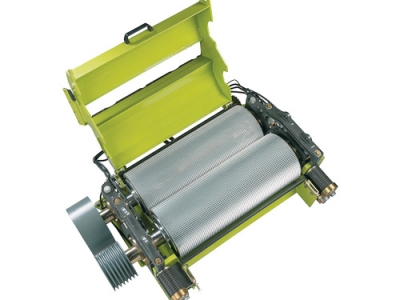
The latest incarnation is a new design of crop processor called MCC Shredlage, which uses two LorenCut rollers, with 110 and 145 teeth respectively, running at a speed differential of 50%. Unusually, the rollers have a counter-rotating spiral groove, so as crop passes through the rollers it is subjected to a sideways movement, which has the effect of splitting the material lengthways and removing the outer sheath of the stalk.
The Shredlage system is licensed through a US company of the same name, which adopted the work of two dairy nutritionists, Roger Olsen and Ross Dale, who recognised the need to develop a better ensiling process for high ratio forage diets.
The harvesting process sees the crop being cut at 32-34% dry matter, and with kernels showing a milk line at around the halfway point. A key difference is that the chop length is pushed out to a theoretical length of cut of 26-30mm rather than the more traditional 16-20mm range.
The resultant material is said to be broken into 'planks' and 'strips' which increase the effective fibre and increase the exposure of the inner plant cells to more microbial activity, resulting in better breakdown and utilisation.
In practice the increased surface area stimulates rumen activity and reduces the need to added 'stuffer' products such as hay or straw to the overall ration. And the aggressive action of the processor breaks the kernels into quarter or eighth pieces, releasing more starch and increasing the energy value of the sample.
Studies at the University of Wisconsin found Shredlage increases the structural suitability of maize silage for a ruminant and helps release the full starch potential of the whole plant. This resulted in an increase of milk production by around 2L/day, a general improvement in herd health, slightly higher daily intakes and a flatter lactation curve. The university also reported there were no apparent problems with ensiling and compaction, although there was a need to tighten processor clearances as crops became drier.
Greenline product manager for Claas Harvest Centres, Luke Wheeler, said "Shredlage will allow contractors to offer even better silage for livestock producers, and we suspect the process will be adopted widely, as in the US. None of our competitors can produce this kind of chopped material, confirming Claas' position as the leader in self-propelled forage harvesters."
www.claasharvestcentre.co.nz