Early December marks a key transition for many dairy farmers, as weaned replacement heifers head off-farm to grazing.
This is a pivotal moment because the growth of these animals will directly influence their future milk production, reproductive performance, and herd longevity. With a continued push for greater on-farm efficiency gains, achieving heifer liveweight targets is essential for highly productive herds.
Cost vs Investment?
We typically associate the word “cost” with producing heifer replacements, e.g. grazing, mating, animal health etc. Undoubtedly, rearing replacements is a major cost in terms of money and labour, but they represent the future of your dairy herd, so they should be looked upon as an investment. How well they are grown and their body condition at first calving has a big impact on the return on that investment.
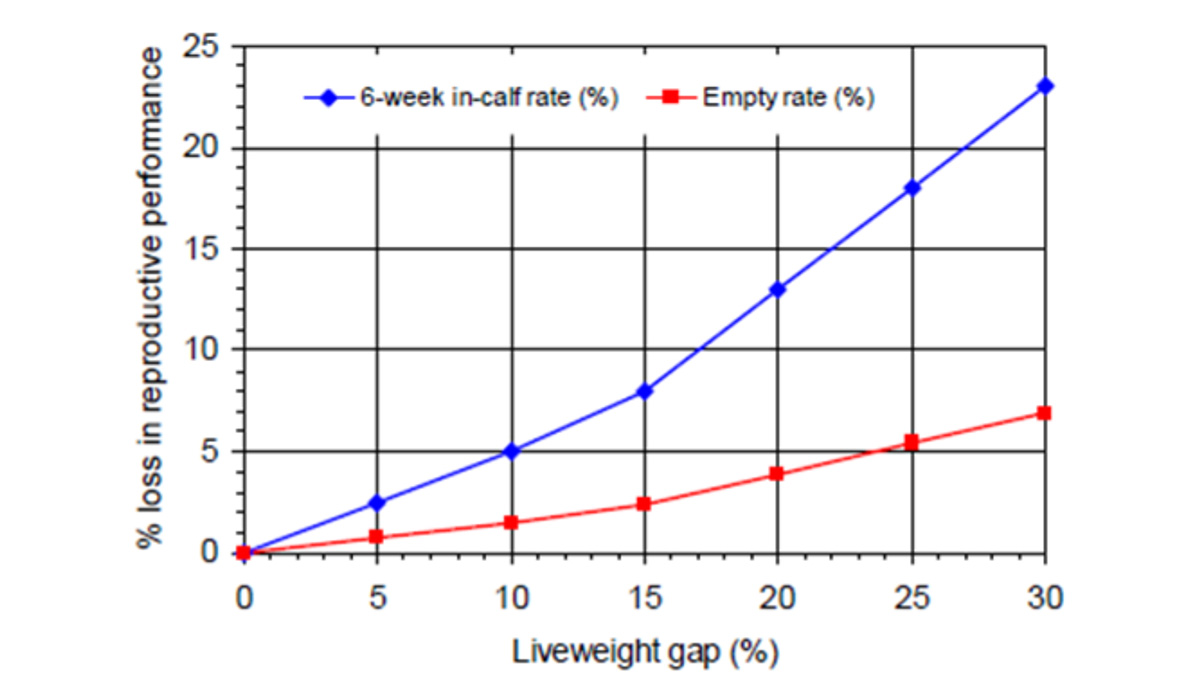
Heifers that reach their target liveweight at first calving, typically 90% of their mature weight, are far more likely to conceive early, enter the herd sooner, and stay productive for longer. Research indicates that a 10% increase in target liveweight contributes an extra 20 kgMS/heifer in their first lactation and delivers a 5% higher 6-week in-calf rate and a 1.5% lower empty rate (Graph 1) compared to their underweight counterparts.
 |
|---|
|
Graph 1: Effects of liveweight gap on first calvers' reproductive performance.
|
When reviewing heifer grazing, the value of grazing needs to be compared with the cost. Low-cost grazing is not necessarily good value, just as paying “top dollar” for grazing does not guarantee top results. The two examples in Table 1 demonstrate cost versus value. In this example, paying a higher weekly grazing rate represents better value when assessed on a $/kg liveweight (LWT) gain basis. The ideal is a win-win situation where the dairy farmer receives back from grazing a quality heifer that has met all industry liveweight targets. The grazier has been well compensated for the heifers they have grown, allowing them to generate a satisfactory margin.
So, what can help deliver a ‘win-win’ outcome?
 |
|---|
|
Table 1: Cost vs. value comparison between grazing
|
1. Start with clear communication
Successful grazing arrangements are built on trust and clarity. Farmers should provide graziers with written targets for key liveweight milestones, based on the mature liveweight of their herd. Without these, it’s difficult to assess progress or agree on what success looks like.
2. Know your herd's mature liveweight
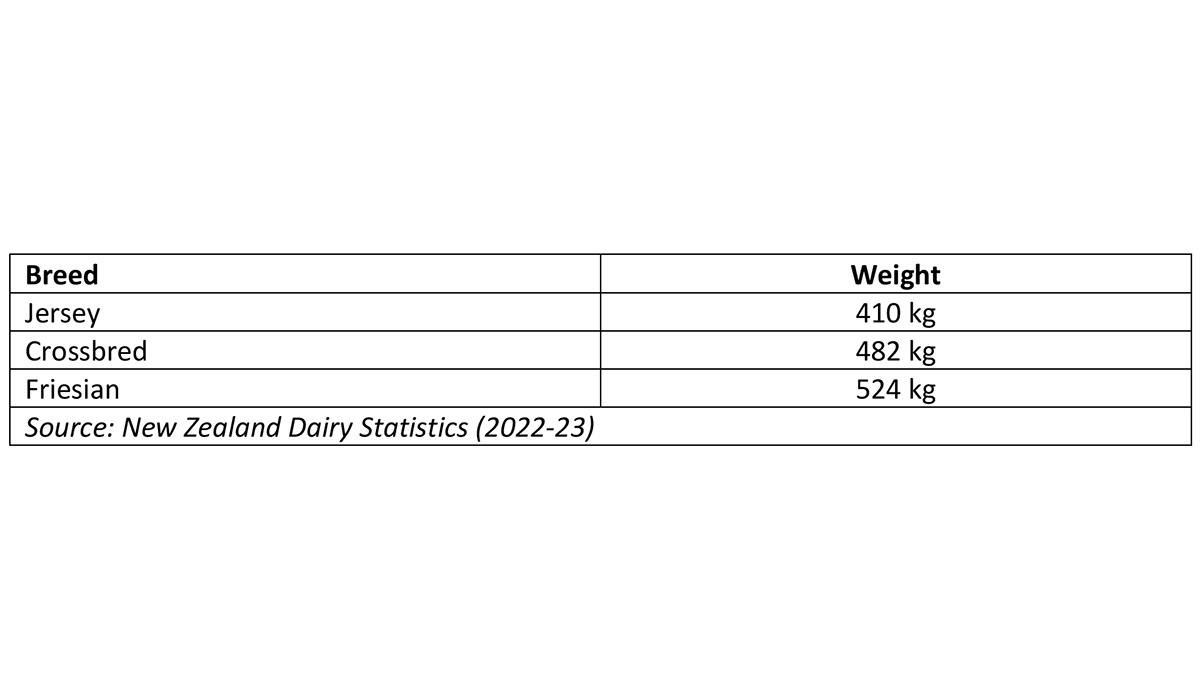
Many farmers are unsure of their herd’s mature liveweight, making it difficult to set realistic targets. This requires weighing 20-50 mature cows (6-8 years old) in condition score 4.5 at 100-200 days in milk. Alternatively, you can reference breed averages or the liveweight breeding value for your herd.
3. Match expectations to feed supply
Graziers are often tasked with delivering steady growth despite highly variable pasture growth, particularly over summer. When dry spells hit, gains can stall unless there’s a plan in place. Farmers and graziers should work together to ensure a feed budget is in place and supplement options are lined up in advance. Maize silage is an excellent option for putting weight on heifers and can be fed in the paddock along a fenceline when ground conditions are dry.
4. Monitor regularly and intervene early
Regular weighing (every eight weeks) allows graziers to track whether heifers are on target. This enables proactive adjustments, such as increasing feed allocation or destocking another stock class to reduce demand. A one-off weigh-in at mating is too late to fix a growth deficit that’s been developing all year.
5. Send well-grown calves
Graziers can only build on what they receive. Heifers sent to grazing at or above their target weaning weights (typically 90–110kg at 12 weeks) and in good health have the best chance of reaching puberty on time and calving at 24 months.
6. Build contingency into the plan
Good graziers don’t wait for a drought to hit before acting. Having flexibility in your grazing system, whether it’s stored supplements or an ability to adjust stocking rate by destocking other stock classes, is key to buffering seasonal volatility.
Growing better heifers is one of the most effective ways to drive greater on-farm productivity, and success is underpinned by proactive communication between farmers and graziers. Clear expectations, documented growth targets, and regular weight checks can keep both parties accountable. Having a contingency plan for poor pasture growth, whether it’s stored supplement, imported feed or alternative grazing, can prevent setbacks.
Wade Bell is Genetic Technologies farm systems manager. Contact him at This email address is being protected from spambots. You need JavaScript enabled to view it.