Fall Armyworm in NZ Maize: Four Years of Research
Four years since it was first detected in New Zealand, researchers and growers now know much more about management of maize pest fall armyworm (FAW).




 increase font size
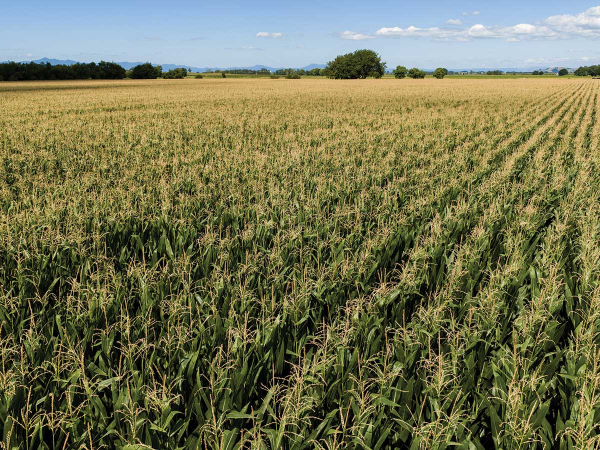 Maize is a high-yielding crop with a substantial nitrogen requirement.
Over the past few weeks, I’ve had several conversations about nitrogen (N) management in maize crops for the coming planting season.
With urea currently around $1,360/t, it’s no wonder nitrogen is at the forefront of discussion and why we’re seeing a growing number of products entering the market with claims around improved nitrogen supply or efficiency.
Maize is a high-yielding crop with a substantial nitrogen requirement. A 20t DM/ha maize silage crop removes around 240kg N/ha. But that doesn’t mean we need to apply 240kg N/ha as fertiliser.
The crop doesn’t care whether its nitrogen comes from a fertiliser bag, mineralisation of soil organic matter, previous effluent applications or another source. What matters is having enough plant-available nitrogen when the crop needs it.
That distinction is particularly important when growing maize on a dairy platform.
Dairy soils are often relatively high in organic matter and fertility, particularly where a paddock is coming out of long-term pasture. When that pasture is cultivated, decomposition of organic matter and pasture residues can release substantial quantities of nitrogen.
New Zealand research demonstrates just how significant this can be, with up to 300kg N/ha released through mineralisation following cultivation of long-term pasture in some situations. Importantly, the amount released varied considerably between sites depending on factors including pasture history, soil type and environmental conditions.
That’s potentially more nitrogen than a high-yielding maize silage crop will require.
This explains why I’m cautious about blanket yield gain claims for products supplying relatively small amounts of additional nitrogen or improving nitrogen efficiency. If a soil is already capable of supplying several hundred kilograms of nitrogen per hectare through mineralisation, demonstrating a measurable yield response from a small N input or gain in efficiency will be challenging.
This is where paddock history becomes particularly important. A paddock coming straight out of long-term dairy pasture is likely to have a substantially bigger pool of mineralisable organic matter than a paddock that has been continuously cropped for several years.
Effluent history adds another dimension.
Dairy shed effluent contains significant quantities of nitrogen and potassium, both nutrients that maize removes in large quantities. Where effluent has been applied to the same paddocks over many years, these areas can develop substantial nutrient reserves.
New Zealand research provides some compelling evidence. Trials established on Waikato dairy farms with a history of effluent application produced first-year maize silage yields of 22.9–31.9 t DM/ha without any yield response to additional N fertiliser. In second-year crops, starter fertiliser maximised yield at one site while no additional fertiliser was required at another.
This reinforces an important point. The starting point for a maize fertiliser programme shouldn’t necessarily be how much nitrogen the crop requires. It should be how much of that requirement the paddock can already supply. Although estimating soil nitrogen supply can feel like a difficult task, growers can make a much more informed decision by combining soil test results with what they already know about the paddock.
A standard soil test provides useful information on pH, Olsen P, potassium, calcium and magnesium, while mineral-N testing to depth can help identify some of the nitrogen already available. But soil testing needs to be interpreted alongside paddock history.
Has the paddock been in long-term pasture? Has it received effluent for 10 years? Was maize grown there last season? What fertiliser has previously been applied?
There is also the question of when that nitrogen becomes available.
Maize doesn’t require all its nitrogen on the day it’s planted. Nitrogen uptake increases rapidly as the crop develops. This is why traditional fertiliser programmes generally include a relatively small amount of starter N at planting, followed, where required, by a larger side-dressing approximately four to six weeks later as crop demand increases.
So, having a soil with a large potential N supply doesn’t necessarily mean fertiliser N will never be required. The important question is whether enough plant-available N will be available at the time the crop needs it.
This is where testing, paddock history and fertiliser timing all come together.
Understand its history, take the appropriate soil tests and build the nutrient programme around this information and what you expect the crop to yield. On some paddocks that will mean applying nitrogen at planting and side-dressing. On others, particularly long-term pasture or high-fertility effluent paddocks, the soil may already be doing much more of the work than you realise.
Four years since it was first detected in New Zealand, researchers and growers now know much more about management of maize pest fall armyworm (FAW).
The transition period (typically defined as the three weeks prior to and the three weeks immediately after calving) sets the biological and productive trajectory for the entire lactation by determining how well the cow adapts from pregnancy to peak milk production.
As spring calving cows head into dry-off, the priority shifts to one thing: setting cows up to calve at the target body condition score (BCS).
Early December marks a key transition for many dairy farmers, as weaned replacement heifers head off-farm to grazing.
With spring underway, maize growers across New Zealand are preparing for planting.


OPINION: Political parties are getting plenty of advice and recommendations from sector groups as the election approaches.

In farming there are external factors that can influence behaviour of a whole herd, such as a bad weather event, triggering false positive heat detections or health attentions.
For Canterbury dairy farmer Cameron Henderson, supporting Meet the Need comes down to a simple question: how can the success of New Zealand farming benefit more than just those within the industry?
Fonterra board members are in line for a pay rise of around 3%.
Dairy processors are ready to further boost New Zealand’s export earnings but want the incoming government to match their ambition with good policy.
Federated Farmers has welcomed new rural policies released by ACT, saying they align closely with its own election priorities.


OPINION: It seems Canterbury processor Synlait is still in the doldrums.
OPINION: Get offside with New Zealand First leader Winston Peters at your own peril.