DairyBase and MINDA Link Up to Cut Farmer Paperwork
Farmers can spend less time on paperwork, thanks to a new data sharing agreement between DairyNZ’s DairyBase and LIC’s MINDA software.
 increase font size
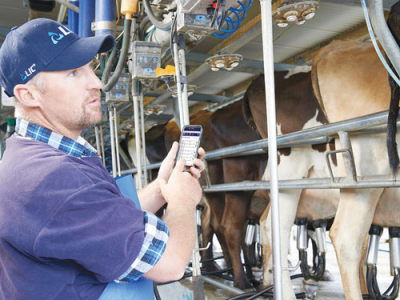 Waikato farmer Graham Cates.
Dairy farmers with herringbone sheds can now make use of a new LIC Automation YieldSense app to help them determine during milking which cows are producing the best or the worst on any given day.
YieldSense is an automated in-line milk sensor that shows yield and milksolid results.
The YieldSense Connected app is itself not new, but it now has new functionality giving it “wider farmer appeal,” the company says. It formerly suited only farmers with automated rotary dairy sheds.
Farmers equipped with YieldSense in-line sensors can use the YieldSense Connected app to immediately identify the ‘passengers’ (low value/production cows) in their herds, and to identify high-producing (high value) cows.
The app captures information from the milk sensors, alerting the farmer to the results via their smart device. Results include a summary of the bottom- and top-performing individual cows in the herd.
Graham Cates, manager of a 300-cow herd in Walton, near Matamata, uses YieldSense Connected to record the yield for each cow in his herd; he taps into the technology for a 10-day period each month.
“We record the alerts when they appear. Whenever we’re alerted, we go to the bail, get the cow number and punch it into the phone,” Cates says.
The information backs up animal management decisions. “It makes our job easier, its user friendly and fast, and now we don’t herd test. We make our decisions about what we’re going to do: treat, dry off, or cull.”
The app goes beyond individual cow results, LIC says. Herd-level reporting helps farmers in herd improvement.
A flashing light system in the milking shed is an optional extra. The lights provide milking staff with an extra visual alert – signalling the bottom- and top-performing cows before they return to the paddock.
Paul Whiston, LIC Automation chief executive, says the app is affordable for most farmers, particularly those with small to mid-size herds.
“Until now YieldSense has been for farmers with rotary milking sheds with an in-bail cow identification system. The YieldSense Connected app opens the technology up to the entire market, including farmers with herringbones.
“YieldSense Connected, and the previously released CellSense Connected (released November last year) offer farmers more choice and flexibility with the latest automation solutions.”
Making sense of YieldSense
Farmer selects the threshold for alerts based on a percentage of the herd
YieldSense detects the yield and milk solid levels in the milk
Alerts from the sensors are sent to the farmer’s smart device and flashing light system (optional extra)
Farmer links the alert to the cow number
YieldSense Connected provides farmers with instant, real-time, reporting on cows and herd and allows for better decision making at the right time.
Farmers can spend less time on paperwork, thanks to a new data sharing agreement between DairyNZ’s DairyBase and LIC’s MINDA software.
An LIC bull, Tronnoco AR Sadio-ET S3F, bred by Tony and Keri O'Connor of Tronnoco Farming Co Ltd near Timaru, has won the 2026 Mahoe Trophy.
Bovine Viral Diarrhoea (BVD) is estimated to cost New Zealand's dairy and beef industries more than $150 million every year, yet many of the tools needed to control it are already well understood. After more than 25 years in veterinary practice, Andrew Weir, animal health technical specialist at LIC, has seen firsthand the impact BVD can have on herd performance. We asked him about the role of persistently infected (PI) animals and the practical steps farmers can take to reduce their risk.
In the past, a bull could sit comfortably in a breeding team for several years with little change, but today, that’s no longer the case.
Paynes Titus Excelsior ET, an LIC bull bred by Brad Payne and Claire Brodie in the Waikato, has won the JT Thwaites Sire of the Season 2026 Award.


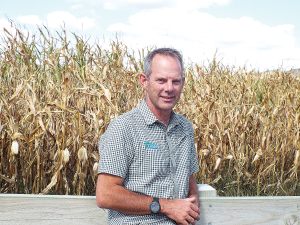
Surprised, humbled and quite thrilled. That’s the reaction of James Allen, one of the founding partners and now chief executive of AgFirst, on being made a life member of the Institute of Rural Professionals.
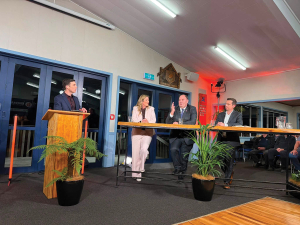
It was billed as a chance for all the political parties to woo the rural vote, but question marks hang over just how effective this was.
Minister of Conservation Hon Tama Potaka has appointed Susan O'Regan as Chair of the Queen Elizabeth II National Trust (QEII) for a three-year term.
Red meat farmers are welcoming Labour’s plan to review the Emissions Trading Scheme and not to campaign on pricing agricultural emissions.
Where any worker in the kiwifruit industry is mistreated, we expect the authorities to take action.
Mid Canterbury Federated Farmers arable chair, Bevan Lill, said Beef + Lamb NZ data indicated that for the last six years, the average arable return on investment was about 0.8% while inflation ran about 4% - so the average arable farm was going backwards at about 3% a year.