Farm Safety Improves Through 'Incremental Gain', Says Birkett
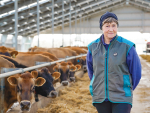
Improving health and safety is about incremental gain rather than a sudden decision, says Leeston farmer and Federated Farmers health and safety spokesman David Birkett.
 increase font size
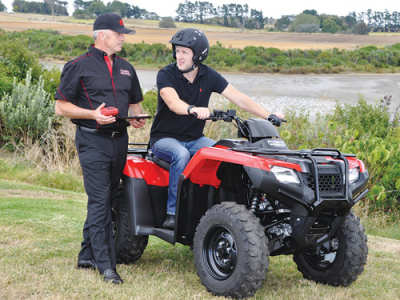 Quad fatalities make the headlines, but all on-farm deaths need a serious look at by farmers.
While quad fatalities keep fuelling a media frenzy, it’s time to look at the broader picture and try to understand what makes our farms such dangerous places.
Dangerous they are: statistics between 2013 and December 2015 show farmers suffered 63 deaths*; the next-highest sectors, transport and warehousing, had 17 and forestry 14 respectively during the same period.
So the death rate on farms is around four times higher; why is that? If you’ve visited a quarry, warehouse or forest lately, you’ll know that before you get to the action you’ll be hit with rules, hazard identification, hi-vis vests, hard hats and steel-toe boots. Easy to do, you say, on a compact ring fenced site, but much harder to do in the backblocks of New Zealand.
Of course, it’s just not possible to have ‘big brother’ watch your every move, so the farming community has to take the task on board and start looking after themselves and their cohort.
You can learn a lot from numbers and the story they tell. Of all the deaths recorded in 2013-15, 43% were suffered by people 60 and older, and 50-60 year olds pushed that percentage to 56%. You have to wonder if the ‘I’ve-always-done-it-like-this-and-got-away-with-it’ mentality causes over-reporting of this age group.
Looking at the causes of the fatalities makes interesting reading too. While quad deaths make up around 32% (20 deaths), the numbers also show that 68% occurred in other situations: tractor rollovers accounted for 14% (9) and being struck by tractors or falling objects, such as big bales, caused 20% (13). Machinery or PTO shaft accidents caused 10% of fatalities (6), and drowning, crushing or burning caused 20% (12). Fatalities involving vehicles, including three fertiliser spreading truck rollovers, accounted for 14% (9), showing that farms are particularly dangerous places.
We have to be proactive to stop this waste of life and the ensuing misery it causes, by understanding the risks that mundane tasks can expose us all to. The new health and safety legislation has focused some attention. But we need to get beyond the ‘she’ll-be-right’ attitude said to typify being Kiwi and understand that it might not be alright.
If you see somebody on your property – family, staff or visitors – doing something risky, stop them and talk about it. You might get an earful about being a Jessie, but you might just save a life.
• Source: WorkSafe NZ - Summary of Workplace Fatalities 2013-16
Improving health and safety is about incremental gain rather than a sudden decision, says Leeston farmer and Federated Farmers health and safety spokesman David Birkett.
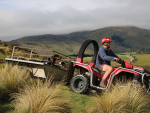
A safety push across New Zealand has revealed significant gaps in hazardous substances management, farm vehicles, tractors, quad bikes and side-by-sides.
Safer Farms Regional Champions are putting Crush Protection Devices (CPDs) through their paces and sharing their first-hand experiences with other farmers.
Decisions you make in an instant on the farm can be the difference between life and death.
Keeping healthy and safe during vintage 2026



New Zealand's 2026-27 freshwater fishing season has opened, with anglers encouraged to head to rivers and lakes over the coming days as conditions look favourable across much of the country.
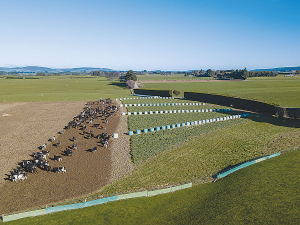
Central Otago District Council (CODC) has voted against a plan to spread treated sewage sludge from Cromwell and Alexandra on farmland near Lauder, a decision Federated Farmers says reflects strong opposition from rural residents.
Pāmu has released its FY26 Integrated Annual Report, reporting a Net Operating Profit of $113 million, more than double the $49 million recorded in FY25.
Meat Industry Association data, released alongside the Red Meat Sector conference in Wellington, shows export value climbing across the US, China, UK and Canada.
Applications are set to open for the 2027 Zanda McDonald Award, a trans-Tasman award recognised for identifying and fast-tracking talented young leaders in agriculture and agribusiness.
The Royal New Zealand College of General Practitioners (the College) and Hauora Taiwhenua Rural Health Network are calling for investment in a proposed new training pathway for rural GPs, warning that many rural practices are struggling to recruit while a large share of the existing workforce nears retirement.