El Niño Warning: NZ Farmers Urged to Plan Fert Early
Plan ahead and be patient. That’s the message to farmers and horticulturalists from the chairman of the NZ Agricultural Aviation Association, Kent Weir.
 increase font size
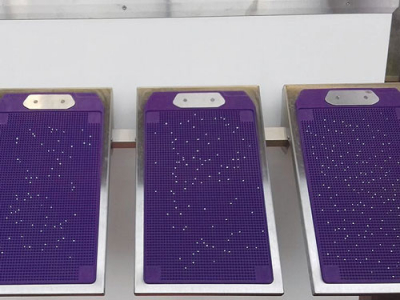 Drive-over rubber mats.
Amazone's EasyCheck system simplifies checking the performance of fertiliser spreaders.
The high cost of fertiliser makes it important to understand how well a spreader performs – in the quantity applied and the spread pattern.
Quantity is taken care of by calibration, to compare set rates with actual weights, and spread pattern is usually done by driving over test trays to get a result known as the co-efficient of variation.
German spreading and seeding specialist Amazone looks to have made the task a little easier with its recently launched EasyCheck system that combines the power of a mobile phone app with a set of drive-over rubber mats, rather than the more traditional tray system.
In use, 16 purple rubber mats are placed in four rows across the paddock at pre-determined distances from the tramlines. Passing down the tramline the operator spreads over the mats then photographs each mat with a smartphone; from there the app calculates the amount of fertiliser and analyses the spread pattern.
Where the spread pattern is incorrect or uneven the app will suggest areas to look at such as disc speed, shutter opening, drop point or spreading vane positions, dependent on machine.
The mats are light enough to be carried by one person; placement takes a few minutes and should provide a more workable option than the more typical bulky plastic or cardboard trays.
The purple colour of the mats is said to allow easier testing of light or dark coloured products, although the manufacturer says the smartphone will need a camera with good resolution.
Plan ahead and be patient. That’s the message to farmers and horticulturalists from the chairman of the NZ Agricultural Aviation Association, Kent Weir.
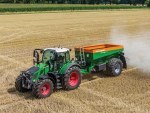
Amazone's ZG-TX combi spreader has been updated with several new features, centred around improved accuracy and easier operation.
When it comes to annual rebates, it's been a long time between drinks for Ravensdown shareholders.
Ravensdown has reported a net profit before tax and rebate of $50.1 million for the year ended 31 May 2026.
A new digital assistant is now helping Ballance Agri-Nutrients farmers speed up nutrient information and ordering.



LIC shareholders have elected a new North Island representative to the co-operative's Board, along with five representatives to its Shareholder Reference Group (SRG), following the company's Annual Meeting held in Invercargill.
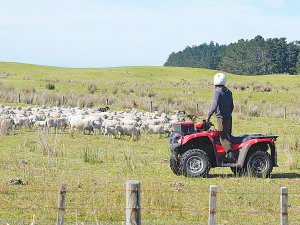
Farmers across parts of Southland and South Otago are continuing to deal with difficult conditions after a prolonged run of wet weather, with pressure building around feed supply, stock management, pasture damage, farm infrastructure and everyday workloads.
Federated Farmers says it welcomes Labour's commitment to reviewing the Sharemilking Agreements Act, calling on other major parties to do the same.
For Canterbury dairy farmers Sian Meijer and Rick Wobben, wearable technology has become one of their most valuable on-farm tools - helping manage 1850 cows across an expansive, high-performing dairy operation while improving efficiency, mating outcomes and day-to-day decision making.
Fonterra has unveiled its annual results for the 2026 financial year, posting $27 billion in revenue and close to $20 billion returned to New Zealand farmer owners and unit holders.
The first major update to the Dairy Cattle Code of Welfare in more than a decade has been released, marking what DairyNZ describes as an important step in ensuring animal welfare standards continue to evolve alongside scientific evidence and on-farm realities.