Wrapped bales arrived in the 1980s offering a viable alternative to clamp silage, and they remain a solution for those not wishing to invest in expensive clamps – a solution for smaller farms and a means to clearing excess grass at the end of the season.
On the downside, disposing of the net wrap used to secure the bale and the external plastic film required to make the package airtight has been problematic, although in the last half decade, the film has been collected for recycling.
The inner plastic net wrap has become more of a problem, accounting for approximately 2.5 million tons of waste per year, at least half of all plastic waste in agriculture. It typically ends up in landfill or is burned – both creating harmful consequences for the environment.
Plastic net wrap can be left in paddocks, contaminating soil and water, or become entangled in machinery such as bale feeders, manure spreaders and seeding equipment, causing downtime and repairs.
Perhaps worse, it can be ingested by cattle and wildlife. When that happens, it can cause weight loss and death.
It seems that farmer ingenuity has come up with the answer at either end of the globe.
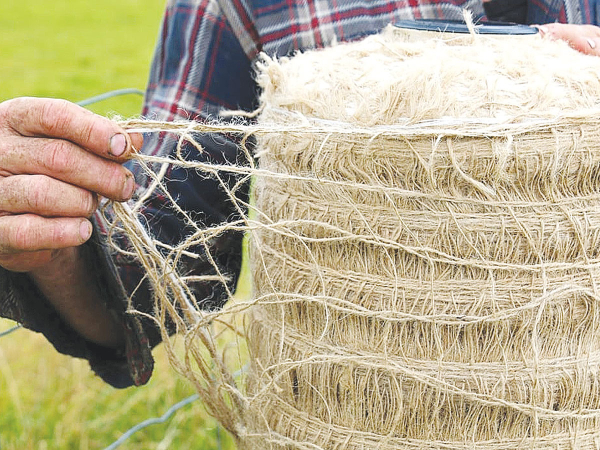
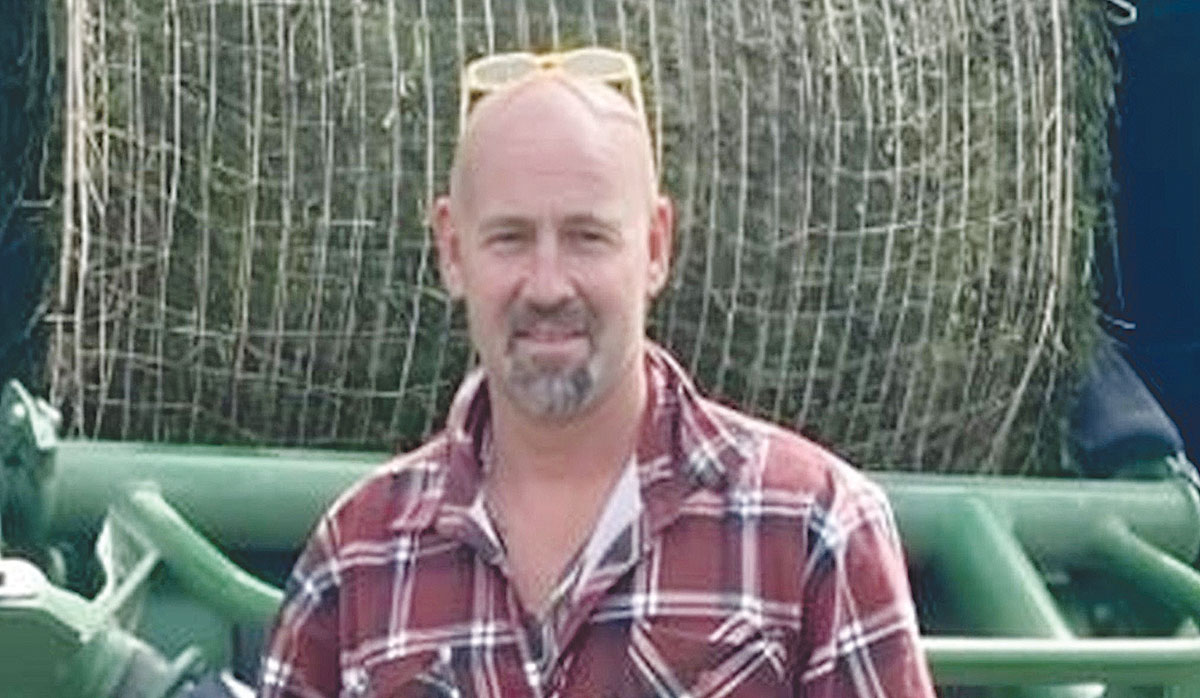
Here in New Zealand, Southland deer farmer, Grant Lightfoot has invented a non-polluting baleage wrap that animals can eat, made from jute yarn, which is similar to flax fibre.
Working as a commercial diver who spent many hours in a decompression chamber, Grant had a eureka moment when thinking about the farm at home and came up with the idea of Econet bale wrap.
Initially, the idea was to use hemp fibre, but legal restrictions in the United States relating to THC – a psychoactive substance found at low levels in hemp – prevented its use and its byproducts in livestock feed.
This evolved into the use of jute, which grows like a bamboo plant, that after cutting is soaked, then beaten, to leave the outer bark which is jute. Initially hand woven at home with Lightfoot’s partner Colleen, the first 50m of the 1.25m wide net was woven at around one metre per evening.
Trials in a baler showed it worked straight from the get-go, followed up by a win in the open-section of the Southern Rural Life Farm Innovation Awards, followed by calls from around the world over the following days.
Lightfoot has gone on to partner with an Indian living in America and an ex-Kiwi living in Oklahoma, with the former using his connections in India to create more samples for testing and the eventual move into commercial production.
 |
|---|
|
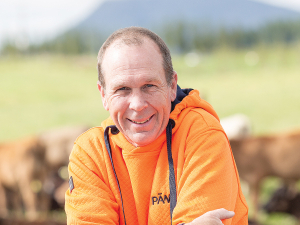
Grant Lightfoot
|
The rolls of baler netting are made in Kolkata in 525m or 775m lengths. With stocks available in NZ, it costs slightly less than $4 to net wrap a bale with Kiwi Econet compared with $2.40 for conventional net. Despite the extra cost, Lightfoot says he has already got farmers and contractors knocking on his door.
World's First Compostable Baler Wrap
In Western Canada, rancher Larry Ruud and son Austin are co-inventors of the world’s first certified compostable baler wrap, that has been on sale for a year, saving farmers’ time, cutting repair costs and avoiding enviromental damage. Nature’s Net Wrap decomposes naturally, so removes the problems currently associated with burning or burying plastic net wraps.
The Ruud’s came up with the idea for Nature’s Net Wrap in 2015, after becoming increasingly frustrated with removing net wrap wound around machinery parts.
Nature’s Net Wrap is made from a blend of biopolymers and natural fibers that have been tested both in the field and in laboratories, evolving into a product that is strong enough to meet farmers’ typical storage needs, yet is compostable and fully consumed by microorganisms and enzymes in the soil, leaving behind no microplastics.
During the development phase, they worked with multiple universities and private testing facilities, including the University of Alberta by 2022, had a prototype ready to do field testing. Two years of testing looked at performance through multiple brands and various models of balers, over a wide range of climatic zones.
A contact, who realised the potential of the product, contacted CNH Ventures, CNH’s venture capital fund, which took a minority stake in Nature’s Net Wrap in January 2024. By May, with CNH’s help, the product was launched onto the North American market. Its arrival to market resulted in multiple calls and emails from around the world.
They also took calls from farmers who grow tomatoes, flowers and vine crops, and others who use plastic netting and webbing, as well as from people looking to use the product apply to stop soil erosion.
Currently, Nature’s Net Wrap is solely available through CNH’s Case IH and New Holland dealer network in North America, with plans to extend into Europe later this year.