
PCE: Treat Environmental Data as Critical Infrastructure
The Parliamentary Commissioner for the Environment, Simon Upton, wants environmental information to be treated as critical national infrastructure.
 increase font size
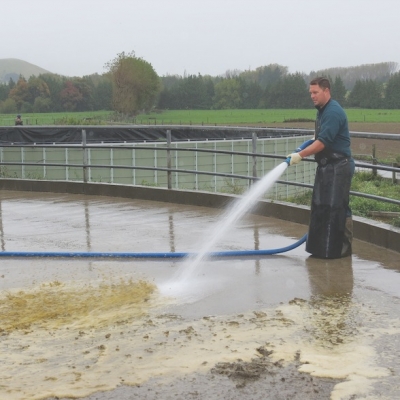 Water-take applications are due by 24 December
ABOUT 90% of Waikato’s 2600 dairy farmers have lodged dairy shed water-take consent applications. The Waikato Regional Council is urging the remainder to apply before the December 24 deadline.
Under the council’s Variation 6 rules, dairy farmers can still take up to 15m3 per day from bores or waterways for dairy shed use, subject to water availability, but need a consent is needed to take more.
Though they must apply for a consent, farmers are assured of ‘grandparented’ access to the level above 15m3 per day they were using at October 2008 provided they meet the deadline for applications. Those who don’t meet the deadline can’t be guaranteed access to the ‘grandparent’ rules.
The council campaigned to educate farmers; DairyNZ, dairy companies and Federated Farmers were supportive.
The council says its special group consent processing scheme also encouraged early applications en masse to help keep down processing costs. “We have almost the expected number of applications,” says farm water project manager Amy King. “We urge remaining farmers wanting a grandparented consent at 2008 levels to meet the deadline.”
Farmers not covered by the ‘grandparent’ provisions should contact the council to discuss their individual circumstances so they can explore options to gain lawful access to water if they need a consent. The contact number is 0800 800 402.
Advice on consenting is also available from dairy companies or by visiting www.waikatoregion.govt.nz/watertakes
King says Variation 6 itself was a response to the environmental pressure resulting from increased demand for water. And the new National Policy Statement for Freshwater Management also reflects the increased pressure on water resources.
King says the need for enough water in the ground or in waterways, to sustain their uses means there is a risk of restrictions on access to water.
But farmers with limits to their water may improve water use efficiency, transfer water permits between parties and/or collect and store water at high flow times for use at other times.
“We are aware there are farmers who have reduced their water usage in the dairy shed through a variety of efficiency gains which has enabled them to milk more cows but with no increase in their overall shed water needs” says King. “DairyNZ in particular has looked into and provided advice to farmers about such options.”
The Parliamentary Commissioner for the Environment, Simon Upton, wants environmental information to be treated as critical national infrastructure.

A pause on Waikato Regional Council's (WRC) plan change that sets new freshwater rules for farming could be announced in the coming weeks.
OPINION: Staying on Plan Change 1, NZ First deputy leader Shane Jones took to social media to gain some political points.
OPINION: All eyes are on the Government as Waikato farmers seek urgent help to fend off the controversial Plan Change 1 (PC1), designed to manage nutrient discharges into waterways in the region.
Waikato farmers have been told that the Government’s new planning system legislation and the region’s Plan Change 1 (PC1) “won’t mesh together very well”.



Now in its fourth year, the 2026 Fencing Industry Awards, formed part of the proceedings of the FCANZ Conference, held in Nelson during August.
DairyNZ deputy chair Cameron Henderson has been re-appointed unopposed for another term.
OPINION: The stats speak for themselves.
Farms across the upper North Island are trialling different pasture mixes as part of a research programme that aims to build greater resilience into farming systems.
Election years are always a concerning time for farmers, according to DairyNZ chair Tracy Brown.
The Ballance Farm Environment Awards are coming to the West Coast of the South Island.