Semi-robotic milking technology to boost parlour efficiency
Waikato Milking Systems’ latest innovation, ErgoPOD is now commercially available within New Zealand and Australia.
 increase font size
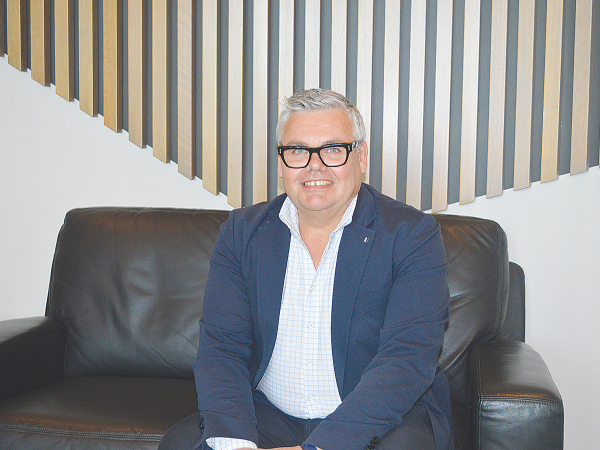 Jamie Mikkelson
OPINION: In an ever-changing world, dairy farmers face numerous challenges that hinder their ability to maintain profitability and sustainability.
As the executive chairman of Waikato Milking Systems, I have had the opportunity to interact with farmers from around the globe, and a common thread weaves through their concerns.
One of the primary issues facing farmers is the scarcity of available labour.
The younger generation shows a reluctance to live in rural areas and take on diverse tasks on the farm. Instead, there is a growing trend towards specialisation, leading to a shortage of skilled workers.
Moreover, the cost of labour has risen significantly, surpassing pre- Covid levels. This surge in labour costs, coupled with supply constraints, has driven inflation, with the unemployment rate predicted by the ANZ to rise rapidly in the next 12 months, much like during the Global Financial Crisis.
The agriculture industry has been further burdened by increased costs of feed, fertilisers and energy.
During the pandemic, farmers and retailers stockpiled supplies as they faced challenges in procurement. However, the scenario has changed, and just-in-time ordering has become more prevalent.
Consequently, suppliers are now facing pressure to reduce prices to secure sales, despite lower volumes. Warehouses are full, working capital under pressure. Additionally, the cost of capital has risen significantly, limiting cash flow, and hampering the ability to invest in labour-saving or productivity-enhancing technologies.
Compounding these challenges, milk prices have plummeted, sometimes falling below the cost of production. Weak global demand for dairy products has outweighed the sluggish growth in global supply. The volatility of the Global Dairy Trade (GDT) adds further uncertainty, making it challenging for farmers to predict their future income, let alone the political and environmental challenges facing the industry.
Amidst these immediate challenges, farmers worldwide have been turning to technology as a solution.
In Europe, where smaller family farms are prevalent, milking robots have become almost commonplace. On larger farms, rotaries are preferred. Upgrades and replacements of parlours have been on the rise, along with the adoption of automated cluster removers, auto teat spraying equipment, auto feeding, sorting, and heat detection systems.
However, there is still untapped potential in milk yield recording, which can serve as a valuable data source for day-to- day herd management decisions.
Despite the current difficulties, farmers who adopt a clear investment strategy in technology and leverage its benefits will be better positioned to thrive when milk prices eventually strengthen. To make these technologies accessible, many technology providers are offering payment options over time, often less than three years, enabling farmers to realise a return on investment within this timeframe.
Over the past two decades, technology has progressed rapidly, but the last five years have seen a remarkable acceleration in advancements, akin to the exponential growth witnessed across industries.
Data-driven insights and the integration of smart AI technologies are revolutionizing the agricultural landscape and are set to bolster productivity gains significantly. This presents a promising outlook for farmers and their cows alike.
Precision farming technologies are set to be the cornerstone of driving productivity in dairy farming. These innovations empower farmers with data-driven insights and real-time information, enabling them to optimize their operations and make informed decisions.
Challenges faced by dairy farmers worldwide necessitate innovative solutions to drive productivity and sustainability. New Zealand’s above average herd size and scale puts it in a unique position globally. There is much to be proud of here in NZ, however celebrating our progress has been clouded with political and environmental posturing for too long. While the pressing issue of global warming demands urgent attention, it is undeniable that the world also grapples with excessive waste and inefficient resource use.
It is for these very reasons that embracing precision farming techniques will propel us towards a brighter future, fostering shareholder value, and in tandem, forging a path towards a more sustainable and ecologically responsible world.
Waikato Milking Systems’ latest innovation, ErgoPOD is now commercially available within New Zealand and Australia.
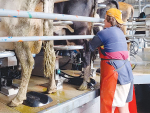
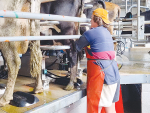
Waikato Milking Systems has unveiled the final production version of its ErgoPOD, a state-of-the-art semi-robotic technology designed to increase milking speed, productivity, and efficiency in the parlour.
While Waikato Milking Systems is committed to solving the challenges dairy farmers face with some of the world’s most innovative and technologically advanced dairy solutions, their approach differs from other companies, as their focus falls on retaining the essence of dairy farming.
Numedic Ltd has acquired a major part of Waikato Milking Systems' effluent and environmental business, including the well-known Cobra range of travelling rain gun irrigators.
OPINION: In the heartland of rural New Zealand, Waikato Milking Systems is on a transformative journey that seeks to revolutionise dairy farming practices with their latest innovation, ErgoPOD.


Alliance is calling for final applications for its 2027 Graduate Programme, with applications closing on Sunday 25 October.
Decades piloting planes has ensured vet and farmer David Hayes is focused on safety. So, after a serious accident while welding on farm, he is sharing his experience so others can learn from it.
Canterbury milk processor, Synlait Milk has confirmed Leon Fung as its chief executive officer.
OPINION: Making it easier to collect rainwater and use it to grow crops and livestock is a no brainer.
As part of its Election 2026 coverage, Rural News asked political parties how they would help pull the arable sector out of the doldrums. Here's what they said:
Farmers are being encouraged to rethink how they manage waste on farm with the launch of ruralwastesorted.co.nz, a new website bringing together practical tips, real farmer experiences and resources.