Editorial: Time to Boost Organics
OPINION: The time has come for the Government to back the organic sector.
 increase font size
 Climate Change Minister Simon Watts announced last month that New Zealand will reduce emissions by 51 to 55% compared to 2005 levels, by 2035.
OPINION: The farming sector, or at least some parts of it, are preparing for a battle with the Government over its latest international climate change target.
Farmer support is being canvassed to push for New Zealand to opt out of the Paris Agreement.
Climate Change Minister Simon Watts announced last month that New Zealand will reduce emissions by 51 to 55% compared to 2005 levels, by 2035. The Paris Agreement is the global climate treaty which seeks to limit global warming to 1.5°C. Under the Agreement, each country sets targets for reducing its greenhouse gas emissions, known as Nationally Determined Contributions.
Watts claims that meeting this target will mean NZ doing its “fair share” towards reducing the impact of climate change.
But some farmer groups – including Groundswell – isn’t buying any of it.
The lobby, well known for organising massive protests around the country during Labour’s reign, is seeking donations to build a war chest.
And Groundswell isn’t holding back when it comes to commenting on Watt’s latest announcement.
“New Zealand doesn’t elect governments to play along with international games. We expect them to look out for our interests. They work for us, not the jet-setting global conference elite,” Groundswell leader Bryce McKenzie told its supporters in an email.
He claims complying with the Paris Agreement means only one thing – poverty.
Federated Farmers is less muted in its response.
It claims the 2030 target of a 50% reduction in all greenhouse gas emissions in just the next five years is already completely beyond reach.
This leaves the National Party in a bind. Will it listen to the concerns of farmers or pander to the ‘middle-ground swing voters’ keen to see action on climate change? Time will tell.
OPINION: The time has come for the Government to back the organic sector.
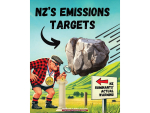
OPINION: Back in April, the Intergovernmental Panel on Climate Change delivered an update that should have triggered an 8.5 magnitude earthquake in the world of climate change policy.
OPINION: City and regional councils have been put on notice - stop using extreme climate forecasting scenarios that can drive unnecessary costs onto ratepayers.
A five-year study has found that the cost of reducing emissions without technology may be significant and unsustainable for Northland dairy farmers.
OPINION: Confidence in the wool sector is rebounding as prices hit levels not seen in more than 15 years.



OPINION: In politics, credibility is and should be big. It must surely rank higher than charisma, which is quite trite and superficial. Yet, voters nowadays are often wooed and influenced by how someone looks or talks at a superficial level. TV plays a huge role in this.

Farmers can spend less time on paperwork, thanks to a new data sharing agreement between DairyNZ’s DairyBase and LIC’s MINDA software.
Kaikōura families affected by July's severe storm have found a practical solution to a problem that's kept some children away from regular schooling for weeks: a washed-out section of Inland Kaikōura Road, which has stopped the local school bus from running its usual route.
Rural New Zealand is welcoming the Government’s recent package of rural healthcare initiatives.
Interest in agritech and production animal systems has prompted Massey University's School of Agriculture and the Environment to new majors to its popular animal science degree.
Ballance Agrinutrients chief executive Kelvin Wickham says despite a tough year, he is pleased the business has returned to profit.