Editorial: Cutting red tape
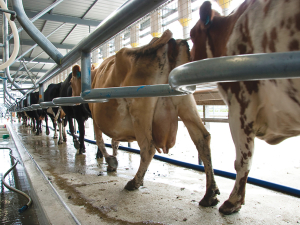
OPINION: One of the world’s largest animal health and nutrition companies, DSM, now known as dsm-firmenich, has developed a feed additive Bovaer to lower methane emissions from cows.
 increase font size
Global animal health company DSM says it has a product that can help reduce emissions from cows by up to 30% but surprisingly the Government is not keen.
Agriculture Minister Damien O’Connor says the product “needs to be fed with every mouthful of feed so there’s no guarantee we can use it in NZ farming systems”.
But DSM says that’s false. It blames MPI for feeding the wrong information to the minister.
Milking It also believes DSM had been trying to contact him directly for a year or so to brief him on the product, called 3-NOP.
Someone is well behind the eight ball on this.
OPINION: One of the world’s largest animal health and nutrition companies, DSM, now known as dsm-firmenich, has developed a feed additive Bovaer to lower methane emissions from cows.
Authorities in both the United Kingdom and Canada have now approved the use of methane-reducing feed additive Bovaer.
A new methane inhibitor showing promising results overseas is now being trialed in New Zealand with the backing of Fonterra.
Fonterra and Royal DSM, a global science-based company active in health, nutrition and sustainable living, are teaming up to work on reducing on-farm greenhouse gas (GHG) emissions in New Zealand.
A global animal health company is welcoming the Government’s discussion paper on the use of agricultural inhibitors.
Farms across the upper North Island are trialling different pasture mixes as part of a research programme that aims to build greater resilience into farming systems.
Election years are always a concerning time for farmers, according to DairyNZ chair Tracy Brown.
The Ballance Farm Environment Awards are coming to the West Coast of the South Island.
Most dairy regions around the country have had a pretty good season so far says Tracy Brown.
Rural leader Mark Hooper has been appointed as an independent director to the NZPork board, bringing extensive farming, governance and advocacy experience to the role.