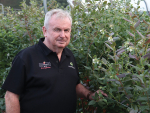
James Blair Named 2026 Young Grower National Champion
James Blair, an agronomist for AS Wilcox and the Pukekohe regional champion, has won the 2026 Young Grower national title.
 increase font size
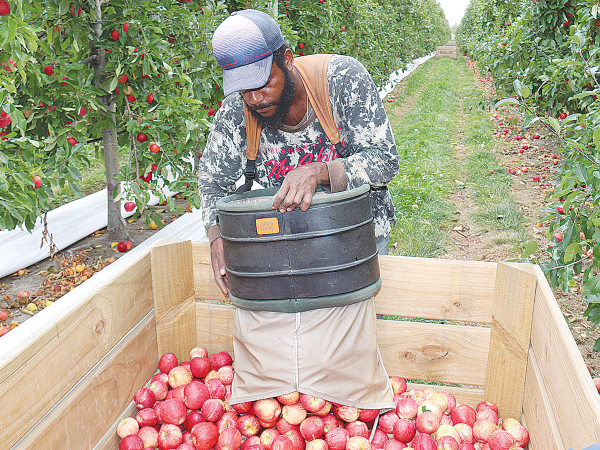 Last month the current RSE cap was lifted by 3,000 to 19,000 for the coming season.
Horticulture New Zealand has welcomed the recent Government decision to increase the Recognised Seasonal Employer (RSE) scheme.
In late September, Immigration Minister Michael Wood lifted the current RSE cap by 3,000 to 19,000 for the coming season.
In setting the new cap, Wood said the Government also took into consideration concerns expressed about working conditions from RSE workers.
"The wellbeing of RSE workers is a priority for us, and we have worked with industry and unions to introduce a new provision, that employers will be required to provide a sick leave entitlement to RSE workers.
"That is in addition to the pre-existing minimum wage requirement of $22.10, which we introduced during the pandemic."
HortNZ chief executive, Nadine Tunley says the move will give growers confidence to continue to invest as they go into the 2022-2023 harvest season.
"Any decision that helps our industry address its chronic labour shortage is good news."
However, Tunley says the horticulture industry is eager to continue to work with the Government on a substantive review of the RSE scheme, to ensure it is fit for purpose and delivers for the Pacific and its people, as well as our horticulture industry.
"We want to build on the past 15 years and ensure the ongoing success of the scheme in a post-Covid world."
But there has been some criticism of the Government decision with ACT saying the change is 'too little too late'.
"The sensible policy change would have been to remove the cap on the number of RSEs completely, like Australia's scheme," ACT Immigration spokesperson James McDowall says.
"Capping the scheme creates untold problems. Employers fight over a 'quota' that must be allocated to each one. The allocation formula is not fair and leads to delays and disappointment year after year."
He says the RSE scheme is a win-win-win for the primary industries, our pacific friends and neighbours, and New Zealand's geopolitical aims of a more united and democratic pacific.
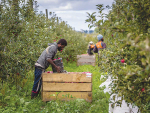
James Blair, an agronomist for AS Wilcox and the Pukekohe regional champion, has won the 2026 Young Grower national title.
OPINION: A simpler, clearer, more effective Recognised Seasonal Employer (RSE) scheme.
There's strong support from the horticulture sector for the Government's plans to overhaul and streamline the Recognised Seasonal Employer (RSE) scheme.
Agriculture Minister Todd McClay has admitted that a scheme bringing workers from Pacific nations to work on orchards has become too hard to navigate but says changes are coming.
Horticulture New Zealand says proposed changes to the Plant Variety Rights Act 2022 will drive innovation, investment and long-term productivity.


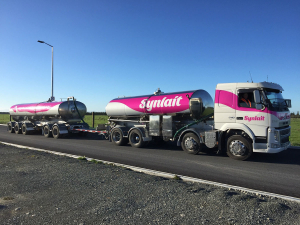
Synlait has swung to second-half profit as operations stabilise, but the dairy processor still posted a $75.4m annual loss.

LIC shareholders have elected a new North Island representative to the co-operative's Board, along with five representatives to its Shareholder Reference Group (SRG), following the company's Annual Meeting held in Invercargill.
Farmers across parts of Southland and South Otago are continuing to deal with difficult conditions after a prolonged run of wet weather, with pressure building around feed supply, stock management, pasture damage, farm infrastructure and everyday workloads.
Federated Farmers says it welcomes Labour's commitment to reviewing the Sharemilking Agreements Act, calling on other major parties to do the same.
For Canterbury dairy farmers Sian Meijer and Rick Wobben, wearable technology has become one of their most valuable on-farm tools - helping manage 1850 cows across an expansive, high-performing dairy operation while improving efficiency, mating outcomes and day-to-day decision making.
Fonterra has unveiled its annual results for the 2026 financial year, posting $27 billion in revenue and close to $20 billion returned to New Zealand farmer owners and unit holders.