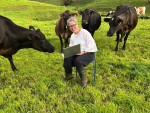
International Day of Rural Women: Two DairyNZ Farmers’ Stories
Today, 15 October, is the International Day of Rural Women, which recognises rural women’s contribution to farming, communities and the environment.



 increase font size
 Kirsti Lovie
As New Zealand marks International Day of Rural Women today, women from across the horticulture sector are calling attention to the crucial role they play in building a more sustainable, inclusive and climate-resilient industry.
This year’s United Nations’ theme, “Rural Women Sustaining Nature for Our Collective Future,” shines a global spotlight on women’s contributions to biodiversity, climate resilience, and land stewardship.
In New Zealand, women in horticulture are not just sustaining the land, they're shaping the future of the sector.
From orchards to research labs, boardrooms to packhouses, rural women are at the forefront of shaping a resilient and sustainable future for our food systems.
Kirsti Lovie, business performance and sustainability manager at Craigmore Sustainables and associate director on the Horticulture New Zealand Board, says she believes that women bring a fresh and essential perspective to leadership in rural communities.
“When it comes to women in horticulture, I see more opportunity than challenges. There are so many career pathways and already many examples of women in prominent leadership positions,” she says.
Lovie, who is also taking over a 120Ha Canterbury growing business with her partner, says supportive networks and leadership programmes across the sector have played a vital role in her journey.
Celebrating Rural Women: Inspiring Wāhine Conference 2025 in Gore
“Mentoring, micro-credentials, governance training — the pathways are there. Now we need to keep communicating that.”
T&G Global assistant orchard manager and Horticulture New Zealand leadership scholar Manpreet Kaur agrees.
“When I started, there were just a few women working alongside me — now more than half of our team are women. For me International Rural Women’s Day is about celebrating the community, the skills, the determination and resilience of rural women and the ability to uplift one another, and communicating that to future generations,” says Kaur.
Since starting in a packhouse in 2009, Kaur has completed national qualifications in horticulture and now mentors others on their career paths.
“I’m proud to be part of an industry that helps feed people and supports communities,” she says.
Meanwhile, Phoebe Scherer - the newly crowned Young Grower of the Year 2025 - is proof that the next generation of women is already making waves.
A lab manager at Apata in the Bay of Plenty, Phoebe didn’t come from a rural background — but she found her purpose through science, mentoring and community.
United Fresh’s Women in Horticulture initiative, continues to champion this momentum — offering leadership pathways, networking, and visibility for women across the fresh produce value chain.
“Whether it’s managing orchards, leading research, or sitting at the board table — rural women are at the heart of a thriving, sustainable future for horticulture in Aotearoa,” says Stephanie Wrathall, project manager for Women in Horticulture.
Today, 15 October, is the International Day of Rural Women, which recognises rural women’s contribution to farming, communities and the environment.

As New Zealand marks the United Nations’ International Year of the Woman Farmer 2026 (IYWF 2026), industry leaders are challenging the misconception that women only support farming.
To mark International Rural Women's Day on 15 October, Women in Horticulture (WiH) and United Fresh New Zealand Inc. are sponsoring the Inspiring Wāhine Conference 2025.
This International Women's Day, there are calls to address a reported gender disparity gap between men women New Zealand's horticulture industry leadership.
An initiative that supports networking and career progression of women in horticulture has received state funding.


Federated Farmers has welcomed new rural policies released by ACT, saying they align closely with its own election priorities.

Rural Contractors NZ says proposed changes to land transport rules for agricultural vehicles are a welcome response by the Government to out of date regulations which have seen members hit with huge fines.
Alliance is calling for final applications for its 2027 Graduate Programme, with applications closing on Sunday 25 October.
Decades piloting planes has ensured vet and farmer David Hayes is focused on safety. So, after a serious accident while welding on farm, he is sharing his experience so others can learn from it.
Canterbury milk processor, Synlait Milk has confirmed Leon Fung as its chief executive officer.
OPINION: Making it easier to collect rainwater and use it to grow crops and livestock is a no brainer.


OPINION: The same mainstream media muppets that brought you Jacindamania in 2017 have been flat out pimping for the Opportunities…
OPINION: Your old mate reckons the atrocious way farmers in the UK are treated by their lords and masters in…




