NZ avocado growers report mixed season amid weather challenges
Avocado growers are reporting a successful season, but some are struggling to keep their operations afloat following years of bad weather.
 increase font size
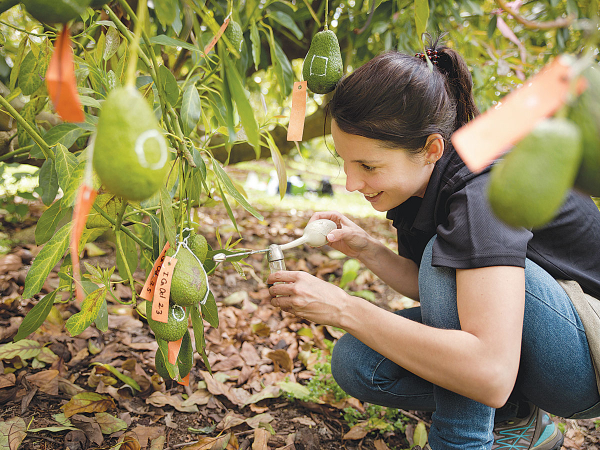 Lucia Ramos works alongside the New Zealand avocado industry to implement best practices in orchards.
Scientist Lucia Ramos is part of the epidemiology and disease management team at Plant & Food Research that's investigating avocado diseases and their management.
She works alongside the New Zealand avocado industry to implement best practices in orchards and to support export growth.
"I feel fortunate that my new home since 2017, New Zealand, is giving me the opportunity to reconnect with this fascinating fruit crop," Ramos says.
Hass is the main avocado variety grown in New Zealand. It is a subtropical fruit grown in a temperate climate which can bring challenges, such as fruit rot diseases, that occur in many avocado-producing regions worldwide and can negatively affect quality and consumer satisfaction.
"The fungi infect the fruit in the orchard, but symptoms normally appear onces the fruit is collected and starts to ripen. This can make the management of rot diseases extremely challenging," says Ramos.
She is working with the avocado industry to analyse and identify underlying cultural, chemical and biological practices already happening in the orchard that may contribute to low incidence of diseases. She investigates the extent to which these practices influence avocado production.
"Dense canopies with dead wood, leaves or fruit enhance the growth of fungi that cause diseases," Ramox explains. "These fungi also survive from season to season in dead fruit or other plant material on the ground, so orchard hygiene is important. Copper sprays can also be used to help to keep diseases at a low level."
She is very thankful to the NZ Avocado representatives and growers for their cooperation and willingness to provide access to their orchards for research.
"Working closely with the avocado industry is key to understanding their needs and focusing on the real problems we need to solve. The work we do is to suppport their success and the success of New Zealand."
Lab work is another important aspect of her work on avocado diseases, as it may provide further insight into the occurrence and development of pathogens that infect avocado crops.
Ramos is currently investigating ways to isolate disease-causing pathogens from the plant material they infect, such as avocado fruit and stems. This will allow her to identify what pathogens are present, as well as characteristics such as when and how those pathogens infect and what weather conditions encourage them to thrive.
"By increasing our knowledge of these factors, we can give growers a more accurate timeframe of when to intervene," Ramos adds. "If we can detect a period that favours the spread and development of certain pathogens, for example, growers could be advised to focus their sprays or hygiene practices during these key periods, reducing unnecessary spray applications and workload during the year."
* Story and photo courtesy of NZ Plant and Food Research.
Avocado growers are reporting a successful season, but some are struggling to keep their operations afloat following years of bad weather.

Reaction to the Government’s major overhaul of the country’s seven crown research organisations has so far been largely positive.
The government has announced a major restructuring of the country's seven crown research institutes (CRIs), which will see them merged into three public research organisations (PROs).
Later this month, Ardgour Valley Orchards apricots will burst onto the world stage and domestic supermarket shelves under the Temptation Valley brand.
Regenerative farming trials in Gisborne, in partnership with Woolworths, LeaderBrand, and Plant & Food Research, are uncovering promising opportunities for sustainable vegetable farming in New Zealand.


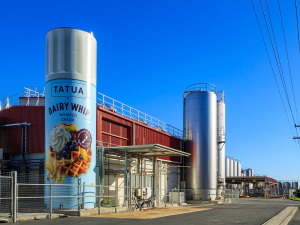
Waikato milk processor Tatua has again declared a record milk payout to farmer shareholders, leaving other processors in the dust.

A Labour-led Government won’t be bringing back the controversial freshwater rules of 2020.
National’s much-touted free trade deal with India featured in the Rural Issues Debate at Mystery Creek, Hamilton on Wednesday night.
New Zealand's 2026-27 freshwater fishing season has opened, with anglers encouraged to head to rivers and lakes over the coming days as conditions look favourable across much of the country.
Central Otago District Council (CODC) has voted against a plan to spread treated sewage sludge from Cromwell and Alexandra on farmland near Lauder, a decision Federated Farmers says reflects strong opposition from rural residents.
Pāmu has released its FY26 Integrated Annual Report, reporting a Net Operating Profit of $113 million, more than double the $49 million recorded in FY25.