
LeaderBrand Leads with AI Innovation
Major New Zealand fresh produce grower is tapping AI to manage weeds on one of its farms.



 increase font size
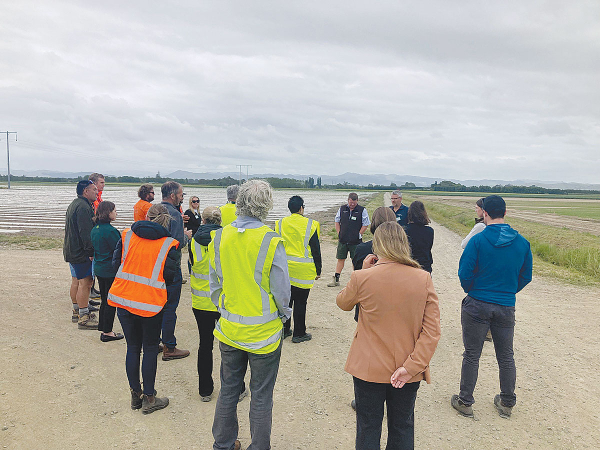 A field day to discuss regenerative farming trials was held in Gisborne recently.
Regenerative farming trials in Gisborne, in partnership with Woolworths, LeaderBrand, and Plant & Food Research, are uncovering promising opportunities for sustainable vegetable farming in New Zealand.
At a recent field day on site, partners, growers, officials, and local community representatives gathered to hear about the latest results, highlighting how life beneath the soil could be the key to rejuvenating intensively farmed land.
These trials, launched in June 2022 with support from the Ministry for Primary Industries (MPI), focus on using compost and cover crops to revitalise soils in intensive vegetable farming. The early findings are said to be already delivering valuable insights that could transform soil health and sustainability practices.
After just over a year of field trials, there are signs of improving soil health. Scientists say they have seen a surge in soil “breathing” at the trial sites, especially following planting of cover crops. This indicates that microbes and organisms are returning to ‘set up shop’ which will have knock-on benefits for nutrient cycling and crop resilience.
Plant & Food Research scientist Matt Norris says that while it’s still early days, the signs so far are encouraging.
“We’ve seen improved spinach and mesclun yields at one site and evidence for improved organic nitrogen supply, which could reduce the need for synthetic fertilisers over time.
“A key focus is to increase soil organic matter levels. We’re doing this by importing carbon in compost and also growing it onsite with cover crops.”
At a second site growing corn and brassicas like broccoli, the soil structure is improving as well. The soil is becoming softer and more friable, storing more moisture and allowing roots to access essential nutrients more easily.
Woolworths says for the supermarket giant, this is about more than yield, it’s about creating a resilient foundation for future farming.
“Seeing these changes in the soil this quickly into the trial is exciting. It’s more than just crop yields; it’s about creating a soil system that can sustain itself and our food supply over time. We’re so pleased to be investing in solutions that support healthy soil as a foundation for everything we grow,” says Catherine Langabeer, head of sustainability at Woolworths New Zealand.
The trials have revealed some other valuable lessons. Stuart Davis, LeaderBrand’s sustainability manager, says the research plots for the project are located in demonstration scale areas on two farms.
“Managing those areas has highlighted some of the practical issues that have to be overcome to incorporate regenerative practices into a cropping rotation,” says Davis.
These include issues like establishing consistent sources of compost free of weed seeds and other contaminants, managing the timing of termination and decomposition of cover crops, and crop health issues related to choice of cover crop.
The research team is set to conduct a detailed soil analysis in early 2025 to fully assess the twoyear impacts of these regenerative techniques and measure key shifts in soil health.
Major New Zealand fresh produce grower is tapping AI to manage weeds on one of its farms.
A pillar of New Zealand's horticultural industry, Dr Stuart Davis, was farewelled at a well-attended funeral service in Tuakau, South Auckland, on December 18.
Spinach is NZ's favourite leafy green, according to the Department of Statistics.
OPINION: The image of regenerative farmers as kind, cuddly progressive types took a hit when one of their own took to social media to gloat over Bayer Crop Science's decision to close its Hastings research site.
Gisborne's record hot dry summer weather has produced rewards for one of the country's largest commercial growers based in the region - Leaderbrand.


Carrfields has announced the appointment of Stu Hall to the newly created role of chief operating officer, Carrfields Ltd, reflecting the continued growth of their agribusinesses and the need to ensure the company has the leadership capacity and support in place as it pursues the emerging opportunities ahead.

New Zealand's role is not to compete with Indian growers, according to NZ Apples and Pears.
The potato industry is celebrating the success of two rising stars - James Blair, the 2026 Young Grower of the Year and runner-up and innovation award winner, Amber Davy.
Twenty-eight emerging leaders from across the horticulture sector spent two days last month learning valuable skills and connecting with industry experts.
There are five entrants in this year’s Young Horticulturist of the Year, competing in a series of technical, practical, business and leadership challenges.
A seasoned horticulturist has been appointed to deliver the Apple Action Plan, a key initiative of the India-New Zealand Free Trade Agreement.

OPINION: The same mainstream media muppets that brought you Jacindamania in 2017 have been flat out pimping for the Opportunities…
OPINION: Your old mate reckons the atrocious way farmers in the UK are treated by their lords and masters in…




