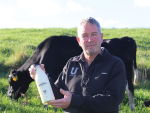
Moxham Family's Organic Milk Now Comes as Gelato
Horowhenua organic dairy farmers Ange and Wayne Moxham have taken their business to a new level.
 increase font size
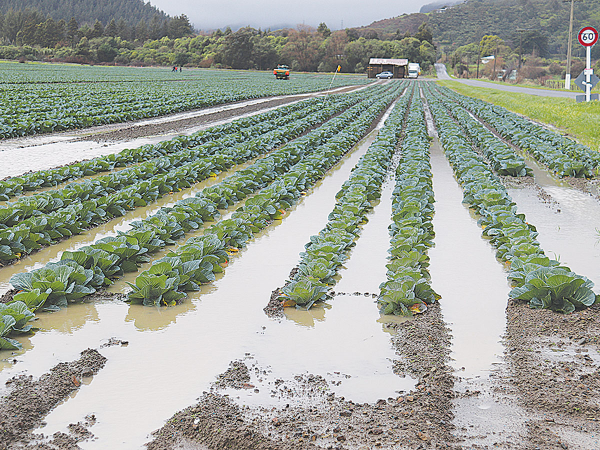 The wettest July in the Horowhenua for more than 75 years has caused havoc for local growers.
It's been the wettest July in the Horowhenua for more than 75 years and it's causing havoc for local growers.
Terry Olsen, president of the Tararua Growers Association, which represents commercial vegetable growers on the western side of the Tararua Ranges from Otaki to Rangitikei, says there has been month upon month of challenging weather. He says conditions have been especially bad south of Levin, where rain, wind and hail have all taken their toll on crops. Olsen says this has made it very hard to get product into the marketplace in a reasonably marketable condition.
"It's been hard on people, soil, machinery and furthermore it's very disheartening and makes for interesting challenges going forward," he told Hort News.
"It's especially hard for those who are totally reliant on vegetable growing for their income."
Olsen says the first challenge was to get crop planted and then to get it established - only to find the crop inundated with rain at the wrong time. Olsen, who is a potato grower but also has a dairy farm as part of his operation, says if a crop gets ruined by the rain it's not a simple matter of replanting it straight away.
"In the case of spuds, it's about sourcing seed if you can and that's all pretty expensive. Then it's having to make decisions to either carry on or with what you are left with or go for a complete replant. These are pretty sizeable decisions."
Olsen says, while having the dairy farm provides a diversification option, that operation has also been difficult because of the rain, which has occurred around calving time. He says even if there is a dry spell, more problems could be in store between September and October have always been challenging months for growers.
According to Olsen, Covid has compounded the problem. He says they have been operating short staffed for a while now which has been an even bigger problem for vegetable growers.
"It's a reminder how challenging nature can be," he told Hort News. "The big thing is to make sure that infrastructure is maintained on farm.
"However, new regulations don't make it any easier and the challenge is trying to interpret what these will mean on the farm."
Horowhenua organic dairy farmers Ange and Wayne Moxham have taken their business to a new level.
It will take between six to eight months for commercial growers in the Horowhenua region to fully recover from the disastrous heavy rains that hit the region in the weeks leading up to Christmas.
Commercial growers in the Horowhenua region in the lower North Island are facing significant crop losses as a result of persistent and devastating rains over the last two weeks.
A cacophany of sounds - barking dogs, the roar of tractors and tooting ute horns - descended on towns and cities around the country on Friday, July 16.
Facial eczema (FE) has hit Horowhenua much earlier than normal due to lots of rain and high temperatures.


Federated Farmers has welcomed new rural policies released by ACT, saying they align closely with its own election priorities.

Rural Contractors NZ says proposed changes to land transport rules for agricultural vehicles are a welcome response by the Government to out of date regulations which have seen members hit with huge fines.
Alliance is calling for final applications for its 2027 Graduate Programme, with applications closing on Sunday 25 October.
Decades piloting planes has ensured vet and farmer David Hayes is focused on safety. So, after a serious accident while welding on farm, he is sharing his experience so others can learn from it.
Canterbury milk processor, Synlait Milk has confirmed Leon Fung as its chief executive officer.
OPINION: Making it easier to collect rainwater and use it to grow crops and livestock is a no brainer.