A Canterbury vegetable growing company already well-recognised for its environmental initiatives has gone a big step further with a large solar power installation to power its packing and storage facilities.
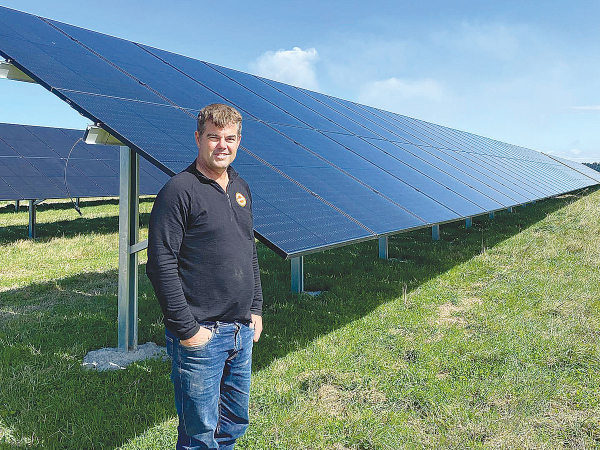
Oakley's Premium Fresh Vegetables Ltd has put in 564 solar panels at its Southbridge base. One of the South Island's largest solar installations, is it expected to provide 40% of the company's annual energy demands.
Robin Oakley, manager of the five-generation family business, says the biggest users of electricity are the coolstores that allow them to store and supply potatoes year-round, and potato grading, washing and packing lines. He says the installation is expected to provide about $60,000 worth of electricity a year.
"The power bill for last month was about five grand down on the same time last year."
Supplied by CPS Solar, the installation feeds excess power back to the grid and can be monitored by a smartphone app. It has now been operating for a couple of months.
"At any given time I can see what it's generating and I can see what it's done so far for the day," he says.
"There's a lot of variance based on the sunshine so you've got to take the averages, but for what I can tell, it's doing everything it's supposed to be doing thus far, but of course we're almost at the shortest day, so this is at its lowers."
Oakley says a consideration for anyone putting in solar is not to put in too much capacity, because the returns for sending excess electricity back to the grid are not enough to justify the extra capital cost.
However, he is now investigating putting in further panels in conjunction with batteries to store the excess generated on the sunniest days. He says there could soon be a supply of second-hand electric vehicle batteries that no longer charge and discharge quickly enough for EV use but would still be good enough for his purposes.
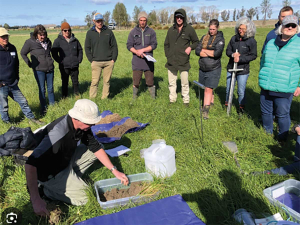
The company won three Ballance Farm Environment Awards in 2020 (second only to the overall regional winner) for excellence in soil management, scientific monitoring and innovation. They have been early adopters of technologies such as farm-wide moisture proves to forecast irrigation requirements, and extensive soil and plant nutrient testing to calibrate fertiliser applications for maximum quality and yield.
Oakley says it's all part of a common-sense approach to putting in technology that stacks up on the commercial returns, like upgrading lighting to LEDs, with sensors to turn lights off automatically when not needed.
Out in the fields they are also implementing strip-tilling with cultivators that only work narrow strips where the vegetable rows will be planted.
Oakley says that requires less horsepower, while minimising soil disturbance and potential loss of organic matter and soil structure.
"So it's a practice that builds your soil structure, it gives you more water and nutrient holding capacity. And it will also tie in with getting more utilisation out of our fertiliser, because we will actually band it rather than broadcast it."