NZKGI Responds to Migrant Worker Exploitation Reports
Where any worker in the kiwifruit industry is mistreated, we expect the authorities to take action.
 increase font size
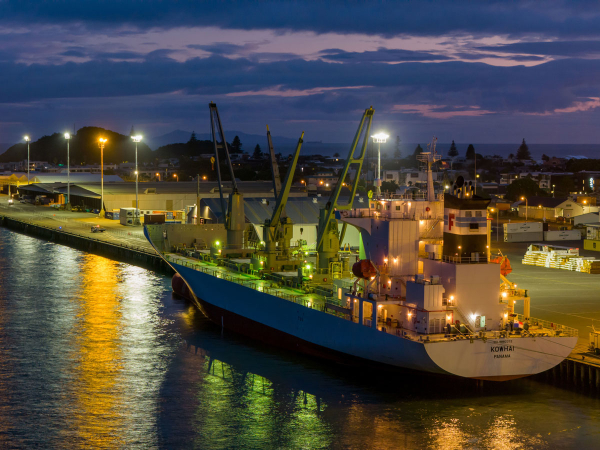 Zespri, in collaboration with ANL/CMA CGM, has initiated a feasibility study to investigate the potential for a low-emissions shipping corridor from Tauranga to Zeebrugge, Belgium, through the Panama Canal.
Zespri, in collaboration with ANL/CMA CGM, has initiated a feasibility study to investigate the potential for a low-emissions shipping corridor from Tauranga to Zeebrugge, Belgium, through the Panama Canal.
Zespri executive officer sustainability Rachel Depree says shipping plays a key role in New Zealand’s export-driven economy, carrying 99% of the country’s trade by volume and approximately 80% by value.
“Low-emissions shipping is a critical part of carbon reduction for exporters and also underpins our collective ability to achieve the government’s goal of doubling export value over the next 10 years,” Depree says.
“Collectively, we are already facing rising costs as carbon is priced into the economy and our markets and customers are starting to demand targets and plans to lower emissions over time,” she says.
Depree says shipping emissions is a key challenge to decarbonising the kiwifruit industry and meeting Zespri’s climate commitments.
“While kiwifruit is a low-carbon product, shipping emissions make up a larger portion of the product’s overall carbon footprint at 43% - and that’s why action is a priority.”
She says that, like many exporters, Zespri cannot directly reduce shipping emissions itself hence the reason why the exporter is working with its shipping and distribution partners to improve efficiency and find opportunities to pilot low-emissions fuel solutions as it works towards its aim of being carbon positive by 2035.
“This includes continuing to advocate for new port infrastructure and supporting the introduction of more low emissions shipping vessels, fuels and technology – all of which are critical and which require significant investment,” says Depree.
“The problem is significant and the answer complex but we do know success here will require coordinated action across government and supply chains,” she says.
Where any worker in the kiwifruit industry is mistreated, we expect the authorities to take action.

Kiwifruit growers are watchful but remain optimistic as concerns around the potential effects of the El Niño weather pattern this season.
Striking a balance between meeting the needs of industry to speed up approval time for products but on the other hand ensuring that risks are properly assessed.
Climate, nature and animal wellbeing make up Fonterra's refreshed sustainability roadmap released last week.
Researchers at Massey University are using a special piece of scientific equipment to improve the measurement of greenhouse gas emissions from pasture soils.



As the India-New Zealand free trade agreement enters into force, New Zealand’s apple industry has reaffirmed its commitment to the long-term development of India’s apple sector.
Fonterra shareholders can begin voting on Tuesday 20 October in the 2026 Board of Directors’ election, a Co-operative Council election in one Ward, and seven Annual Meeting resolutions.
National’s pledge to introduce 19 new national standards shows the party is serious about getting Wellington out of farming, Federated Farmers says.
The National Party’s policies to make it easier to grow fresh vegetables, secure reliable water and energy and simplify farm planning are practical changes that will give growers the confidence to invest, according to Horticulture New Zealand (HortNZ).
Fonterra Co-operative Group chief financial officer Andrew Murray has resigned to take up a role outside the dairy giant.
A major move is about to get underway to improve the quality and viability of dairy beef and cattle in NZ.