New fruit packing technology – developed by a NZ company – is said to be dramatically reducing packhouse labour needs.
Global Pac Technologies’ Aporo II robotic produce packaging machine is an update of the original Aporo I Produce Packer, which was first developed in 2018. The latest model can now manage twice the throughput of the original – packing 240 fruit per minute – saving between two and four labour units per double packing belt.
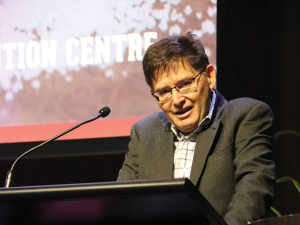
“Aporo II can be retrofitted across two packing belts instead of one, so it has effectively doubled the throughput and the labour saving that Aporo I could deliver,” explains Cameron McInnes, director of Jenkins Group – the New Zealand-based company, which co-founded Global Pac Technologies with US-based Van Doren Sales.
The automaton system is described as an intelligent robotic fruit packing machine that mechanises the most labour-intensive jobs in the packhouse. According to its manufacturer, it is proving to be a game-changer for post-harvest operators around the globe.
“We have been rolling out this new machine with some key customers globally and the results have been dramatic,” McInnes adds. “One of our Australian customers built a new packhouse and installed three of our Aporo II’s. That increased their packhouse production by 30-40% and reduced their labour by 50%.”
He explains that the system automates the process of placing fruit into trays and allows post-harvest operators to redeploy labour resources to areas where they can add more value.
McInnes claims Aporo II’s dual robotic heads are more consistent and dependable than human packers. The technology is now being used in France, the UK, Sweden, Belgium, the US, Australia and New Zealand – primarily to pack apples, but now also stone fruit – like peaches and nectarines.
Work is underway to extend its use to other fruit varieties in the near future. He adds that both Aporo I and Aporo II are designed for really simple autonomous packing.
“The machine is highly intelligent. It looks at the fruit, orientates the fruit and doesn’t need to be told what type of trays you’re using – it just looks and finds the pockets. It’s really powerful technology,” McInnes explains.
“Its internal vision system or ‘neural network’ is continuously learning to adapt to different fruit varieties and improve performance over time. It features automatic tray pocket recognition for any tray type and the touch screen interface is very intuitive and easy to use.”
He says the system not only orientates and places fruit the right way on the tray; it can also be programmed to find the best colour on the apple and spin that side up.
“It’s very clever.”
The Aporo machines can be retrofitted to existing packhouse infrastructure within a matter of hours in some cases. It straddles existing conveyors and is available in configurations for both single and double packing belt layouts.
The company says that since Aporo I’s initial launch in 2018, over 100 packing belts have had the technology deployed on them around the world.
McInnes says there’s a strong pipeline of orders that have already been received for new and updated version.
The Aporo I and II packers have been developed by New Zealand agritech business Robotics Plus. Global Pac Technologies was then formed as a joint venture to sell the technology to the global market.
“We are the market leaders in this space and our customers are having real success,” McInnes adds.
“The global apple market is worth approximately US$80 billion and automation is key to overcoming the worldwide labour shortage that all post-harvest operators are experiencing.”
About
Global Pac Technologies is a partnership between New Zealand firm Jenkins Group Limited and US-based Van Doren Sales Inc. Combined, they have two centuries of experience in fresh fruit and produce processing.
The joint venture was formed in 2018 in response to the growing move towards automation in the sector, which has resulted from increasing consumption, coupled with the problems the industry is facing worldwide in finding suitable staff.
Global Pac is focused on acquiring and developing new technologies to optimise packhouse processing operations.