NZKGI Responds to Migrant Worker Exploitation Reports
Where any worker in the kiwifruit industry is mistreated, we expect the authorities to take action.
 increase font size
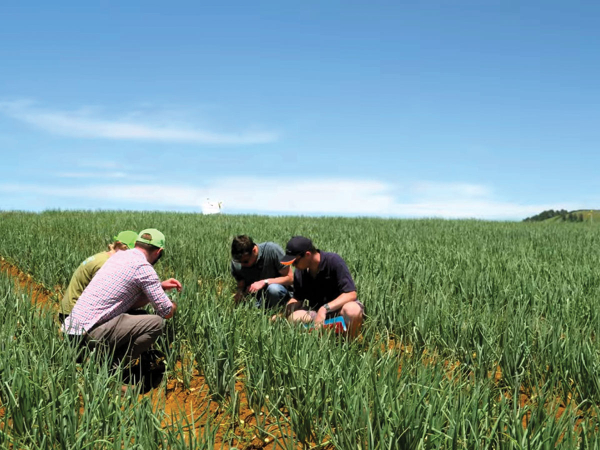 Trials undertaken near Pukekohe this past season in onions focused on seeking new crop protection products for Stemphylium leaf blight, a disease for which resistance is being actively managed.
New Zealand growers have always adapted to changing conditions, but one challenge is steadily gaining ground across the horticulture sector: resistance.
When pests, diseases or weeds become less sensitive to agrichemicals, products that once delivered reliable control can lose their effectiveness, leaving growers with fewer tools available to manage production risks.
This is the focus of Keep What Works Working, a new industry-good resistance management campaign led by A Lighter Touch (ALT) with widespread industry support. The campaign encourages growers to have an early-season conversation with their crop protection adviser about resistance risks and the practical steps they can take to protect the effectiveness of the agrichemicals they rely on.
A Lighter Touch programme director Livia Esterhazy says the campaign has been developed in response to the increasing threat of resistance across a range of production systems.
While resistance management can sometimes be viewed as a technical issue, the reality is that it directly affects a grower's business resilience, productivity and long-term profitability.
"We don't want resistance management to be something growers think about only after a product starts failing," she says.
"The biggest opportunity is to act early. Having a conversation with an adviser before spray programmes are finalised can help growers make decisions that protect the performance of important crop protection tools for the future."
 |
|---|
|
A Lighter Touch programme director Livia Esterhazy |
The economic case for action is compelling. Analysis by the New Zealand Institute of Economic Research (NZIER) found that reduced resistance management could impose significant costs on New Zealand's production systems over time.
Scenario modelling over a 10-year period estimated potential losses ranging from $74 million under moderate impact scenarios to more than $1.26 billion in severe scenarios where resistance problems become widespread.
Fortunately, horticulture already provides strong examples of how industries can respond.
As part of the campaign, A Lighter Touch has produced 14 sector-specific resistance management case studies for horticulture, arable and viticulture.
In the onion sector, Stemphylium leaf blight (SLB) has become one of the industry's most significant diseases since major outbreaks occurred during the 2017-18 season. Research commissioned by Onions New Zealand confirmed that the pathogen had developed resistance to three key fungicide mode-of-action groups that had previously been relied upon for disease control.
In response, growers, researchers, agrichemical companies and advisers worked together to develop resistance management guidelines and integrated disease management strategies.
These include careful fungicide selection and rotation, disease monitoring, crop hygiene, irrigation management and optimising plant nutrition. The resulting guidelines were validated in field trials and delivered better disease control than grower-standard programmes.
The kiwifruit industry provides another example. Armoured scale insects remain a key phytosanitary pest, but the sector has successfully reduced reliance on calendar-based spraying through the nationally adopted KiwiGreen integrated pest management programme.
Monitoring, economic thresholds, biological control and carefully timed interventions have significantly reduced insecticide use while helping to manage resistance risk. However, the industry continues to recognise the importance of avoiding over-reliance on any single mode of action and is actively exploring alternative tools and approaches.
Summerfruit growers have also experienced the consequences of resistance. Monitoring programmes identified reduced sensitivity to several fungicide groups used to control brown rot, one of the sector's most damaging diseases. The findings prompted the development of resistance management guidelines that promote fungicide rotation, mixing high-risk fungicides with an effective protectant fungicide, limiting applications of at-risk chemistries, and strengthening broader disease management practices such as orchard hygiene, monitoring and spray optimisation.
These examples and others detailed in the case studies highlight an important lesson: resistance management is not just about choosing a different product. It is about protecting the effectiveness of valuable crop protection tools through a combination of monitoring, integrated management practices, informed product selection and industry-wide stewardship.
Resistance develops gradually, often without obvious warning signs, but once tools are lost they can be difficult, costly, or impossible to replace.
"By planning ahead and incorporating resistance management into seasonal decision-making, growers can protect the effectiveness of important tools in their crop protection toolbox and safeguard their business for the future," Esterhazy says.
For more information and resistance management resources, visit www.keepwhatworksworking.co.nz
Where any worker in the kiwifruit industry is mistreated, we expect the authorities to take action.

Kiwifruit growers are watchful but remain optimistic as concerns around the potential effects of the El Niño weather pattern this season.
More signs of a booming kiwifruit sector.
The chair of the country's environmental regulator, the Environmental Protection Authority (EPA), says changes are already under way to improve the performance of the agency to better meet the needs of those who interface with them.
After delivering a strong financial year, rural trader PGG Wrightson says the coming months will depend on customer confidence and weather.


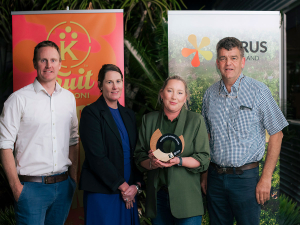
New Zealand's citrus growers were challenged to build their future on the value embedded in their fruit rather than the volume they produce, at Citrus New Zealand's annual gathering in Gisborne on 17 September.
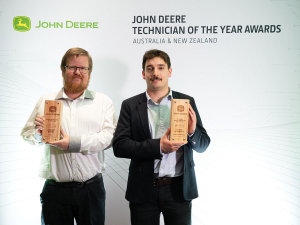
Leading John Deere technicians and apprentices from New Zealand and Australians were recognised at the recent sixth annual JD Technician of the Year Awards, held in Brisbane.
In Dacre, near Invercargill in New Zealand’s South Island, Bruce Dinnington is running a dairy operation unlike any other.
A free online platform aggregating governance vacancies across rural and regional New Zealand has been launched.
Environment Minister Nicola Grigg has announced details of a new rural plastics recycling scheme.
Agricultural drone operators say that a government decision to allow lower-risk drone work without certification won’t lower standards but drive innovation and efficiency.