Quality up but volumes down in 2023
Zespri says the challenging weather events that have dominated the 2023 growing season have contributed to a lower-than-expected crop this season.
 increase font size
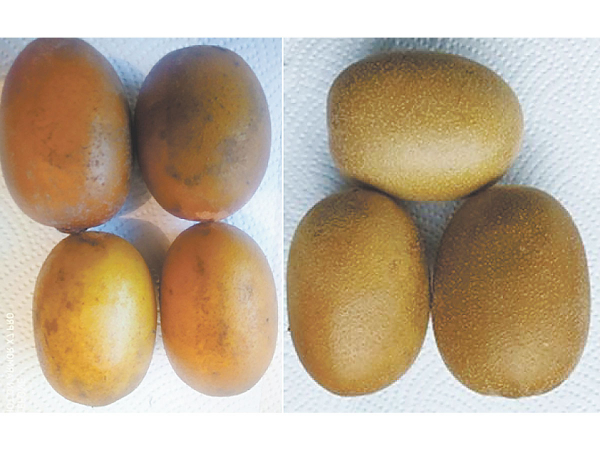 Damaged fruit on the left vs saleable fruit on the right.
By now you have probably seen the headlines regarding issues with fruit quality and the forecast cost to growers.
We have also noticed increasing incidences of vine decline syndrome, which requires attention from orchard managers.
While the industry undertakes formal investigations, we suggest some immediate steps growers can take to improve fruit quality and vine health, increase fruit value and reduce production costs.
We have tracked the use of fertilisers in kiwifruit orchards and noticed widespread excessive fertiliser application. In particular, we have noticed the excessive use of potassium, nitrogen, boron and copper.
While copper is valuable when applied judiciously, overuse is of particular concern because:
1. Copper is highly toxic to plants
2. PSA is resistant to copper
3. Copper has not controlled PSA disease manifestation
Highl levels of boron can result in premature softening of fruit. High rates of potassium and nitrogen may increase kiwifruit yield but can also decrease flesh firmness. Excessive potassium locks up magnesium in the soil resulting in magnesium deficiency and potassium-induced leaf breakdown syndrome.
Unbalaned fertiliser treatments and excessive fertiliser can harm yield quality.
Our advice to manage fruit quality issues in the shrt to medium term is as follows:
- Apply fertilisers only if test results indicate a deficiency - do not aim for "high fertility" (toxic levels).
- Carry out leaf tests. Do not apply foliar feeds unless the test shows a deficiency. Check the contents of foliar feeds; some products may contain high levels of micro and macronutrients.
- Stop using copper after bud burst. Instead, apply humates to lock up copper in the soil.
- Foliar nitrogen application should be stopped unless you have evidence of need/benefit.
- Stop using potassium until soil levels drop into the desired range.
- Use the Agrizest/Primazest programme. In orchards with high soil potassium levels, combine magnesium sulphate with the Agrizest/Primazest programme. This will improve fruit quality and reduce stress from salinity, the severity of leaf breakdown and premature leaf fall.
- Bear in mind that nutrients interact. By applying too much of one nutrient, other nutrients may become less available, causing a deficiency (see Mulder's Chart).
The Primazest/Agrizest programme will assist in reducing abiotic and biotic stress and allow the vines to be healthier and more productive.
In the long term, standard fertiliser levels may need to be investigated and adjusted to suit current varieties, industry practices and soil health. If you are unsure, please seek independent advice.
For more, email This email address is being protected from spambots. You need JavaScript enabled to view it. for a copy of the report with references included.
Zespri says the challenging weather events that have dominated the 2023 growing season have contributed to a lower-than-expected crop this season.

An Auckland company believes reducing enteric methane through productivity gains is the way to tackle green house gas emissions.


Safer Farms is urging farmers to make sure everyone working on farm has safe, suitable footwear for the job.

The Government is backing work on a community-led water storage scheme that could irrigate up to 11,000 more hectares of the Poverty Bay flats, Agriculture Minister Todd McClay says.
Agri-tech company Herd-i has become a new all-region sponsor of the New Zealand Dairy Industry Awards (NZDIA), the largest nationwide celebration of excellence in the dairy sector.
Four candidates have been confirmed for two director positions on Fonterra’s board.
Returning to the family dairy farm after playing 20 years of professional rugby around the world is no easy task.
After delivering another record farmgate milk price to 100 supplying farms, independent milk processor Tatua is entering thee new financial year with a positive outlook.