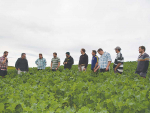
Otago Action Group keen to carry on
The Otago-based Bruce District Action Group is transitioning to a self-funded group now that the Red Meat Profit Partnership (RMPP) has ended.
 increase font size
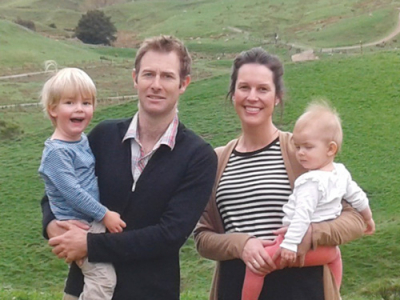 James and Kate McKay.
The prospect of raising production and profits spurred James and Kate McKay, farming at Alfredton, Southern Hawkes Bay, to get involved in the Red Meat Profit Partnership (RMPP).
This seven-year Primary Growth Partnership scheme is aimed at getting sustainable productivity improvements on sheep and beef farms, leading to more profit.
Encouraged by their Anzco livestock rep, Ed Wallace, the McKays joined the PGP scheme in 2015 and have since examined key aspects of their farming system.
They talked to local BakerAg consultant Richmond Beetham, who has helped them look at their ultimate goal of mating a 50kg hogget. Other goals are to increase weaning weights and diversify their forage.
Their farm, Te Keo, is on 400ha 18km east of Eketahuna – a summer-safe breeding and finishing property bought by the McKay family in 1970.
James’ parents, Murray and Mandy McKay, bought the farm off the family in 1983 and James and Kate took over in 2015 after careful, thorough succession planning.
One year into the pilot farm scheme the McKays feel they are getting ahead.
“We enjoy being innovative famers and we saw this programme as a great vehicle to continue to be progressive in our methods,” James says. “We have access to expert knowledge and practice we may not have had otherwise.... We have always valued and benefited from quality discussion with other farmers.”
At a recent pilot farm day at Te Keo, the McKays shared information and experiences with other local and pilot farmers from StockCare, BakerAg and AgriCom. Alan McDermot from Anzco talked about what markets are now expecting.
One big change the McKays are making is putting their hands on all their sheep.
“We are not relying on our eye at the drafting gate. We have a better understanding of our machine [sheep] and when and how much it needs to be fed.”
McKays have worked with StockCare for four years to help accurately predict how their sheep will perform long before lambing – good for budgeting. The inclusion of forage crops (rape) to get lambs off the hills, to give the ewes more space in the summer and look after the tail end better, has been a key.
“Break feeding of light ewes this year in August for a month has made a big difference, enabling us to set stock many ewes at 74kg and BCS 3.3.
“Feed budgeting has helped us ensure we don’t keep hold of trade lambs too far into the autumn/winter.
“We see a lot of room to improve weaning weights and lambing percentages and, with the use of our four years of stock monitoring, we can home in on specific details such as lamb growth rate on mum or our trade lamb seasonal growth rate and sale pattern with real data and make changes.
“We feel most of the low hanging fruit has now been picked so we are turning to mating of our hoggets and diversifying forages.”
The Otago-based Bruce District Action Group is transitioning to a self-funded group now that the Red Meat Profit Partnership (RMPP) has ended.
After seven years, the Red Meat Profit Partnership (RMPP) came to an end on 31 March, yet chair Malcolm Bailey says it's work is "continuous".
Beef + Lamb New Zealand (B+LNZ) has announced changes to the funding approach for Action Groups from 1 April 2021.
A year-long trial has shown that it’s possible to produce a beef patty sustainably across the supply chain in New Zealand.
A new voluntary sustainability and continuous improvement standard developed by the Red Meat Profit Partnership (RMPP) has been piloted by sheep and beef farmers.


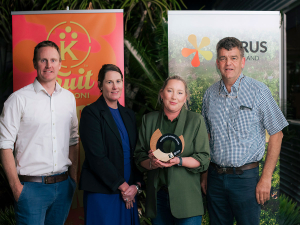
New Zealand's citrus growers were challenged to build their future on the value embedded in their fruit rather than the volume they produce, at Citrus New Zealand's annual gathering in Gisborne on 17 September.
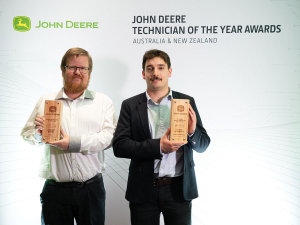
Leading John Deere technicians and apprentices from New Zealand and Australians were recognised at the recent sixth annual JD Technician of the Year Awards, held in Brisbane.
In Dacre, near Invercargill in New Zealand’s South Island, Bruce Dinnington is running a dairy operation unlike any other.
A free online platform aggregating governance vacancies across rural and regional New Zealand has been launched.
Environment Minister Nicola Grigg has announced details of a new rural plastics recycling scheme.
Agricultural drone operators say that a government decision to allow lower-risk drone work without certification won’t lower standards but drive innovation and efficiency.