MPI Opens $3m Greenhouse Gas Research Funding Round
The Ministry for Primary Industries (MPI) has announced has opened applications for the 2026/27 funding round of the Greenhouse Gas Inventory Research (GHGIR) fund.
 increase font size
 MPI looks to increase food safety and biosecurity fees.
The Ministry for Primary Industries (MPI) is proposing to raise its charges for food safety and biosecurity services.
“Without these systems, New Zealand’s $38.3 billion primary sector exports would never get past importing countries’ borders,” says spokesman Dan Bolger. “And our primary industries would be exposed to a much greater risk of pests and diseases.”
This is MPI’s first fee increase since the ministry’s formation in 2011 and the first review of food safety fees since 2008.
“Since that time demand for MPI’s services has increased, driven by increasing imports and exports and a greater number of food businesses,” Bolger says. “Also, inflation pressure has meant that the real cost of delivering services is also increasing.
“The different systems for recovering costs from industry were not developed at the same time. Over time this
has led to potential inequities in current charges. The proposals are designed to address these inequities and ensure all industry – large and small – is treated fairly.”
Bolger says the ministry needs to strike a balance between fair costs and earning enough to do its job. “The increase [would be] $12.8 million for the food and biosecurity systems.
“Feedback from industry and the public is an important part of getting these updates to fee rates right. I encourage you to take part in consultation.”
MPI is running presentations nationwide to explain its fee increased proposals. The deadline for submissions is 20 February 2015.
For details, visit: https://mpi.govt.nz/news-and-resources/consultations/
Fee increases
The Ministry for Primary Industries (MPI) has announced has opened applications for the 2026/27 funding round of the Greenhouse Gas Inventory Research (GHGIR) fund.

AMINZ and the Ministry for Primary Industries (MPI) have partnered to develop a new Farm Debt Mediation video series aimed at farmers, creditors, and advisors.
Dairy continues to be the mainstay of the country's primary export earnings.
Don’t worry about it but just be aware - that’s the message from Ministry for Primary Industries (MPI) director-general Ray Smith as the H5N1 strain of bird flu is found in Australia.
OPINION: The latest update from the Ministry for Primary Industries (MPI) on the state of NZ's primary sector paints a positive picturee about its performance over the past 12 months.

New Zealand dairy farmers are set to be the first in the world to receive access to a new digital physical milk pricing tool that enables them to fix the price for their physical milk.
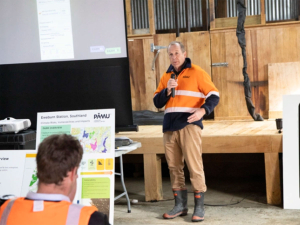
State farmer Pāmu is opening its farm gates this summer in an effort to give the rural sector the opportunity to see how large-scale, multi-system farming is delivering productivity and profitability across New Zealand.
A five-year study has found that the cost of reducing emissions without technology may be significant and unsustainable for Northland dairy farmers.
DairyNZ says Waikato farmers need certainty on Plan Change 1, but they say that certainty must be matched with practical, workable rules and a clear transition that doesn't get ahead of the new resource management system currently under review.
While the Government has moved quickly to make commercial hauliers' lot easier during the current fuel crisis, they appear to be stuck in the creep box when it comes to the agricultural industry.
Waikato farmers have been told that the Government’s new planning system legislation and the region’s Plan Change 1 (PC1) “won’t mesh together very well”.