Relationships are key to opening new trading opportunities and dealing with some of the rules that countries impose that impede the free flow of trade.
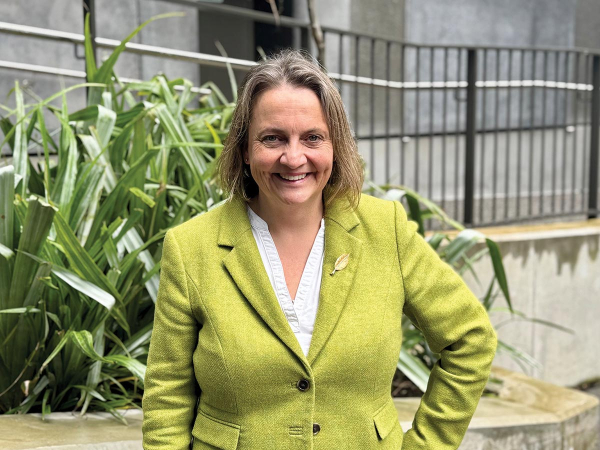
That’s the view of Diana Reaich who heads up Ministry for Primary Industries (MPI) trade and international group. She spent more than 20 years at Ministry for Foreign Affairs and Trade (MFAT) with roles in foreign and trade policy. Prior to joining MPI a year ago, she was NZ’s Ambassador in Brussels where she played a significant role in the negotiating of FTAs with the EU.
She says that while MFAT takes the lead role on FTAs in terms of the overall document, it’s the behind-the-scenes work in relation to the primary sector where MPI is heavily involved.
“With free trade agreements, MFAT operates at the high level in relation to tariffs and other benefits, while we get into the nitty gritty of what you actually need to do to send a consignment of cheese or meat to a particular market,” she says.
In this regard the MPI team lead certain parts or chapters of an FTA such as sanitary or phytosanitary and provide detailed technical input into other parts of an agreement. To do this MPI has a large team of experts based in NZ but also has 15 staff located at our embassies and high commissions in key markets. It has four based in China, two in Brussels and one each in London, Jakarta, Washington, Geneva, Rome, Dubai, New Delhi, Hanoi and Tokyo.
Reaich says the food and fibre sector delivers around $60 billion in export revenue and contributes 82.5% of NZ’s goods exported. To gain market access for primary exports has never been and never will be an easy task – especially nowadays with moves away from rules-based trade and overall global uncertainty.
She says her team works hard to understand what NZ exporters need to get their products into market and to also to identify the potential barriers they face.
She says it’s then a case of the MPI team working with the regulators in overseas markets to make sure they understand our unique production systems and how we can meet their standards. Sometimes this is pointing out the similarity of standards, or simply meeting the specific requirements of individual markets.
To this end, MPI hosts delegations of officials and primary sector representatives from other countries so they can see our farm practices and meet our farmers, processors and others in our primary sector. At the same time, MPI staff make reciprocal visits overseas and together with ‘in market staff’ work to develop trust, knowledge and the requirements of NZ’s customers.
Reaich says relationships are critical to everything MPI does.
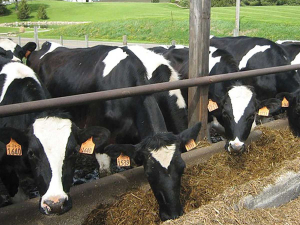
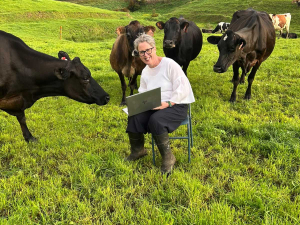
“And it’s a cool part of what we do, explaining the NZ systems, because it’s important that those global standards are developed in a way that which aligns with [what] farming looks like in NZ. Our farming system is pasture based, unlike many other parts of the world, so our role is not only spreading the knowledge about this, but also influencing those global standards to meet our needs,” she says.
NTBs Cost $10 Billion
One of the biggest impediments to NZ exports are things known as non-tariff trade barriers (NTBs) which deprive our country of around $10 billion annually.
NTBs are defined as any obstacle to international trade that is not an import or export duty, and may take the form of import quotas, subsidies, customs delays, technical barriers, or other systems preventing or impeding trade. They can apply irrespective of whether NZ has an FTA with any given country. Currently NZ is battling 194 of these and a huge multi agency effort is going into reducing these.
Diana Reaich says NTBs are part of MPI’s day to day business.
“We do a lot of the heavy lifting about NTBs. This covers things such as audit requirements, complex certification and onerous labelling requirements, and so we work to understand those barriers and provide the technical information to our partners to enable us to break through then. We do all the technical work and then MFAT will get involved from a diplomatic angle,” she says.
Reaich says one of the things she’s learned since coming to MPI is just how much of the heavy lifting it does. She says their work includes getting trading partners to understand our traceability, food safety and verification systems and supporting more rapid border clearances of products.
A top priority for the MPI team at present is acquiring an FTA with India, which Reaich describes as a tricky, complicated and massive market and is many markets within a market.
“So, in our case, as well as having a representative there, we are sending people to India all the time to find out who are right people and relevant agencies that we need to talk to. There is no substitute for sending good people and talking and listening to build good relationships,” she says.
Finally, Reaich says one thing she’s realised since coming into her role at MPI is the dedication of her staff and that their work opens up new opportunities for our exporters and makes a real difference to the NZ economy.